How Do Focus Mode and Diffuse Mode Enhance Learning?
TL;DR
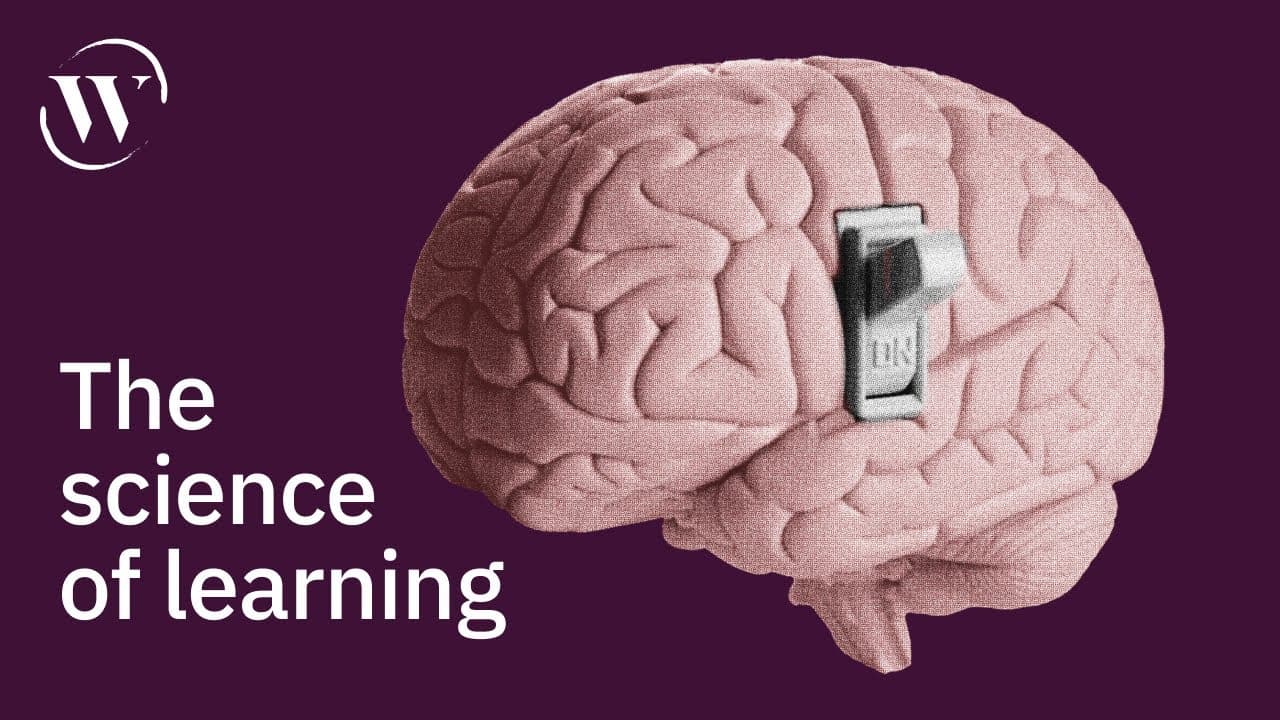
Learning effectively involves alternating between focus mode, where you actively concentrate on information, and diffuse mode, where your brain processes that information subconsciously. This dual approach allows you to form well-practiced neural patterns, known as neural chunks, which enhance your ability to recall and apply knowledge effortlessly.
Transcript
- A very important idea that people are often unaware of in 'false effect' that we have two completely different ways of seeing the world, two different neural networks we access when we're perceiving things. So what this means is when we first sit down to learn something, for example, we're going to study math, you sit down and you focus on it. So... Read More
Key Insights
- 🧠 When learning something new, we switch between two neural modes: focus and diffuse mode. Frustration with focus mode can be resolved by switching to diffuse mode, allowing for background processing that helps make information easier to comprehend.
- 🤔 Learning involves creating well-practiced neural patterns, also known as neural chunks. These patterns make it easier to recall information quickly and effortlessly, leading to expertise in a particular subject.
- ♟️ The more patterns or neural chunks you have in your mind, the greater your expertise in that subject. Chess masters, for example, have memorized numerous chess patterns, enabling them to access and utilize them during gameplay.
- 🎯 Practicing the right way is crucial for effective learning. Interleaving techniques and avoiding repetition can improve creativity and deepen understanding. Cold working on difficult problems and gradually reducing reliance on hints can help develop neural chunks.
- 🎶 Learning difficult concepts is similar to learning a song. Just as singing a song multiple times helps improve performance, practicing key math problems or language conjugation patterns repeatedly can make them automatic and effortless.
- 💡 Developing neural chunks through practice allows for efficient problem-solving during tests or real-life situations. Having a library of well-practiced chunks enables connections to be made between different chunks, solving novel problems successfully.
- 🔁 Learning is a continuous process of switching between different neural modes and creating neural chunks. This process applies to various subjects, from math and science to languages and even tasks like backing up a car.
- 🔑 Key to learning effectively is understanding the importance of focus mode and diffuse mode, as well as practicing and developing neural chunks. These insights can enhance learning outcomes and improve expertise in any field.
- 🎙️ More videos with Barbara Oakley:
Install to Summarize YouTube Videos and Get Transcripts
Explore YouTube Video Summarizer or Get YouTube Transcript Extractor
Questions & Answers
Q: What are the two neural modes of learning?
The two neural modes of learning are focus mode and diffuse mode. Focus mode involves active concentration and analysis, while diffuse mode occurs when the brain is at rest and background processing takes place.
Q: How can switching between focus mode and diffuse mode enhance learning?
Switching between focus mode and diffuse mode allows for the activation of different neural circuits, leading to better comprehension and understanding of new information. It allows the brain to process information in different ways, leading to insights and connections that may not have been apparent initially.
Q: Why is it important to create well-practiced neural patterns?
Creating well-practiced neural patterns, also known as neural chunks, helps in recalling and applying information effortlessly. These patterns are developed through practice and repetition, making it easier to access and utilize them when needed.
Q: How does chunking theory relate to learning?
Chunking theory suggests that the more well-practiced neural patterns or chunks a person has, the more expertise they possess in a particular subject. Chunking allows for efficient recall and application of information, leading to a deeper understanding and higher proficiency in that area.
Q: Can practicing too much kill creativity?
Contrary to the belief that excessive practice can hinder creativity, the right kind of practice is beneficial for learning. Interleaving different techniques and avoiding monotonous repetition is key. Effective practice involves challenging oneself by tackling difficult problems and gradually building mastery over time.
Q: What is a powerful technique for learning difficult concepts?
One powerful technique is to work on key problems repeatedly to develop well-practiced patterns. By attempting the problem cold, seeking hints when necessary, and periodically revisiting the problem, neural chunks can be formed, making it easier to solve similar problems and connect concepts during tests or real-world applications.
Summary & Key Takeaways
-
There are two neural modes of learning: focus mode and diffuse mode.
-
Focus mode involves actively concentrating and analyzing information, while diffuse mode occurs when the brain is at rest and background processing takes place.
-
To effectively learn, it is important to switch between these two modes and create well-practiced neural patterns.
Read in Other Languages (beta)
Share This Summary 📚
Summarize YouTube Videos and Get Video Transcripts with 1-Click
Try YouTube Summary with ChatGPT & Claude or YouTube Transcript Generator
Explore More Summaries from The Well 📚




Summarize YouTube Videos and Get Video Transcripts with 1-Click
Try YouTube Summary with ChatGPT & Claude or YouTube Transcript Generator