How did ancient DNA change our view of ancestry?
TL;DR
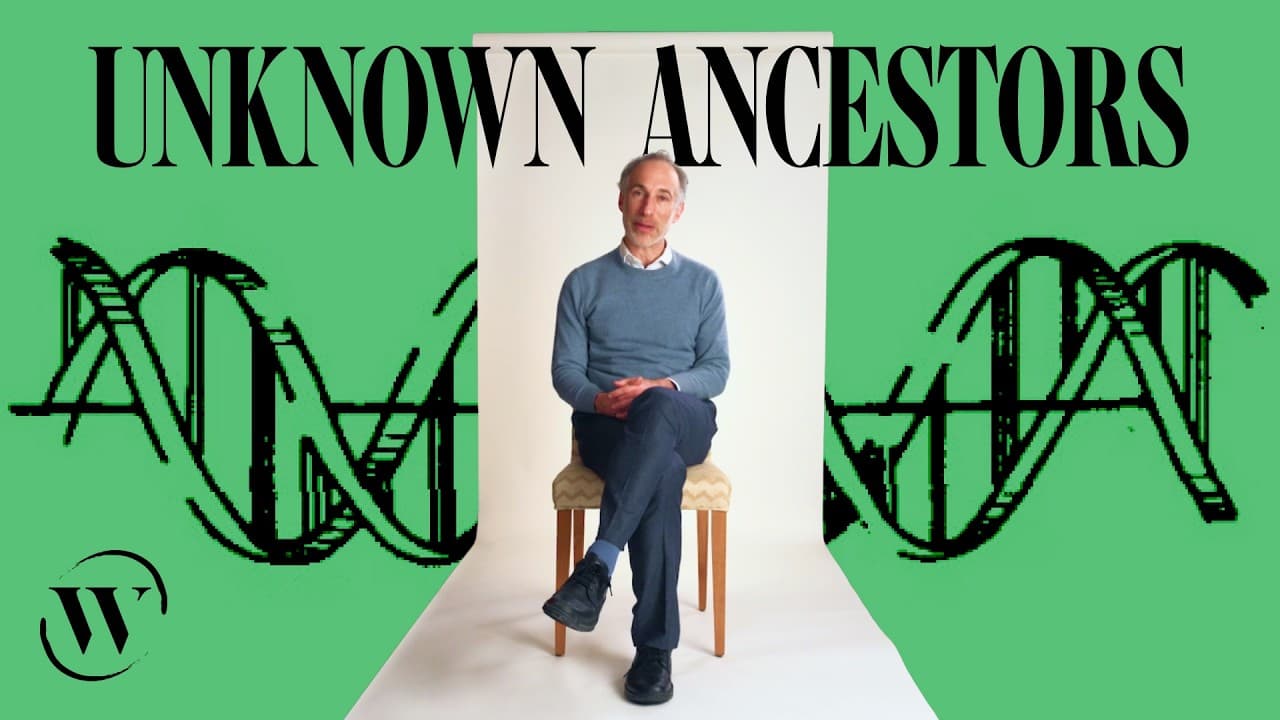
Ancient DNA shows that populations historically labeled as from one place often do not directly descend from the people who lived there. Modern humans mixed with archaic groups like Neanderthals and Denisovans, reshaping our family tree into a web of migration and interbreeding. This changes how we think about ancestry and identity across time.
Transcript
When you send your DNA to a direct to consumer ancestry testing company, you might get back an answer like you're 15% Irish and your 30% Nigerian and you're 20% South Asian or something like this. And what you're being told is an answer that's related to a very specific moment in time. But if you ask a question about another time, 80,000 years ago,... Read More
Key Insights
- Ancient DNA demonstrates that modern populations are not direct descendants of their geographic predecessors.
- The spread of modern humans involved mixing with archaic humans like Neanderthals and Denisovans.
- Archaic admixture accounts for about a small but meaningful portion of non African DNA in many populations.
- New genetic data repeatedly surprised researchers by revealing unexpected ancestral components.
- Ancient DNA is a new type of scientific instrument that expands what we can measure about the past.
- DNA from Africa 3000 years ago can look very different from today’s populations in the same region.
- The Denisovans represent a distinct archaic group that contributed to certain modern populations.
- The integration of ancient and modern DNA allows high resolution analyses of how populations relate over time.
Install to Summarize YouTube Videos and Get Transcripts
Explore YouTube Video Summarizer or Get YouTube Transcript Extractor
Questions & Answers
Q: A real search query question about the video (e.g. 'How to...', 'What is...', 'Why does...', 'When should...'). Question 1
Ancient DNA reshapes our view by showing that modern populations are not simply the direct descendants of the people who lived in a place long ago. Instead, populations moved, mixed, and replaced, creating a history of migration and interbreeding that makes the genetic landscape today far messier and more interconnected than a single lineage would suggest.
Q: Question 2
The evidence for archaic admixture, such as Neanderthal DNA in non African populations, indicates that as modern humans spread out of Africa they interbred with local archaic groups. This challenges the idea of a clean, linear family tree and supports a network model of human ancestry with multiple sources of genetic input.
Q: Question 3
Denisovans, discovered from a pinky bone rather than a full skeleton, contributed to the genomes of some modern populations, notably in the Pacific region. This shows that ancient human groups beyond Neanderthals left a measurable genetic legacy in living people, adding another layer to our understanding of human evolution.
Q: Question 4
The discovery of unexpected archaic admixture came after applying new statistical tests and sequencing technologies to ancient remains and modern genomes. The results were robust across multiple methods, strengthening the claim that interbreeding occurred and left a detectable signature in today’s DNA.
Q: Question 5
Ancient DNA provides a different type of information than artifacts or languages. While archaeology and linguistics reveal cultural patterns, ancient DNA directly tracks genetic relationships and migrations, offering a complementary and sometimes contrasting perspective on how populations moved and mixed over time.
Q: Question 6
The field shows that the world’s genetic history is not static but constantly shaped by movements and interchanges. When researchers study the genomes of ancient individuals, they uncover lineages that no longer exist in modern populations, highlighting how past diversity informs present-day genetic makeup.
Q: Question 7
The concept of a simple origin out of Africa spreading homogeneously across the globe is replaced by a narrative of repeated migrations, partial replacements, and admixture events. This more dynamic model explains why genetic diversity in some regions does not align with simple geographic expectations.
Q: Question 8
The interview discusses how ancient DNA revolutionizes our understanding of difference and identity. It emphasizes that genetics reveals a world shaped by movement and mixing, which can help rethink stereotypes and inspire a more nuanced view of human diversity across time and space.
Summary & Key Takeaways
-
Ancient DNA reveals that people who lived in an area long ago are not the direct ancestors of today in that same place, challenging simple location based ancestry. The research shows multiple admixtures with archaic humans as modern humans spread globally, creating a complex genetic web rather than a linear lineage.
-
The data introduced a new scientific instrument in genetics, enabling high resolution comparison between ancient and modern genomes, which uncovers migrations, mixing events, and population replacements that shaped today’s genetic diversity.
-
The field demonstrates that history is dynamic and not fixed, with evidence of Neanderthal and Denisovan contributions to non African populations, and that languages and cultures interweave with genetics in shaping human history.
Read in Other Languages (beta)
Share This Summary 📚
Summarize YouTube Videos and Get Video Transcripts with 1-Click
Try YouTube Summary with ChatGPT & Claude or YouTube Transcript Generator
Explore More Summaries from The Well 📚

Summarize YouTube Videos and Get Video Transcripts with 1-Click
Try YouTube Summary with ChatGPT & Claude or YouTube Transcript Generator