How Surge Reached $1B Revenue with No Funding
TL;DR
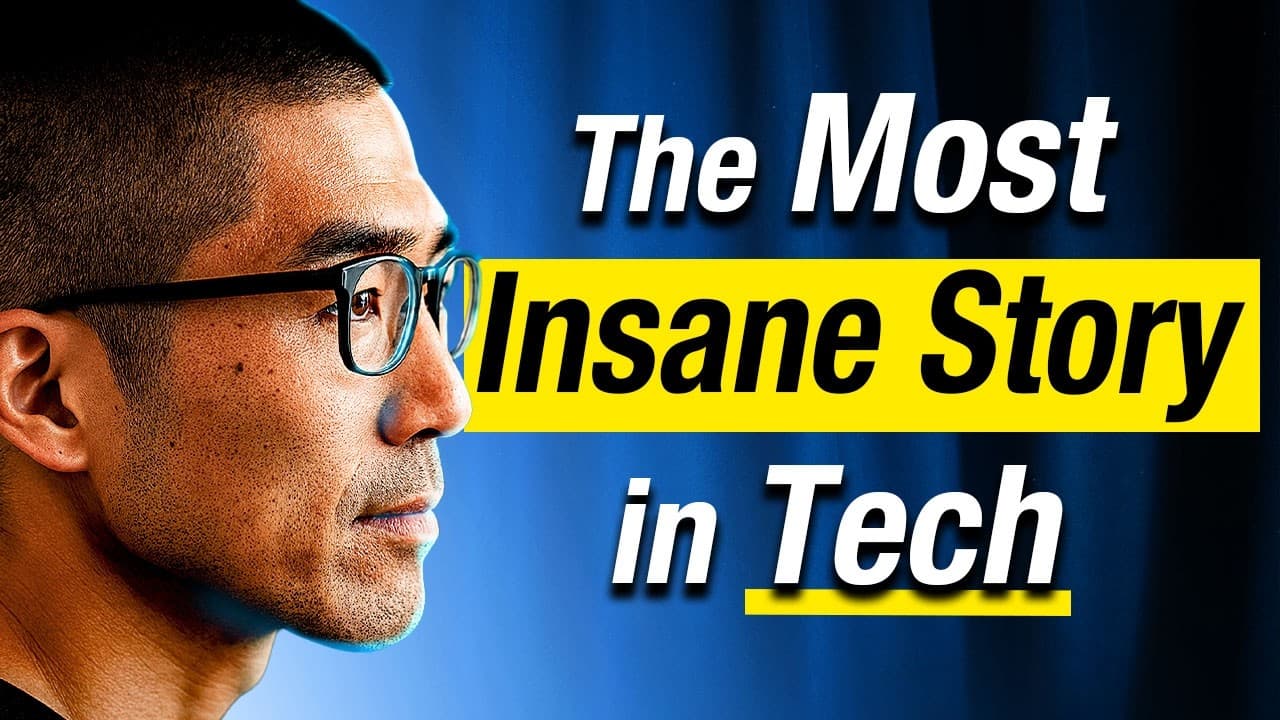
Surge focused on building a lean, high impact organization by keeping teams small and cutting unnecessary meetings. They claim that 10x to 100x engineering efficiency plus AI-driven productivity can drive rapid growth without external funding, while maintaining customer focus and profitability. The approach centers on prioritizing customer value over internal machinery and avoiding pointless policies.
Transcript
I think a lot of the other companies in our space, they're just not technology companies at the end of the day. They are either body shops or they are body shops masquerading as technology companies. One of the things that we simply tell everybody when we first join. Quality is the most important thing. Yeah, it's more important than anything else.... Read More
Key Insights
- Quality is the primary value; other practices are subordinate because great products require it, regardless of funding.
- Smaller teams with higher talent density speed up iteration cycles and improve communication, reducing waste and focus shifts.
- The right questions and customer-centric thinking distinguish doers from dreamers in large organizations.
- Avoiding routine meetings and internal performance theater helps preserve bandwidth for real product work.
- AI tools amplify existing high performers, potentially creating 100x efficiency when combined with strong execution.
- The concept of a single founder or small teams building billion-dollar companies is plausible with AI and relentless focus.
- Prioritization should reflect customer impact rather than internal approvals or status gains for managers.
- No sales, no PR, no BS implies relying on product and customer signals over traditional marketing and sales machinery.
Install to Summarize YouTube Videos and Get Transcripts
Explore YouTube Video Summarizer or Get YouTube Transcript Extractor
Questions & Answers
Q: A real search query question about the video (e.g. 'How to...', 'What is...', 'Why does...', 'When should...'). Question 1
How can a startup reach $1B in revenue without external funding according to the interview with Edwin Chen, and what are the core mechanisms behind this path? The answer is that a lean, highly productive organization with small teams and high talent density drives faster iteration and better product outcomes. AI enhancements reduce drudgery, enabling engineers to implement ideas faster. The company focuses on customer value rather than internal vanity metrics, prioritizes issues that directly impact the end user, and avoids heavy meetings that waste time. This combination allows scalable growth while maintaining profitability and control of destiny.
Q: Question 2
What role do small teams and high talent density play in Surge’s strategy for fast growth and high efficiency? They enable faster communication, fewer meetings, and quicker iteration cycles, which lead to better ideas percolating through the organization. Fewer people on projects means more focus on impactful work and less complexity in decision making. This structure supports rapid product development and a clean alignment with customer needs, rather than internal politics or managerial visibility.
Q: Question 3
How does the interview describe the difference between doers and managers in large tech companies, and how can this affect product priorities? Doers focus on customer problems and practical product improvements, while some managers prioritize internal tools or org growth to impress superiors. The resulting misalignment diverts effort from end-user benefits to organizational signaling. Surge’s approach favors decisions grounded in customer impact and product value, avoiding priorities that do not clearly improve the user experience or business outcomes.
Q: Question 4
What is the stance on meetings within Surge, and why is this important for scaling product development? The founder rejects unnecessary one-on-one meetings and corporate meeting habits, arguing that many updates can be handled through direct communication and transparency. By killing superfluous meetings, teams maintain focus on core tasks, reduce time spent in planning cycles, and move faster in delivering features that matter to customers.
Q: Question 5
Do AI tools contribute to increasing engineering output at Surge, and if so, how? AI is seen as a way to remove drudgery from daily work, enabling engineers to convert ideas into working code faster. This accelerates the transformation of a high-potential engineer’s capabilities into tangible products, potentially multiplying output and allowing a smaller team to achieve outsized results.
Q: Question 6
What is the feasibility of single-person companies reaching a billion-dollar valuation, according to the discussion? The interview suggests it is plausible with AI-enhanced efficiency and high-skill individuals who can generate significant revenue without a large payroll or PR machinery. It is presented as a future possibility given continued advancements in AI and a focus on customer-centric, scalable product delivery.
Q: Question 7
How does Surge view the relationship between customer value and internal company machinery when setting priorities? Customer value should drive priorities, not internal efficiency plays or executive vanity. The company argues that many large tech efforts exist primarily to keep internal systems and reporting visible to leadership rather than to solve real customer problems, and that this misalignment slows progress.
Q: Question 8
What does the conversation imply about the long-term bottlenecks in AI progress and the role of data labeling and synthetic data? The discussion suggests that data labeling and data quality are important; advances in synthetic data and improved labeling processes could influence efficiency. The emphasis is on understanding where bottlenecks lie beyond compute and models, and considering how data strategies can alter the pace of AI development, without relying on hype or unsupported claims.
Summary & Key Takeaways
-
Surge emphasizes a lean, efficient company with small teams and minimal meetings to accelerate execution and product delivery.
-
The interview argues that AI and highly productive engineers can enable billion-dollar scale without external capital, if the right focus and discipline are in place.
-
The founder discusses prioritization, avoiding internal vanity metrics, and aiming for a customer-first product that drives sustainable profitability.
Read in Other Languages (beta)
Share This Summary 📚
Summarize YouTube Videos and Get Video Transcripts with 1-Click
Try YouTube Summary with ChatGPT & Claude or YouTube Transcript Generator
Explore More Summaries from 20VC with Harry Stebbings 📚




Summarize YouTube Videos and Get Video Transcripts with 1-Click
Try YouTube Summary with ChatGPT & Claude or YouTube Transcript Generator