How will AI assistants like Town compete with Google
TL;DR
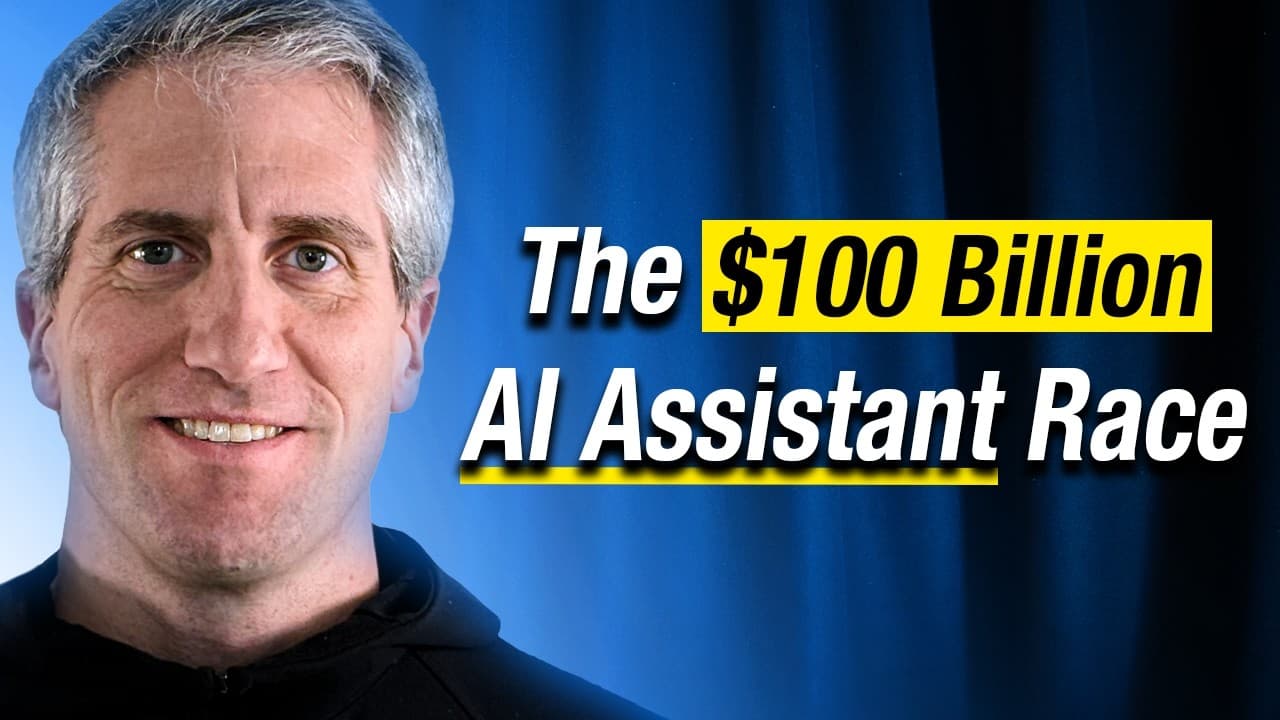
Town and similar AI assistants aim to win not just on raw power but through mainstream adoption and network effects. The strategy focuses on building a product that fits everyday work in email and calendar, with agent to agent collaboration and data privacy separation to preserve trust and scale with users.
Transcript
I know what I'm building is a top three priority at Google and Apple like in the next 12 months. Not a top 10 priority, like a top three priorities. The product in this category that will win will have a network effect at the agent level. Now, the hottest category in Silicon Valley is AI assistance. On the consumer side, you've got Instinct. On the... Read More
Key Insights
- Town is an AI assistant that lives in email and calendar and automates work tasks in the background.
- A winning product will rely on network effects at the agent level, enabling cross-user collaboration when answers require others' input.
- The main path to defensibility is building a mainstream, widely adopted product rather than relying solely on niche, power-user features.
- Cannibalization by large frontier model providers is acknowledged, but initial focus is on achieving deep product market fit and broad user adoption.
- The envisioned future interaction model may involve a single entry point for most users, with privacy constraints guiding data separation between personal and work data.
- Competition is expected to come from platforms that already have large distributions, such as messaging apps, which could embed AI assistants.
- Town emphasizes that context and data access are critical, with the model needing to operate across email and calendar to deliver value.
- The enterprise use case will require balancing multiple agent types and ensuring a smooth user experience across tools and services.
Install to Summarize YouTube Videos and Get Transcripts
Explore YouTube Video Summarizer or Get YouTube Transcript Extractor
Questions & Answers
Q: How does Town plan to achieve mainstream product market fit and why is that important?
Town plans to achieve mainstream product market fit by focusing on an accessible product that automatically assists with tasks inside familiar tools like email and calendar. They believe mainstream adoption is foundational because it creates a broad base of users who benefit from AI automation in everyday work, which in turn drives network effects, scalability, and resilience against rapid shifts by competitors. This approach prioritizes practical utility and ease of use over specialized capabilities for a small subset of power users, aiming to reach a large audience quickly and securely.
Q: What is the role of network effects in Towns strategy?
Network effects are central because Towns value grows as more users engage and share knowledge via the agent such as towny assistants. When one user asks a question and an assistant leverages another team member to answer, it creates a collaborative loop that compounds value across an organization. This model makes it harder for new entrants to replicate the same level of practical utility, since the benefit scales with the number of participants who are connected through the system.
Q: How does Town view competition from large providers and open models?
Town recognizes that large providers could leverage their distributions to capture users, especially through familiar channels like messaging apps. They also acknowledge frontier models as potential threats while emphasizing that broad distribution and real world adoption will be decisive. The focus is on building a mainstream product with strong user traction that is difficult to displace, rather than relying solely on defensive tactics against incumbents.
Q: What is the envisioned data privacy approach for Towns AI assistants?
Town proposes separating personal and work data at the data layer to protect privacy while allowing an integrated experience. This separation is driven by concerns about data intermingling in a workplace setting, which could affect trust and governance. The design aims to let users benefit from AI assistance across contexts without compromising sensitive information or complicating enterprise compliance.
Q: What are the potential entry points for users into AI assistant usage?
The potential entry point is a single, simple interface that customers use to interact with AI assistants, lowering the barrier to adoption. However, there may be multiple entry points to accommodate privacy and organizational needs, such as separate personal and enterprise contexts. The overarching goal is to make the experience seamless so users do not have to switch apps or tools to access AI driven productivity.
Q: How does Town differentiate itself from niche or power-user AI tools?
Town differentiates itself by targeting mainstream users with a product that integrates into everyday work routines rather than focusing on advanced, specialized capabilities. The aim is to provide practical automation that saves time in common tasks. By broadening the user base, Town seeks to create a scalable network effect that outpaces niche solutions that appeal to only a subset of users.
Q: What is the role of agent to agent interactions in Towns vision?
Agent to agent interactions enable one assistant to consult another colleague's assistant for answers, creating a powerful network effect. This feature turns collaboration into a core value, as teams become more efficient when the right person is consulted automatically. The mutual assistance across agents creates a defensible moat through real world utility and broad participation.
Q: What challenges does Town foresee in balancing privacy with enterprise needs?
Town foresees privacy constraints as a major determinant in how data flows between personal and work domains. The challenge is to maintain trust and comply with workplace data governance while enabling useful, cross context AI assistance. The design effort centers on ensuring that data remains properly compartmentalized yet accessible enough for the AI to deliver meaningful productivity gains.
Summary & Key Takeaways
-
Town pivoted from AI tax to email and calendar based assistant to reach mainstream users, aiming for real work automation in daily routines.
-
The product relies on agent level network effects where assistants can consult colleagues to answer questions, creating a moat through collaboration.
-
Privacy and data separation are central, with potential multiple entry points for personal and work data while maintaining some interdependence across tools.
Read in Other Languages (beta)
Share This Summary 📚
Summarize YouTube Videos and Get Video Transcripts with 1-Click
Try YouTube Summary with ChatGPT & Claude or YouTube Transcript Generator
Explore More Summaries from 20VC with Harry Stebbings 📚





Summarize YouTube Videos and Get Video Transcripts with 1-Click
Try YouTube Summary with ChatGPT & Claude or YouTube Transcript Generator