How Harvey Builds Mega Deals and Scales AI
TL;DR
Effective company building depends on making strong decisions, focusing on the highest-priority work, and recognizing when negotiation adds no value. Winston Weinberg argues that enterprise AI remains a massive market, but rapid growth can reflect market pull as well as execution, so leaders must keep raising internal expectations while evolving from founder heroics into a well-run organization.
Transcript
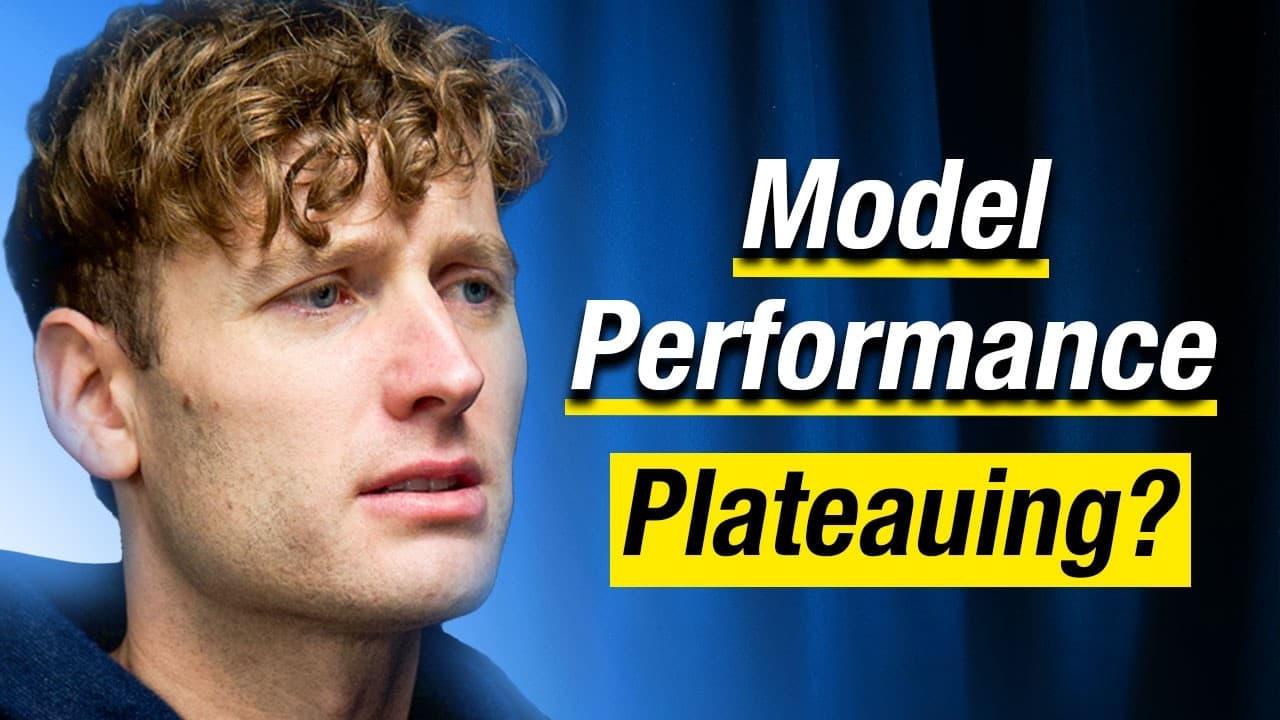
I think the value of B2B SAS is about to become astronomical. >> Do you think we're seeing a plateauing in performance across the different model providers? >> I think that we're seeing a plateau in performance for consumer use cases. Probably what's going to happen is the economy is going to explode. These companies are going to have crazy expecta... Read More
Key Insights
- Company building is largely the practice of making consistently strong decisions. Weinberg believes physically challenging himself early in the day reduces stress afterward and helps him approach company decisions with greater focus and resilience.
- Getting up early creates protected time for concentrated work. Weinberg keeps East Coast hours even in San Francisco, often waking around 4:00 or 4:30 a.m., so he can exercise and think about product before Slack messages and emails begin arriving.
- Constantly clearing Slack can become counterproductive as a company scales. Reading nearly every channel initially helped Weinberg stay informed and decide quickly, but the same habit later competed with the need to focus on the company's most important priority.
- A mature organization reduces its dependence on founder heroics. Weinberg wants to build a machine staffed by capable people, then inspect how departments conduct sales calls, prepare product requirements, and establish objectives rather than personally handling every operational detail.
- Company-market fit follows product-market fit. Weinberg defines it as creating organizational structures that suit the company's actual vertical and operating model, including the ways that model differs from traditional B2B or consumer software businesses.
- Product-market fit must be reinvented after organizational foundations are established. Harvey moved from initial product validation to company design, then returned leadership attention to the product's direction over the next six months and year.
- Market pull can make company performance look stronger than execution alone would justify. Weinberg therefore benchmarks Harvey against broader AI adoption and other fast-growing AI companies, not merely businesses competing within legal AI.
- The key to some deals is knowing when not to negotiate. If the only important outcome is hiring a particular person, Weinberg recommends meeting that person's requirements and placing them in the desired role, assuming the company has already established that the candidate is best in class.
Install to Summarize YouTube Videos and Get Transcripts
Explore YouTube Video Summarizer or Get YouTube Transcript Extractor
Questions & Answers
Q: How does Winston Weinberg manage founder stress?
Winston Weinberg uses intense physical exercise to increase his tolerance for stress and improve decision-making. After initially running a mile in roughly eight minutes, he began running one every morning and progressively reducing his time. He says pushing himself physically at the start of the day helps his body absorb stress, leaving him calmer and better prepared for company-building decisions.
Q: Why does Winston Weinberg wake up so early?
Weinberg wakes early to secure uninterrupted time before the daily stream of Slack messages and emails begins. He keeps roughly East Coast hours even when he is in San Francisco, often rising around 4:00 or 4:30 a.m. The quiet period lets him exercise, concentrate on product questions, and think about company priorities without continual operational interruptions.
Q: When should a founder stop monitoring every company detail?
A founder should reduce constant detailed monitoring when it begins to displace attention from the company's highest-priority work. Weinberg found that reading almost every Slack channel was useful early because it kept him current and supported fast decisions. As Harvey scaled, however, that habit made it harder to focus on product direction and the few issues that mattered most.
Q: What is the difference between product-market fit and company-market fit?
Product-market fit establishes that a product satisfies meaningful market demand, while company-market fit concerns whether the organization's structures suit its specific business and vertical. Weinberg argues that AI companies cannot simply assume their operating model matches traditional B2B or consumer software. Leaders must identify what is different, build the appropriate company structure, and later return to reinventing product-market fit.
Q: How should a founder move beyond operational heroics?
A founder moves beyond operational heroics by creating an organization in which strong employees can run functions effectively without continual intervention. Weinberg points to experienced founders who enter selected meetings to inspect how teams sell, write product requirements, and define objectives. That approach lets leaders improve the overall machine while reserving more time for product and the company's most consequential priorities.
Q: Why does Harvey benchmark itself against the wider AI market?
Harvey benchmarks itself against wider AI adoption because strong results may reflect an expanding market as well as superior execution. Weinberg does not want employees to assume they have already won merely because the company has grown quickly. Comparing Harvey with other fast-growing AI businesses raises expectations and reinforces his belief that category winners and losers could be determined within the next few years.
Q: When should a company avoid negotiating a deal?
A company should avoid extended negotiation when only one outcome truly matters and bargaining over secondary terms could jeopardize it. Weinberg uses recruiting as the clearest example: if a candidate is genuinely best in class and the company wants that person, it should meet the candidate's requirements and provide the desired position instead of creating unnecessary back-and-forth discussions.
Q: How does Winston Weinberg evaluate Harvey's valuation?
Weinberg evaluates valuation by comparing projected end-of-year revenue with the multiple implied by the company's price. During the discussion, he says a multiple around 20 to 25 can feel reasonable, while a multiple near 100 feels questionable. He also acknowledges that Harvey's Series C valuation of 1.5 felt particularly high relative to the company's revenue at that time.
Summary & Key Takeaways
-
Winston Weinberg describes company building as a progression from product-market fit to company-market fit, followed by another cycle of product reinvention. Harvey first validated its product, then developed structures suited to its particular market, and later returned its leadership attention to defining product direction for the next six to twelve months.
-
Weinberg credits early mornings and intense physical exercise with improving his focus and tolerance for stress. Keeping East Coast hours, even while in San Francisco or traveling, gives him uninterrupted time before Slack messages and emails arrive. He uses those quiet hours to exercise, think about product, and prepare for consequential decisions.
-
Harvey's rapid growth has taught Weinberg to separate company execution from broad market demand. He benchmarks the business against wider AI adoption rather than only legal AI competitors. His leadership challenge is preventing early success from producing complacency while replacing constant founder intervention with systems, capable teams, and focused oversight.
Read in Other Languages (beta)
Share This Summary 📚
Summarize YouTube Videos and Get Video Transcripts with 1-Click
Try YouTube Summary with ChatGPT & Claude or YouTube Transcript Generator
Explore More Summaries from 20VC with Harry Stebbings 📚



Summarize YouTube Videos and Get Video Transcripts with 1-Click
Try YouTube Summary with ChatGPT & Claude or YouTube Transcript Generator