Andrew Feldman on Cerebras' $1B Raise and AI Chip Demand
TL;DR
Cerebras raised a $1.1 billion Series G at an $8.1 billion valuation, led by Fidelity and Atreides, while still planning to go public. CEO Andrew Feldman says AI demand is so large and fast that customers cannot forecast it, so big compute deals act as options on the future. He also argues NVIDIA now shows signs of worrying about growth.
Transcript
Things are moving at a rate that 6 8 12 months out everybody's unsure. It's so fast. It's so big. There is unbelievable demand and nobody knows where it will go in the future. The question of depreciation is how much faster are future generations than the current generation. That's the actual question on depreciation. People often say we don't have... Read More
Key Insights
- Cerebras closed a $1.1 billion Series G at an $8.1 billion valuation, which Andrew Feldman calls the largest raise ever done in its category, led by Fidelity and Atreides with participation from Tiger Global, Valor and 1789 Capital.
- Fidelity leading a late-stage round matters because it is seen as a premier public market investor, and its participation gives Wall Street a great deal of confidence in a company heading toward an IPO.
- A pre-IPO round does not replace going public: Feldman says Cerebras still intends to IPO, and raising late-stage capital quickly is common when it does not distract the company from its opportunities.
- The new funding gives Cerebras dry powder to scale manufacturing and add data centers; the company added five data centers in the US this year and says it has more big ideas.
- Headline AI deals often hide fine print: phrases like 'up to 100 billion over five years' mean the real figure could be much smaller, and few people track whether promised jobs or factories ever appear.
- AI demand is so uncertain that some customers ask Cerebras for between five and 40 million queries per second, showing that even buyers cannot forecast their needs six to twelve months out.
- The right way to plan in a fast market is to have good rules for changing plans: plan more often, use a shorter view, and take options on future capacity, accepting the loss of the premium if unused.
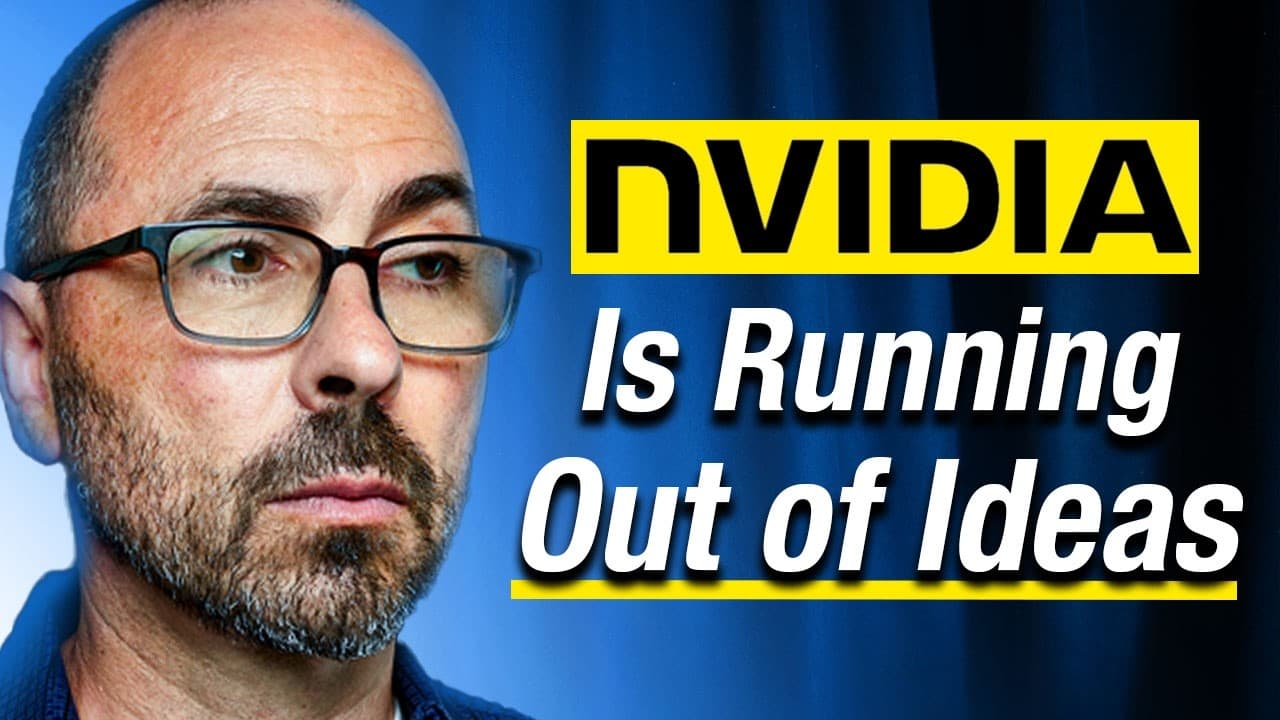
- Feldman sees signs NVIDIA is worried about growth, including using its balance sheet more than its technology, buying business through investments, and pre-announcing future chips before current ones are widely available.
Install to Summarize YouTube Videos and Get Transcripts
Explore YouTube Video Summarizer or Get YouTube Transcript Extractor
Questions & Answers
Q: How much did Cerebras raise in its Series G round?
Cerebras closed a $1.1 billion Series G round at an $8.1 billion valuation. Andrew Feldman describes it as the largest raise ever done in its category and at the highest valuation. Fidelity and Atreides led the round, with strong participation from Tiger Global, Valor Equity and 1789 Capital, giving the company capital to grow manufacturing and data centers.
Q: Why did Cerebras raise a pre-IPO round instead of going public?
Feldman says Cerebras still has every intention of going public. He explains that doing a pre-IPO round is common at the late stage if it can be completed quickly without distracting the company. With so many opportunities in front of Cerebras, gathering capital to keep pursuing them was, in his words, a no-brainer while the IPO plan continues.
Q: Why does having Fidelity as an investor matter before an IPO?
Feldman calls Fidelity one of the premier public market investors, comparing it to the Oxford or Cambridge of investing. When Fidelity chooses to lead a round, it brings Wall Street a great deal of confidence. Host Harry Stebbings adds that HubSpot CEO Brian Halligan taught him how important getting Fidelity is, both pre-IPO and at IPO, because of the signal it sends.
Q: What will Cerebras use the $1 billion funding for?
Feldman says the funding gives Cerebras dry powder to build out manufacturing to the scale and scope it wants and to add new data centers. The company added five data centers in the US this year and plans more. He also says the company has big ideas, arguing that incremental gains such as dropping from 8-bit to 4-bit precision will not get AI to where it needs to go.
Q: How should you read headline AI infrastructure deals worth tens of billions?
Feldman advises reading the fine print. Many deals are spread over five years and use the phrase 'up to', which means a deal of up to 100 billion could end up at 12, 30 or 40 billion, but never more. He also notes that few people track whether promised investments, jobs or factories actually materialize, so nobody holds anyone to account.
Q: Why is AI compute demand so hard to forecast?
According to Feldman, things are moving so fast that everyone is unsure what demand will look like six, eight or twelve months out. Some customers ask Cerebras for anywhere between five and 40 million queries per second, an uncertainty of an order of magnitude. He suggests viewing large compute announcements as options on the future: paying something now to secure capacity that may or may not be fully used.
Q: How should companies plan in a rapidly changing AI market?
Feldman says planning is brutal when Cerebras makes five- and seven-year data center commitments and supply chain bets worth hundreds of millions to billions of dollars. Instead of perfect plans, companies need good rules for changing plans: plan more frequently, keep a shorter view, and take options on future capacity. If the future moves against you, you lose only the option premium.
Q: What signs suggest NVIDIA is worried about growth?
Feldman notes that if NVIDIA kept growing at its current rate, in 11 years everyone on earth would work for it, which cannot happen. He sees behaviors large companies show when worried about growth: using the balance sheet more than technology, buying business through investments in companies like OpenAI, pre-announcing B300 and Rubin chips before B200s are widely available, and not discussing field failure rates of its products.
Summary & Key Takeaways
-
Cerebras raised $1.1 billion at an $8.1 billion valuation, led by Fidelity and Atreides, with Tiger Global, Valor and 1789 Capital participating. Andrew Feldman says the capital lets Cerebras expand manufacturing and data centers, after adding five US data centers this year, while still intending to go public.
-
Feldman argues that huge AI deal headlines should be read carefully, since 'up to' figures spread over five years can mean far less. The deeper signal is enormous, unpredictable demand, with customers unsure of their needs by an order of magnitude, so deals work like options on future capacity.
-
On NVIDIA, Feldman says its growth rate cannot continue forever and points to behaviors typical of large companies worried about growth: using the balance sheet to buy business, investing in customers, and pre-announcing future products while staying quiet about field failure rates of current ones.
Read in Other Languages (beta)
Share This Summary 📚
Summarize YouTube Videos and Get Video Transcripts with 1-Click
Try YouTube Summary with ChatGPT & Claude or YouTube Transcript Generator
Explore More Summaries from 20VC with Harry Stebbings 📚






Summarize YouTube Videos and Get Video Transcripts with 1-Click
Try YouTube Summary with ChatGPT & Claude or YouTube Transcript Generator