How Lovable Competes and Scales in the AI Market
TL;DR
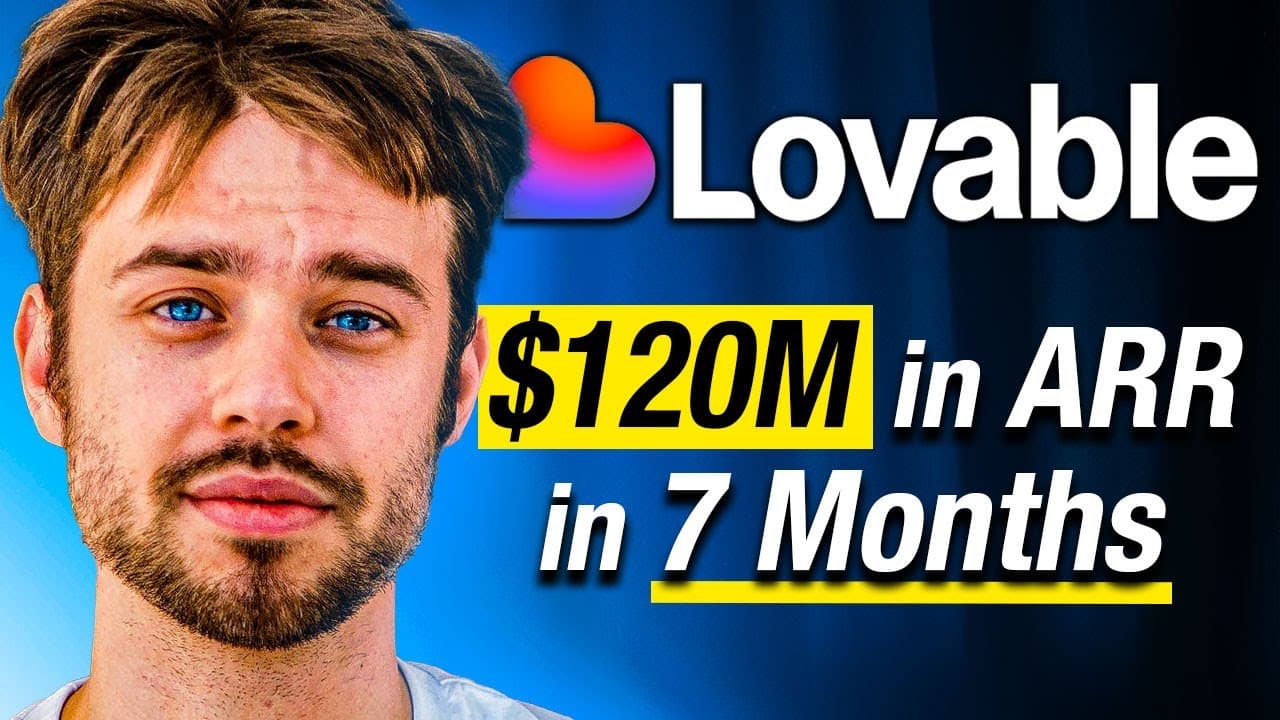
Lovable competes by hiring adaptable people, moving quickly, and building user trust through careful product experiences. Anton Osika argues that early AI startups should prioritize execution and growth before defensibility, while Lovable aims to improve its economics by becoming a broader platform that customers rely on for product building, administration, finance, and operations.
Transcript
I think university is not the best place to learn. Doesn't matter what you're studying. I'd invest in Grock and I would probably short anthropic. No, I would I would short. Why? I think it's more the slope on the Grock team. They're doing something which I respect a lot which is to hire missionaries for the data curation part. The morale is super h... Read More
Key Insights
- The AI competition is primarily a race to assemble the best team and establish a trusted brand. Capital supports those goals, but Osika says it is not Lovable's constraint, while companies training foundation models face much larger compute requirements.
- Application-layer engineering requires a different type of talent from foundation-model research. Osika argues that specialists hired for their model-training knowledge would not necessarily outperform Lovable's engineers when building its product, because the roles demand different abilities and working styles.
- Candidate slope is a central hiring criterion at Lovable. Osika looks for dynamic conversations in which he learns from the candidate, treating intellectual momentum and adaptability as signals that the person can grow quickly and contribute effectively within the organization.
- Founder mode remains Osika's expected source of greatest impact, but organizational growth requires more structure. He wants strong leaders and founder-like generalists around him to filter demands, prioritize incoming work, and create order without separating him from important product and company decisions.
- Brand trust is built through repeated attention to product details and user reactions. Lovable studies how customers respond whenever the company changes its product rapidly, aiming to make every update and interaction reinforce confidence in the broader platform.
- Defensibility comes from accumulated customer value rather than an early theoretical moat. Lovable wants users to build so much value on its platform, and receive so much continuing benefit from it, that leaving becomes an unattractive practical choice.
- Early AI startups should emphasize execution and growth before spending heavily on defensibility. Osika compares successful companies to competitors that must keep moving quickly because new challengers continually enter the market with similar opportunities and rapidly improving technology.
- Lovable's economics are expected to change as its platform expands beyond paid product-building usage. The company wants subscriptions to reflect persistent operational value, while AI compute eventually represents only a smaller portion of the revenue customers provide.
Install to Summarize YouTube Videos and Get Transcripts
Explore YouTube Video Summarizer or Get YouTube Transcript Extractor
Questions & Answers
Q: Is the AI market primarily a capital arms race?
The AI market is described as a race to build the strongest team, brand, and user trust, with capital acting as an important enabler rather than the sole determinant. Osika says funding is not currently a constraint for Lovable. However, capital can become a major constraint for foundation-model developers because training requires extremely large amounts of compute.
Q: How does Lovable evaluate engineering candidates?
Lovable evaluates candidates partly through their slope, meaning their apparent capacity to learn, adapt, and improve quickly. Osika treats a dynamic conversation in which he learns many things from a candidate as a positive signal. He also investigates how people performed in previous roles, seeking evidence about their actual behavior, collaboration, and contribution under real working conditions.
Q: Does application-layer AI require foundation-model researchers?
Application-layer companies require excellent engineers, but Osika argues that their ideal talent differs from the specialists who train foundation models. Researchers receiving exceptional offers may possess rare training knowledge, yet they would not necessarily outperform Lovable's existing engineers on its product. Each environment rewards a distinct combination of technical ability, product judgment, adaptability, culture building, and teamwork.
Q: How can founder mode work as an AI company grows?
Founder mode can remain the chief executive's main source of impact while experienced leaders provide selective organizational structure. Osika does not intend to become the company's most organized manager. Instead, he wants a protective layer of leaders and founder-like generalists who can filter requests, prioritize competing opportunities, and maintain order while preserving his rapid feedback and direct involvement.
Q: What makes an AI startup defensible over time?
An AI startup becomes defensible when customers accumulate lasting value on its platform and continue receiving benefits that would be difficult to abandon. Lovable plans to move beyond being a technical co-founder and support administration, finance, and operations. Osika advises young companies to focus first on executing and growing quickly, then develop stronger defensibility once they have meaningful traction.
Q: How does Lovable plan to build a trusted brand?
Lovable plans to build trust by paying close attention to details across every product interaction and update. Osika points to Apple's ecosystem as an example of how detail-oriented execution can create a strong brand, though he notes that excessive attention may slow progress. Lovable therefore tries to understand user reactions while continuing to change and improve its product rapidly.
Q: Why are Lovable's current AI compute costs significant?
Lovable's paid usage currently sends a majority, though not all, of the associated economics toward AI compute providers, according to Osika. The company is still charging customers mainly for building with the product. Its longer-term plan is to deliver broader, recurring platform value so customers remain subscribed and compute becomes a smaller part of the cost structure.
Q: When should AI applications optimize model selection and routing?
AI applications can eventually adapt models to different tasks, using simpler capabilities for routine work and stronger reasoning when unfamiliar situations arise. Osika believes Lovable should not optimize aggressively for that yet because model capabilities are changing substantially from month to month. The immediate priority is maintaining enough flexibility to iterate quickly as the underlying AI technology develops.
Summary & Key Takeaways
-
Anton Osika views the AI market primarily as a competition for exceptional teams, trusted brands, and rapid execution. Capital matters more when training foundation models because compute requirements are large. At the application layer, Lovable focuses instead on finding adaptable engineers whose abilities, working style, and growth trajectory fit the organization.
-
Lovable currently operates with a scrappy startup culture, even as it reaches a later growth stage. Osika expects most of his impact to continue coming through founder mode, but he also wants an organized protective layer of leaders and founder-like generalists who can filter requests, impose order, and prioritize incoming opportunities.
-
Lovable seeks long-term defensibility by becoming a platform customers do not want to leave. Its ambition extends beyond serving as a technical co-founder to handling administrative, financial, and operational work. Although paid usage currently carries substantial AI compute costs, the company expects broader platform value and persistent subscriptions to improve its economics over time.
Read in Other Languages (beta)
Share This Summary 📚
Summarize YouTube Videos and Get Video Transcripts with 1-Click
Try YouTube Summary with ChatGPT & Claude or YouTube Transcript Generator
Explore More Summaries from 20VC with Harry Stebbings 📚

Summarize YouTube Videos and Get Video Transcripts with 1-Click
Try YouTube Summary with ChatGPT & Claude or YouTube Transcript Generator