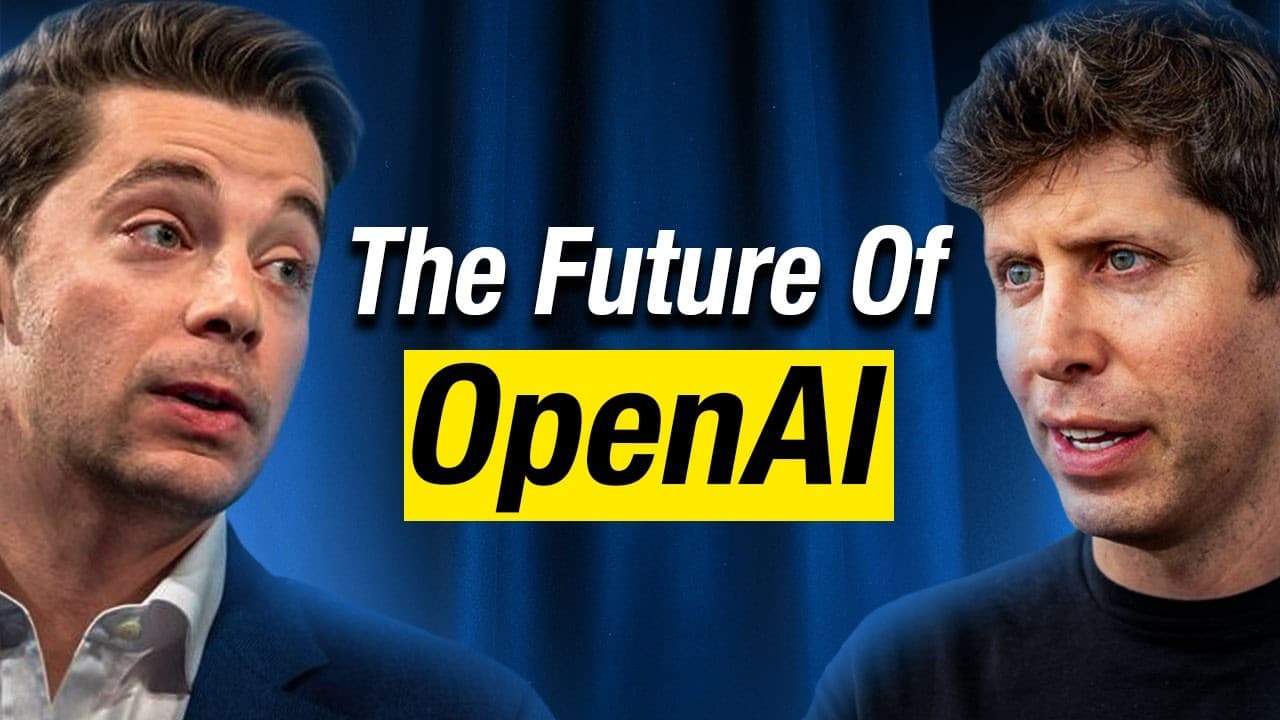
Sam Altman and Brad Lightcap on Building OpenAI
TL;DR
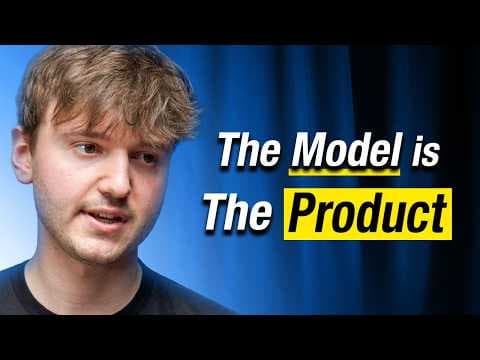
Startups building on AI should assume models will keep improving at the same pace, Sam Altman argues, because companies built on today's limitations risk being steamrolled as OpenAI pursues its mission. Altman and COO Brad Lightcap also explain that OpenAI began from two convictions: deep learning was working, and it got better with scale.
Transcript
there are two strategies to build on AI right now there's one strategy which is assume the model is not going to get better and then you kind of like build all these little things on top of it there's another strategy which is build assuming that open air is going to stay on the same rate of trajectory and the models are going to keep getting bette... Read More
Key Insights
- There are two strategies for building on AI: assume the model will not improve and build small things on top of it, or assume OpenAI's models will keep improving at the same pace. Sam Altman says 95% of the world should bet on the second.
- Many startups have been built on the assumption that models will stay the same. Altman warns that when OpenAI simply does its fundamental job in pursuit of its mission, it will steamroll those companies.
- OpenAI's founding conviction rested on two observations: deep learning seemed to be legitimately working, and it got better with scale. At the time the team did not know how predictably scale would help, only that bigger was better.
- Altman describes OpenAI's persistence as conviction rather than blind faith. The team had an attack vector it believed in, kept getting data that the approach worked, and treated repeatedly doing things once thought impossible as a sign of progress.
- OpenAI did not start out doing language models. The team held a high-level conviction about the approach for a long time, while the specific details took years to figure out and required many discoveries by colleagues.
- Brad Lightcap joined OpenAI almost by accident. While helping Altman recruit a CFO, he asked about 25 people who all declined, and he was too embarrassed to report back, so he started helping on nights and weekends.
- A sign of a good partnership, according to Altman, is being unable to do each other's job. He says Lightcap could do his job for a week, but he could not do Lightcap's, and high-bandwidth communication across the leadership team is essential.
- Lightcap says that at any point in a company's life only one to three things really matter. Altman's focus on those few priorities, plus a long-term future orientation, helps OpenAI keep its speed as it scales.
Install to Summarize YouTube Videos and Get Transcripts
Explore YouTube Video Summarizer or Get YouTube Transcript Extractor
Questions & Answers
Q: How should AI startups plan for future model improvements?
Sam Altman describes two strategies. One assumes the model will not get better and builds many small things on top of current capabilities. The other assumes OpenAI's models will keep improving at the same pace. Altman says 95% of the world should bet on the second, but many startups have been built on the first. He warns that when OpenAI simply does its fundamental job because of its mission, it will steamroll companies that depend on current model limitations.
Q: Which companies does Sam Altman say will be steamrolled by OpenAI?
Altman suggests that the companies at risk are the ones that assumed the model would not get better and built small fixes on top of its current weaknesses. As OpenAI keeps improving its models in pursuit of its mission, those fixes stop being needed. He contrasts them with companies that assume the models will keep improving at the same rate, which he believes is the right bet for about 95% of the world.
Q: What gave Sam Altman the conviction to start OpenAI?
Altman says two things seemed very important when OpenAI started. First, deep learning appeared to actually be working. Second, it got better with scale. The team did not yet know how predictably scale would improve results, but it was clear that bigger was better. Altman also says he had been interested in AI since he was a child, and that the confusing part at the time was why others did not see this and jump on it too.
Q: Why did OpenAI keep going when others doubted its approach?
Altman says it was not blind faith, although you do need some belief that you can do a hard thing. The team had an attack vector it believed in and kept getting data that the approach was working. Repeatedly doing things it had previously thought impossible was a sign of progress. AI would clearly matter if it worked, and Altman adds that strong conviction against widespread doubt is annoying but slightly motivating.
Q: How did Brad Lightcap end up joining OpenAI?
Lightcap worked with Altman at Y Combinator, focusing on deeply technical growth-stage companies such as fusion reactors, quantum computers, self-driving cars and satellites. He saw that OpenAI kept improving over time rather than carrying binary risk. While helping Altman recruit a CFO, he asked about 25 people and none wanted the job. Too embarrassed to report back, he began helping on nights and weekends, and that quickly became full time.
Q: Did Brad Lightcap join OpenAI before Sam Altman?
Yes. Altman says Lightcap worked at OpenAI full time before he did. Altman explains that for a while he split his time between OpenAI and Y Combinator, and moving to OpenAI full time was a gradual process, completed around the spring or summer of 2019. Lightcap jokes that it was the first time he had beaten Altman at anything, and Altman tells him to take it as a win.
Q: What are Brad Lightcap's strengths as OpenAI COO according to Sam Altman?
Altman highlights adaptability and the ability to see the whole picture. Lightcap joined to do finance, and when OpenAI's business began growing fast, Altman asked him to build it out. Lightcap agreed and figured it out as he went. Altman also credits him with building a new product category and go-to-market function, from business model to customer support, and says OpenAI now has a good enterprise go-to-market organization, which he would have thought very unlikely a year earlier.
Q: What is Sam Altman's biggest leadership strength according to Brad Lightcap?
Lightcap names two related strengths. First, Altman focuses intensely on the one to three things that really matter at any point in a company's life. That helps leaders align, pass priorities down to their teams and keep moving fast at scale, while most companies slow down as the number of perceived priorities grows. Second, Altman has a very long-term orientation and picks the priorities that will most accelerate progress toward that distant goal.
Summary & Key Takeaways
-
Sam Altman says founders can build on AI in two ways: assume models stay the same, or assume they keep improving at OpenAI's current rate. He argues that 95% of the world should bet on continued improvement, and he warns that startups built on today's limits risk being steamrolled as OpenAI pursues its mission.
-
OpenAI started from two observations: deep learning was working, and it improved with scale. Altman says the conviction was not blind faith. The team had an attack vector and steady evidence that it worked. It took time to work out the details, and the team did not begin with language models.
-
Brad Lightcap met Altman at Y Combinator. He noticed that OpenAI, unlike the binary-risk deep tech companies he was evaluating, seemed to keep getting better over time. He joined while trying to recruit a CFO, and later moved from finance to building OpenAI's business and enterprise go-to-market function.
Read in Other Languages (beta)
Share This Summary 📚
Summarize YouTube Videos and Get Video Transcripts with 1-Click
Try YouTube Summary with ChatGPT & Claude or YouTube Transcript Generator
Explore More Summaries from 20VC with Harry Stebbings 📚


Summarize YouTube Videos and Get Video Transcripts with 1-Click
Try YouTube Summary with ChatGPT & Claude or YouTube Transcript Generator