Vlad Tenev on Robinhood's Turnaround and Tokenization
TL;DR
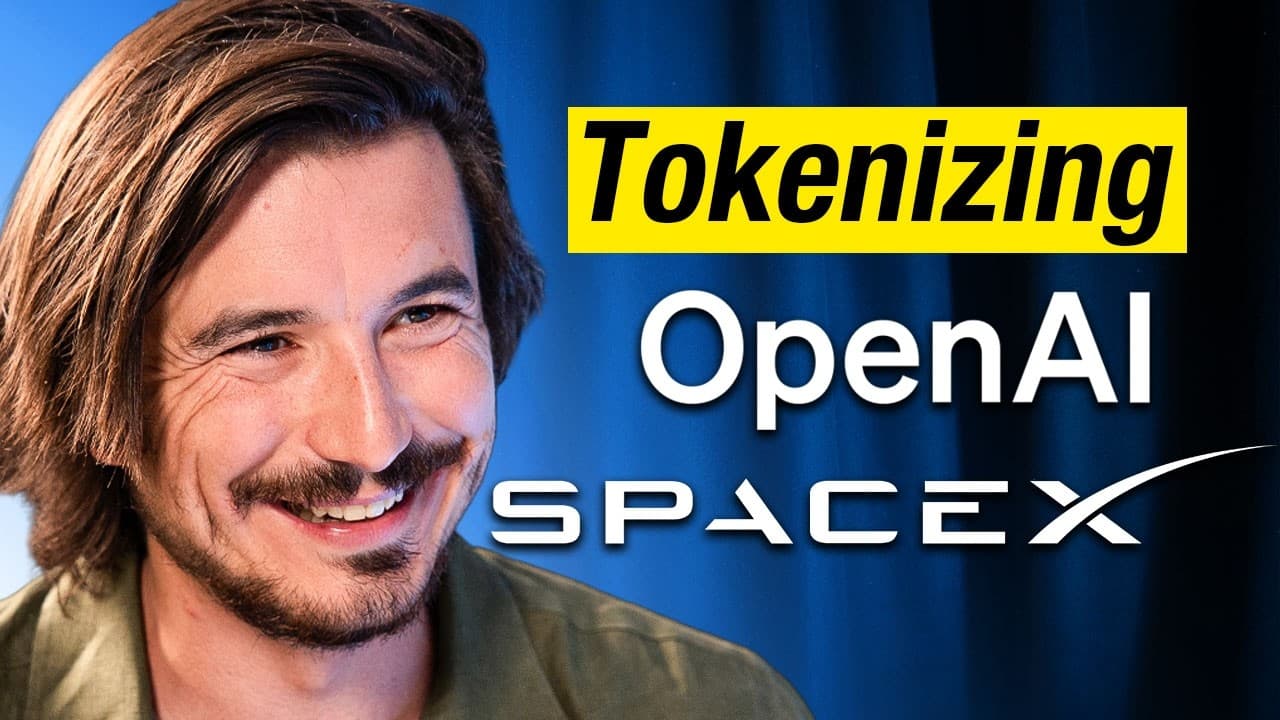
Robinhood's turnaround came mostly from serving active traders on purpose. The company had first attracted them by accident through zero commissions. Its market cap rose from about $35 billion to about $85 billion in roughly 8 months. Over that period, AI use spread across internal teams: nearly all engineers use agentic coding tools, and the company built its own customer support AI. Vlad Tenev also argues that private companies like Stripe should be tokenizable without their opt-in.
Transcript
Everyone likes tokenization in principle, but it's not really as attractive when it's being done to you. I think it's important for the tokenization mechanism to work without the opt-in of the companies that are being tokenized. I do think it's a big problem that a retail investor can't get access to Stripe shares. I've shared this viewpoint with u... Read More
Key Insights
- Robinhood's market cap grew from about $35 billion to about $85 billion in roughly 8 months. Vlad Tenev says the strategy did not change. Over two years the market simply came to see that it was working.
- Within the previous 18 months, Robinhood's net revenue rose 58% to nearly $3 billion. A $500 million loss in 2023 turned into a $1.1 billion profit in 2024, and the stock rose roughly 4x.
- AI coding adoption among Robinhood engineers is close to 100%. The company has moved from autocomplete tools like GitHub Copilot to fully agentic tools, and Tenev estimates that human-written code is now the minority.
- Robinhood built its customer support AI in-house. When it started, off-the-shelf vendors were immature, and the hard work is deep integration with back-end systems. The system needs that integration to answer queries and take actions for customers.
- Tenev names hallucination as AI's main remaining weakness. Harmonic, the company he chairs, aims to prevent it by design: every reasoning step is checked before output is released, against a clear measure of correctness.
- The digitally native active trader is a key Robinhood customer profile. Tenev compares these users to gamers with multiple screens. They care most about speed, latency and frontier technology, and they drove products like the futures ladder and Robinhood Legend.
- Robinhood built an active trader business by accident. Zero commissions were so valuable that traders paying around $1,000 a month in commissions elsewhere did their research on other platforms and placed their trades on Robinhood.
- Serving active traders on purpose, starting in 2022, was the number one reason for Robinhood's turnaround, according to Tenev. These users stay active in falling and sideways markets by using bearish and multi-leg options strategies.
Install to Summarize YouTube Videos and Get Transcripts
Explore YouTube Video Summarizer or Get YouTube Transcript Extractor
Questions & Answers
Q: How much did Robinhood's market cap grow in 8 months?
Robinhood's market cap went from about $35 billion to about $85 billion in roughly 8 months. Over the previous 18 months, net revenue rose 58% to nearly $3 billion, and a $500 million loss in 2023 turned into a $1.1 billion profit in 2024. The stock rose roughly 4x. Vlad Tenev says the company articulated the same strategy for about two years, and the market simply took time to see that it was working.
Q: How much of Robinhood's code is written by AI?
Vlad Tenev says adoption of AI coding tools among Robinhood engineers is close to 100%. The company has moved from autocomplete tools like GitHub Copilot to agentic tools that write the code. With agentic systems it is hard to tell which code a human wrote. Tenev's guess is that human-generated code is now the minority, which fits the roughly 50% figure cited for new code at other large companies.
Q: Why did Robinhood build its own customer support AI instead of buying one?
When Robinhood started, off-the-shelf vendors such as Sierra were just getting off the ground, and its larger vendors, including Salesforce, had not yet developed comparable tools. The bigger reason is that the hard work lies in system integration. The AI needs customer data to answer queries, and it increasingly takes actions, which requires deep integration with Robinhood's back-end systems. Tenev believes most vendors have not figured that out.
Q: Would Robinhood sell its internal AI support tool as a SaaS product?
Robinhood has discussed it internally, but Tenev sees a challenge. The tool's value comes from deep integration with Robinhood's proprietary data, and he is unsure the company wants to do deep integrations with other companies' data. He still likes platformization: he asks of every great internal tool whether it could be offered externally, because pressure from outside customers helps keep a tool great.
Q: What is the biggest remaining weakness of AI, according to Vlad Tenev?
Tenev says hallucinations are still a problem, and a lot of scaffolding is needed to guard against them. This problem is why Harmonic was founded; Tenev is its chairman. Harmonic aims to prevent hallucinations by design. Every step of the reasoning must follow logically from the previous one, and every piece of output is checked against a clear measure of correctness before it is released.
Q: Who is the active trader customer that Robinhood now targets?
Beyond millennial and Gen Z customers, Robinhood now targets the digitally native active trader. Tenev compares these users to gamers: they have multiple screens, headphones and fancy keyboards, and they stay locked into their trading setup. They want to be at the frontier of technology and care about speed and latency. Robinhood studied their needs closely to design products like its futures ladder and Robinhood Legend.
Q: How did Robinhood accidentally build an active trader business?
Robinhood's original strategy was a very simple mobile app with zero commissions, aimed at first-time investors who might start with $100. After launch, high-volume active traders also arrived, because zero commissions were so valuable to them. Someone paying around $1,000 a month in commissions could research on other platforms and trade on Robinhood. A small group of these users drove much more revenue than the company had modeled.
Q: What was the main reason behind Robinhood's business turnaround?
Tenev calls it the number one reason: in 2022 Robinhood realized it was not serving active traders well. They were outgrowing the app and moving to other platforms. These customers matter because they are resilient. They use bearish strategies when markets fall and multi-leg options when markets move sideways, so they stay active. Robinhood put its most hardcore people on making it the best platform for them.
Summary & Key Takeaways
-
Robinhood's market cap rose from about $35 billion to about $85 billion in roughly 8 months. Net revenue grew 58% to nearly $3 billion, and a $500 million loss in 2023 became a $1.1 billion profit in 2024. Tenev credits a consistent two-year strategy that the market took time to recognize.
-
AI has driven large internal gains at Robinhood. Engineering adoption of agentic coding tools is near 100%, and most code is now AI-written. The company built its own support AI because vendors were immature and deep back-end integration was required. Robinhood Cortex, its customer-facing AI system, launched the day of the interview.
-
Robinhood's turnaround came from serving active traders deliberately. These high-volume users first arrived because of zero commissions. In 2022 the company saw it was underserving them and assigned top people to build products like Robinhood Legend and the futures ladder. Tenev also supports tokenizing private companies without their opt-in.
Read in Other Languages (beta)
Share This Summary 📚
Summarize YouTube Videos and Get Video Transcripts with 1-Click
Try YouTube Summary with ChatGPT & Claude or YouTube Transcript Generator
Explore More Summaries from 20VC with Harry Stebbings 📚



Summarize YouTube Videos and Get Video Transcripts with 1-Click
Try YouTube Summary with ChatGPT & Claude or YouTube Transcript Generator