How to Build a High-Talent-Density Tech Team
TL;DR
Build a talent-dense team by defining the exact capabilities required, mapping the small group of people who possess them, and pursuing those candidates relentlessly. Avoid broad recruiting funnels and generic referral questions, since applicants are not necessarily the strongest candidates. Ask former colleagues who demonstrated a specific skill better than anyone else, then concentrate recruiting effort on activating those individuals.
Transcript
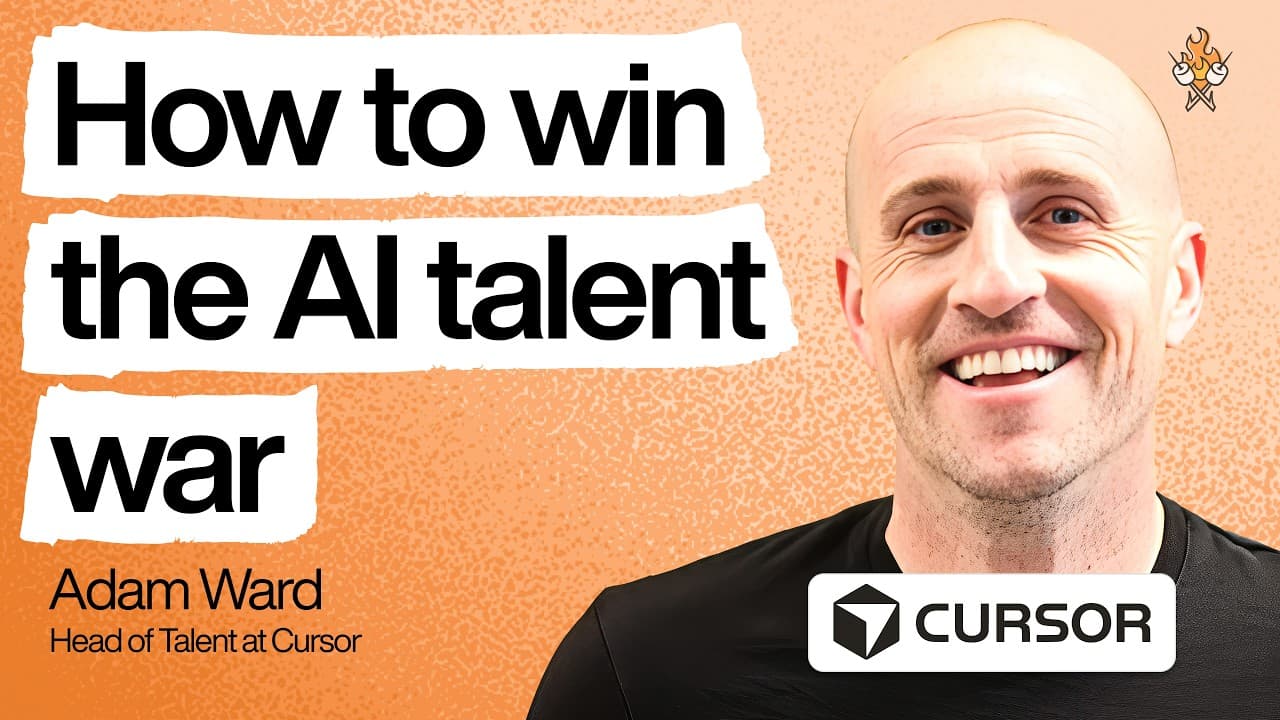
You have built and are known as someone that can build the most elite high talent density teams. Let's start with how people do it wrong, something you call the funnel of doom. >> Companies think about recruiting like a funnel. I'm going to reach out to 100 people. 20% of those will apply. By definition, that is not the top 20%. That is just the 20... Read More
Key Insights
- Traditional recruiting funnels are poor proxies for talent quality because the people who respond are merely those reached at a receptive moment, not necessarily the strongest candidates. Filtering a large applicant pool can therefore produce an acceptable remainder without identifying the best available people.
- The alternative recruiting playbook is scoping, mapping, and relentless pursuit. A company should precisely define the capability it needs, identify the limited number of people who genuinely possess that capability, and devote its recruiting energy to activating those candidates instead of processing a broad funnel.
- Generic referral questions produce weak sourcing signals because asking for the best product engineer leaves the meaning of best undefined. A stronger question requests the person who demonstrated a particular behavior, such as collaborating exceptionally well with designers or translating a framework into a product.
- The current talent market is a tale of two cities because unusually large offers for scarce new graduate PhDs can appear beside reports of major companies reducing their workforces. Ward interprets this gap as part of a broader resettlement of talent, labor, and working methods.
- Technology labor shifts are occurring faster than earlier transitions because changes that once took years now unfold in days or weeks. Ward compares the current period with the rise of mobile engineering, when companies scrambled to find skills for a newly important technical platform.
- Forward deployed engineering is increasingly valuable because it combines deep technical understanding with customer-facing communication and implementation. These professionals can work with sales teams, advise executives, clarify complicated products, and help customers move from maximizing token use toward optimizing their solutions.
- Experienced full-stack engineers can become forward deployed engineers when they enjoy moving beyond terminal-based work and engaging directly with companies, customers, and clients. For the right person, this transition can reveal an energizing and previously unexpected direction for their career.
- Broad technical versatility is gaining importance as engineering, product, and design responsibilities move closer together. Companies increasingly value designers who can operate like design engineers and deeply technical engineers with stronger product sense, while overly narrow specialists and inexperienced graduates may encounter weaker demand.
Install to Summarize YouTube Videos and Get Transcripts
Explore YouTube Video Summarizer or Get YouTube Transcript Extractor
Questions & Answers
Q: How do you build a high-talent-density team?
Build a high-talent-density team through three connected activities: scope the exact capabilities the role requires, map the relatively small group of people who can demonstrate those capabilities, and pursue those people relentlessly. This approach concentrates recruiting effort on known high-potential candidates. It avoids depending on a large applicant pool whose responsive members may simply have been contacted at the right moment.
Q: Why does the traditional recruiting funnel lead to mediocre hires?
A traditional funnel treats recruiting as a volume exercise: contact many people, accept that only a fraction will apply, eliminate candidates at successive stages, and hire from those who remain. Ward argues that the responsive fraction is not automatically the most talented fraction. It may consist only of people reached on a receptive day, so the process can select survivors rather than exceptional performers.
Q: What should recruiters ask when seeking candidate referrals?
Recruiters should ask about a specific capability instead of requesting the best person someone knows. For example, they can ask which former product engineer collaborated with designers more effectively than anyone else, or who was unusually strong at translating a framework into a product. Specific questions prompt concrete comparisons and help reveal candidates whose demonstrated strengths match the actual requirements of the role.
Q: What is the scoping, mapping, and pursuit hiring playbook?
Scoping means defining the particular skills and behaviors needed for success rather than relying on a broad job label. Mapping means identifying the finite group of people who appear capable of meeting that definition. Relentless pursuit means focusing recruiting time on activating those individuals. Together, the steps replace high-volume filtering with a deliberate search for candidates already connected to the desired capabilities.
Q: Why are forward deployed engineers in high demand?
Forward deployed engineers address a supply and demand gap because they combine abilities that are difficult to find in one person. They understand a technical product deeply, partner with sales teams, communicate with customers and executives, and assist with deployment across a workforce. They can also help companies shift from maximizing token consumption toward optimizing the solution as financial leaders examine growing bills.
Q: How can a full-stack engineer become a forward deployed engineer?
A full-stack engineer may be suited to forward deployed work if direct interaction with customers and companies feels energizing. The transition involves applying technical knowledge outside the terminal, working with sales teams, explaining complicated products to leaders, and helping customers deploy those products. Ward says this customer-facing direction can unlock a new and unexpected career chapter for the right technical professional.
Q: Which technical skills are becoming more valuable in hiring?
Technical breadth paired with product and communication ability is becoming more valuable. Ward describes engineering, product, and design as moving closer together: companies may prefer designers who can function as design engineers and deeply technical engineers who also possess stronger product sense. Forward deployed roles add another combination, requiring technical depth alongside executive communication, customer partnership, and practical deployment support.
Q: Why are narrow specialists and new graduates facing softer demand?
Ward suggests that overly specialized technical workers may face weaker demand as companies seek people who can operate across engineering, product, design, and customer needs. New graduates may also lack the experience required for this broader work. Products such as Cursor can perform some tasks that less experienced workers might otherwise handle, increasing the relative value of judgment, versatility, and accumulated practical experience.
Summary & Key Takeaways
-
Adam Ward describes a recruiting market moving at exceptional speed, with scarce specialists receiving extraordinary attention while established companies also reduce their workforces. He sees this as a major resettlement of talent, labor, and how companies complete work. AI-related changes are compressing shifts that previously unfolded over years into days or weeks.
-
Traditional recruiting funnels begin with large outreach pools, lose candidates at every stage, and hire whoever remains. Ward argues that this process does not reliably identify exceptional people. His alternative is to scope the precise capability needed, map the limited set of people who demonstrate it, and relentlessly pursue those specific candidates.
-
Hiring demand is shifting toward versatile technical professionals who combine engineering ability, product judgment, customer communication, and deployment skills. Forward deployed engineers illustrate this change because they can understand a technical product, work beside sales teams, advise executives, and help customers adopt it. Narrow specialists and inexperienced graduates may face softer demand.
Read in Other Languages (beta)
Share This Summary 📚
Summarize YouTube Videos and Get Video Transcripts with 1-Click
Try YouTube Summary with ChatGPT & Claude or YouTube Transcript Generator
Explore More Summaries from Lenny's Podcast 📚






Summarize YouTube Videos and Get Video Transcripts with 1-Click
Try YouTube Summary with ChatGPT & Claude or YouTube Transcript Generator