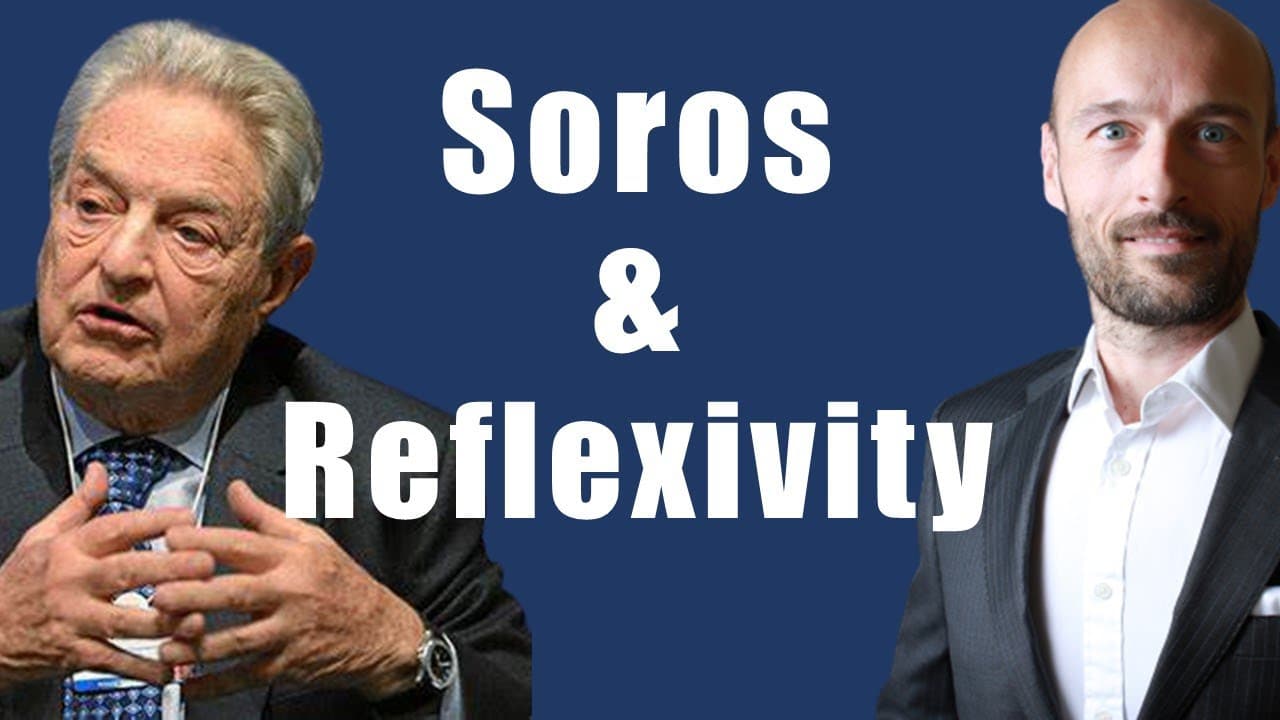
What Is George Soros' Reflexivity Theory?
TL;DR
George Soros’ reflexivity theory says market prices can distort economic fundamentals while those changing fundamentals feed back into prices. It distinguishes negative, self-correcting loops from positive, self-reinforcing loops that may produce bubbles, reversals, and crashes. Examples involving oil prices, Amazon, and real estate show how these forces operate, and why understanding the full cycle matters for investors and regulators, so read on for the practical implications.
Transcript
hello and welcome back to patrick boyle on finance in today's video we're going to discuss george soros and his theory of reflexivity we'll try to understand what it means how he uses the idea to make money his criticisms of traditional economics and we'll look at some examples of reflexivity in action in addition i&... Read More
Key Insights
- George Soros is renowned for his theory of reflexivity, which challenges traditional economic models by emphasizing the impact of investor perceptions on market fundamentals.
- Reflexivity creates feedback loops in financial markets, where prices and fundamentals influence each other, leading to phenomena like bubbles and crashes.
- Soros identifies two types of reflexive feedback loops: negative (self-correcting) and positive (self-reinforcing), each affecting market equilibrium differently.
- Positive feedback loops can lead to significant market movements and changes in fundamentals, as seen in Amazon's growth during the dot-com bubble.
- Soros argues that bubbles are driven by an underlying trend and a misconception, with the process reinforced until reality forces a correction.
- He believes that speculators should exploit bubbles by buying during inflation and selling before collapse, highlighting the need for regulatory intervention.
- Soros' ideas, once dismissed by academia, are now gaining recognition, with discussions on how reflexivity undermines traditional econometric models.
- Critics argue that regulatory intervention in markets could cause more harm than good, as seen in historical examples of government price controls.
- More videos with George Soros:
Install to Summarize YouTube Videos and Get Transcripts
Explore YouTube Video Summarizer or Get YouTube Transcript Extractor
Questions & Answers
Q: What is George Soros’ theory of reflexivity?
Soros’ theory has two cardinal principles: market prices can distort underlying fundamentals, and financial markets can actively change the fundamentals they are supposed to reflect. This creates a feedback loop between participants’ perceptions, prices, and economic reality.
Q: How does reflexivity challenge the efficient markets hypothesis?
The efficient markets hypothesis says market prices accurately reflect all available information. Soros argues instead that prices may misrepresent fundamentals and that this mispricing can then alter those fundamentals, a second effect he says behavioral economics also fails to fully address.
Q: What are the two types of reflexive feedback loops?
Negative feedback is self-correcting and creates a tendency toward equilibrium. Positive feedback is self-reinforcing and produces dynamic disequilibrium, potentially causing large changes in both market prices and underlying fundamentals.
Q: How does Amazon illustrate positive reflexivity?
During the late 1990s, abundant capital allowed Amazon to price aggressively and prioritize growth while competitors had to demonstrate profits. Its growth attracted still more cheap capital, and Jeff Bezos used the opportunity to expand the business; Amazon later launched AWS in 2006, which became its most profitable part 10 years later.
Q: How does Soros explain the formation and collapse of asset bubbles?
Every bubble has an underlying trend grounded in reality and a misconception related to that trend. When they reinforce each other, the boom can continue until expectations become too detached from reality; doubts then grow, the trend reverses, and forced liquidation of leveraged positions can make the bust short and steep.
Q: How does reflexivity work in a real estate bubble?
The initial trend is cheaper, more readily available credit, while the misconception is that real estate values are unrelated to credit availability. Rising property values make owners appear more creditworthy, encouraging more borrowing and relaxed lending standards; after reversal, forced liquidation depresses real estate values.
Q: How does Soros believe speculators and regulators should respond to bubbles?
Soros says an inflating bubble is not initially an opportunity for a speculator to go short: he buys while preparing to reverse when the market turns. Because that rational behavior adds fuel to the bubble, he argues regulators are needed to counteract bubbles that threaten to grow too large, although the transcript questions whether regulators can identify them reliably or intervene without causing harm.
Summary & Key Takeaways
-
George Soros' reflexivity theory posits that investor perceptions and market fundamentals are interlinked, creating feedback loops that can lead to asset bubbles and market volatility. This challenges the efficient market hypothesis, highlighting the role of human psychology in financial markets.
-
Soros identifies two types of feedback loops: negative, which are self-correcting and promote equilibrium, and positive, which are self-reinforcing and can cause market disequilibrium. Positive feedback loops are particularly significant as they can drastically alter market dynamics and fundamentals.
-
The theory of reflexivity suggests that bubbles arise from an interplay of trends and misconceptions, leading to self-reinforcing cycles until a market correction occurs. Soros advocates for regulatory intervention to manage bubbles, though critics warn of potential negative consequences from such actions.
Read in Other Languages (beta)
Share This Summary 📚
Summarize YouTube Videos and Get Video Transcripts with 1-Click
Try YouTube Summary with ChatGPT & Claude or YouTube Transcript Generator
Explore More Summaries from Patrick Boyle 📚




Summarize YouTube Videos and Get Video Transcripts with 1-Click
Try YouTube Summary with ChatGPT & Claude or YouTube Transcript Generator