What Does SpaceX's IPO Prospectus Reveal?
TL;DR
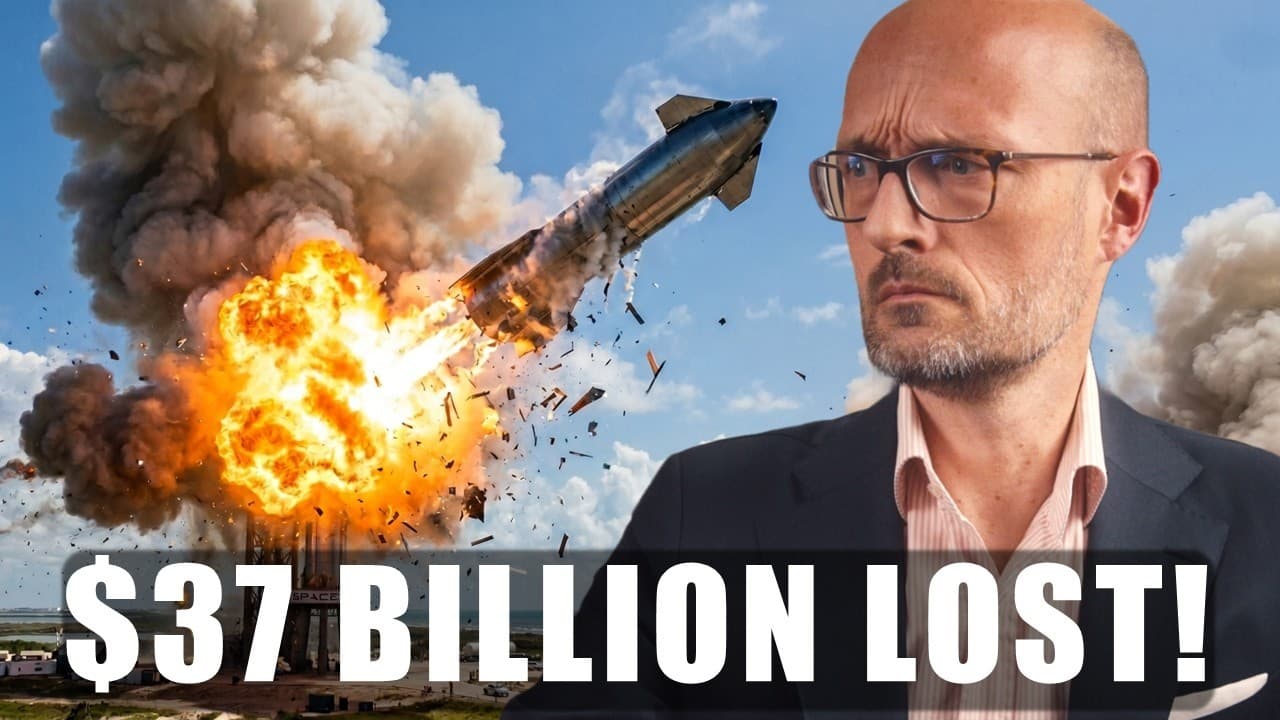
SpaceX’s IPO prospectus presents the company as a space, connectivity, and AI business whose $1.75 trillion proposed valuation depends heavily on ambitious, unproven ventures. In the first quarter of 2026, Starlink earned a $1.1 billion profit while the space and AI divisions lost $662 million and $2.5 billion, respectively. Read on for the filing’s financial breakdown, unusual strategy, governance concerns, and major investor risks.
Transcript
When a company decides to go public, they're required by the Securities and Exchange Commission to file an S1 prospectus. Historically, these are some of the driest documents ever committed to paper. They're written by corporate lawyers for other corporate lawyers to ensure that no one anywhere is ever accidentally entertained. But two days ago, Sp... Read More
Key Insights
- SpaceX's IPO prospectus is unconventional, featuring photos and ambitious goals like extending consciousness to the stars.
- SpaceX's business strategy includes speculative ventures such as asteroid mining and in-orbit manufacturing.
- Despite a $1.75 trillion valuation, only Starlink is profitable, while other divisions incur significant losses.
- The prospectus raises governance concerns, with Musk retaining control through a dual-class share structure.
- SpaceX's AI business, Grock, struggles against competitors, and 93% of its market value is based on AI.
- SpaceX's financials reveal a $4.94 billion net loss in 2025, despite Starlink's $4.4 billion operating profit.
- The company carries $29 billion in debt, with a recent $20 billion bridge loan taken in March 2026.
- The success of SpaceX's valuation hinges on the Starship rocket, which has yet to prove reliable.
Install to Summarize YouTube Videos and Get Transcripts
Explore YouTube Video Summarizer or Get YouTube Transcript Extractor
Questions & Answers
Q: What does SpaceX's IPO prospectus reveal?
The prospectus reveals an unconventional company combining space, connectivity, and AI operations with plans including asteroid mining, in-orbit manufacturing, and transportation to the Moon and Mars. It also shows that Starlink is the only profitable division, while the space and AI divisions lose money.
Q: Why is SpaceX's IPO prospectus considered unconventional?
The filing opens with 14 pages of rocket and satellite photographs and says the company’s primary objective is to “extend the light of consciousness to the stars.” That phrase appears 10 times, while AI appears more than 200 times.
Q: How is SpaceX divided into business segments?
The prospectus divides SpaceX into three segments: space, connectivity, and AI. The space segment builds and launches rockets, while connectivity consists of Starlink.
Q: Is SpaceX profitable?
SpaceX posted a $4.94 billion net loss in 2025 despite generating $18.7 billion in revenue. Starlink produced $4.4 billion in operating profit, but the company’s other divisions incurred losses.
Q: How did SpaceX's divisions perform in the first quarter of 2026?
The space division lost $662 million, and the AI division lost $2.5 billion during the quarter. Starlink’s connectivity division was the only profitable segment, earning $1.1 billion.
Q: How does SpaceX's $1.75 trillion valuation compare with its revenue?
SpaceX generated $18.7 billion in revenue in 2025, making the proposed $1.75 trillion valuation almost 100 times its revenue. At that valuation, it would rank seventh in the S&P 500 by market capitalization but would not reach 200th by revenue.
Q: What role does AI play in SpaceX's IPO case?
The prospectus attributes 93% of SpaceX’s total addressable market to AI and directs roughly 60% of capital spending toward AI infrastructure. However, the AI division lost $2.5 billion in the first quarter of 2026, while profitable Starlink effectively subsidizes it.
Q: What major risks does the SpaceX prospectus highlight?
The company carries $29 billion in debt, including a $20 billion bridge loan taken in March 2026. Its valuation also relies on Starship proving reliable, while Musk retains control through a dual-class share structure that limits shareholder influence.
Summary & Key Takeaways
-
SpaceX's IPO prospectus is a mix of financial disclosure, science fiction, and governance concerns. The document reveals ambitious goals like extending consciousness to the stars and speculative ventures such as asteroid mining. Despite a $1.75 trillion valuation, only Starlink is profitable, while other divisions incur significant losses.
-
The prospectus raises concerns about corporate governance, with Musk retaining control through a dual-class share structure. The AI business, Grock, struggles against competitors, and 93% of SpaceX's market value is based on AI. The financials reveal a $4.94 billion net loss in 2025, despite Starlink's $4.4 billion operating profit.
-
SpaceX carries $29 billion in debt, with a recent $20 billion bridge loan. The success of SpaceX's valuation hinges on the Starship rocket, which has yet to prove reliable. The prospectus highlights speculative business lines and raises questions about the company's financial sustainability and reliance on unproven technologies.
Read in Other Languages (beta)
Share This Summary 📚
Summarize YouTube Videos and Get Video Transcripts with 1-Click
Try YouTube Summary with ChatGPT & Claude or YouTube Transcript Generator
Explore More Summaries from Patrick Boyle 📚





Summarize YouTube Videos and Get Video Transcripts with 1-Click
Try YouTube Summary with ChatGPT & Claude or YouTube Transcript Generator