How Did Jeffrey Epstein Build His Fortune?
TL;DR
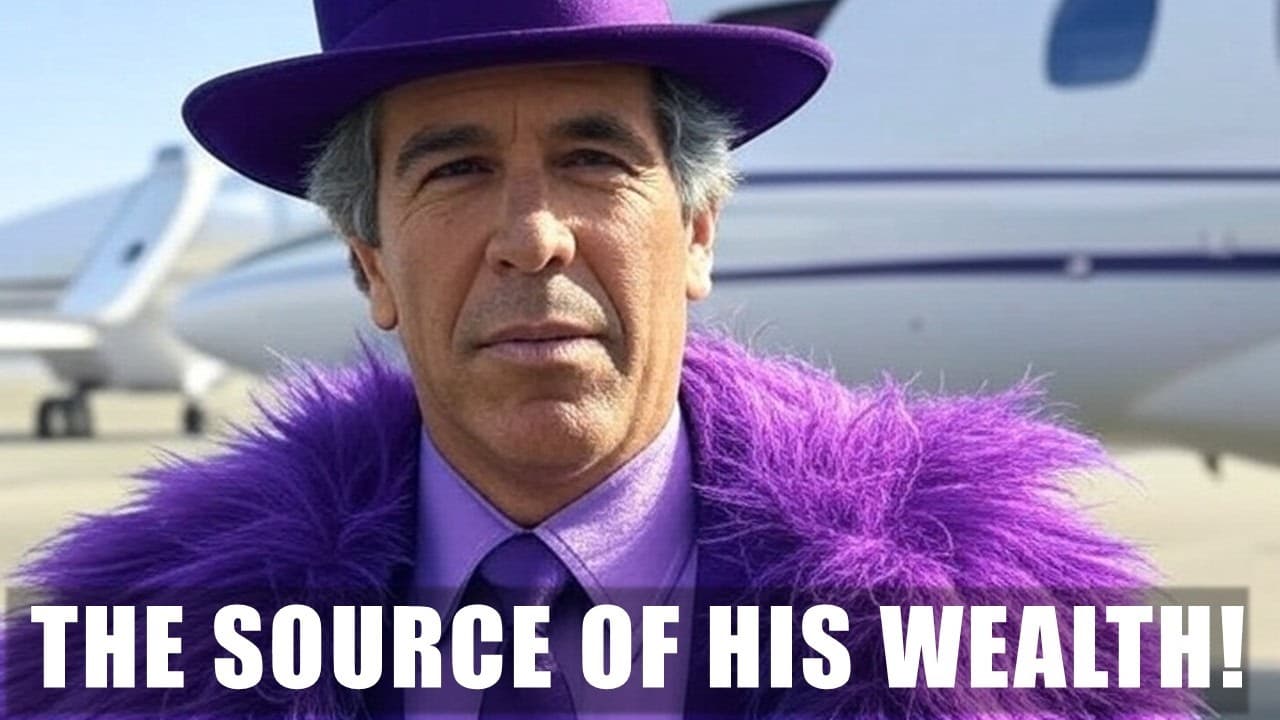
Jeffrey Epstein’s fortune appears to have depended heavily on secretive financial relationships with a small number of wealthy clients, especially Les Wexner, rather than a verifiable large-scale investment business. His reported net worth reached roughly $560 million to $600 million, but undisclosed clients, unaudited firms, unusual asset transfers, and conflicting corporate records leave its full origin unresolved.
Transcript
Jeffrey Epstein, the disgraced financier, was a college dropout who managed to amass a fortune that's difficult to explain before dying mysteriously in his jail cell in 2019. He wasn't a rapper like P. Diddy. Yet, he owned two private islands, multiple private jets, and homes all over the world. He befriended presidents, princes, scientists, celebr... Read More
Key Insights
- Epstein’s documented financial history does not fully explain his fortune. Prosecutors placed his net worth near $560 million, while the New York Times estimated $600 million, but his principal firm disclosed no audited statements, investment performance, verified assets, or comprehensive client list.
- Les Wexner was Epstein’s only confirmed major money-management client. Epstein advised the billionaire founder of Elbrands for more than a decade and reportedly earned hundreds of millions of dollars, making this relationship the clearest identified source of his wealth in the account presented.
- Epstein’s relationship with Wexner included an extraordinary property transfer. Wexner transferred a Manhattan mansion valued at $77 million to Epstein’s Virgin Islands-based company, and the transaction reportedly recorded no payment, illustrating how Epstein acquired at least one exceptionally valuable asset under unusual circumstances.
- Epstein’s public business claims conflicted with available corporate records. He said J. Epstein and Company accepted only clients with accounts exceeding $1 billion, but a 2002 filing reportedly showed just $88 million in shareholder contributions and approximately 20 employees, rather than the 150 described in media profiles.
- Epstein entered elite finance without a degree or formal financial training. After teaching math and physics at the Dalton School, he obtained an entry-level Bear Stearns position through chairman Alan Greenberg and became a partner within four years, before his employment ended abruptly one year later.
- Epstein’s work with Towers Financial connected him to a company later exposed as a major Ponzi scheme. CEO Steven Hoffenberg hired Epstein in 1987 as a consultant, paid him $25,000 per month, provided an office, and described him as a close associate and business partner.
- Epstein’s tangible assets demonstrated enormous wealth even when its origin remained unclear. His holdings reportedly included a $77 million Manhattan townhouse, properties in Palm Beach, New Mexico, and Paris, two islands valued together at $86 million, three private jets, a helicopter, and at least 15 vehicles.
- Official reviews did not validate prominent blackmail and client-list theories described in the transcript. A Department of Justice and FBI memo said a review of more than 300 gigabytes of data and physical evidence found no incriminating client list and no credible evidence that Epstein blackmailed prominent people.
Install to Summarize YouTube Videos and Get Transcripts
Explore YouTube Video Summarizer or Get YouTube Transcript Extractor
Questions & Answers
Q: How did Jeffrey Epstein make his money?
The clearest identified source was Jeffrey Epstein’s work for Les Wexner, the billionaire founder of Elbrands. Epstein served as Wexner’s personal money manager and adviser for more than a decade and reportedly earned hundreds of millions of dollars. His other financial operations were opaque, with undisclosed clients, unaudited results, offshore entities, and unverified assets, so the complete origin of his fortune remains unresolved.
Q: What was Jeffrey Epstein’s reported net worth?
A filing in Jeffrey Epstein’s criminal case estimated his net worth at roughly $560 million, while the New York Times later estimated it at $600 million. His holdings included luxury residences, two private islands, three private jets, a helicopter, and at least 15 vehicles. These assets established that he controlled immense wealth, even though investigators and journalists could not fully verify how he acquired it.
Q: Who was Jeffrey Epstein’s only confirmed major client?
Les Wexner, the billionaire founder of Elbrands, was Jeffrey Epstein’s only confirmed major money-management client in the account provided. Epstein worked as Wexner’s personal adviser and money manager for more than a decade and reportedly earned hundreds of millions of dollars. Their unusually close relationship also included the transfer of a Manhattan mansion valued at $77 million for no recorded payment.
Q: Was Jeffrey Epstein’s investment business independently verified?
Jeffrey Epstein’s investment business was not presented as independently verified. Financial Trust Company, based in the US Virgin Islands, published no audited statements or performance data. J. Epstein and Company kept its clients confidential, while its assets were not verified. A 2002 filing reportedly showed $88 million in shareholder contributions and approximately 20 employees, conflicting with a much larger public image.
Q: How did Jeffrey Epstein begin his financial career?
Jeffrey Epstein entered finance after teaching math and physics at the Dalton School in Manhattan despite lacking a college degree. Alan Greenberg, a Dalton parent and the chairman of Bear Stearns, helped him obtain an entry-level position after he lost the teaching job in 1976. Epstein became a partner within four years, an unusually rapid rise for someone without formal financial training.
Q: Why did Jeffrey Epstein leave Bear Stearns?
Jeffrey Epstein’s Bear Stearns career ended about one year after he became a partner. According to the account cited from the New York Times, Epstein later told the SEC that he had been dismissed because he lent money to a friend to purchase stock, had irregularities in his expense account, and faced rumors of an affair with a secretary. He was not charged with wrongdoing in that episode.
Q: What was Jeffrey Epstein’s connection to Towers Financial?
Towers Financial CEO Steven Hoffenberg hired Jeffrey Epstein as a highly paid consultant in 1987. Hoffenberg paid him $25,000 per month, gave him an office, and described him as his wingman and closest friend. Towers Financial, a Manhattan debt-collection agency, was later exposed as the operator of one of the largest Ponzi schemes in United States history, according to the transcript.
Q: Did investigators find an Epstein client list or blackmail evidence?
A Department of Justice and FBI memo described in the transcript said investigators found neither an incriminating client list nor credible evidence that Jeffrey Epstein blackmailed prominent individuals. The agencies said they conducted an exhaustive review of more than 300 gigabytes of data and physical evidence. The announcement contradicted years of public speculation and intensified suspicion among people who expected broader revelations.
Summary & Key Takeaways
-
Jeffrey Epstein rose from a working-class Brooklyn background and an unfinished university education to teaching at Manhattan’s Dalton School. A connection with Bear Stearns chairman Alan Greenberg helped him enter finance. He became a partner rapidly, but left after reported concerns involving a stock loan, expenses, and rumors of an affair.
-
After Bear Stearns, Epstein created financial businesses whose clients, assets, and performance remained largely hidden. J. Epstein and Company claimed to accept only accounts exceeding $1 billion, yet Les Wexner is identified as its only confirmed major client. Epstein reportedly earned hundreds of millions while acting as Wexner’s adviser and money manager.
-
Epstein’s assets included expensive international homes, two private islands, aircraft, vehicles, and a reported net worth of roughly $560 million to $600 million. However, corporate filings, unaudited financial operations, offshore structures, unusual property transfers, and his association with Towers Financial prevent a complete, independently verified explanation of how he accumulated that wealth.
Read in Other Languages (beta)
Share This Summary 📚
Summarize YouTube Videos and Get Video Transcripts with 1-Click
Try YouTube Summary with ChatGPT & Claude or YouTube Transcript Generator
Explore More Summaries from Patrick Boyle 📚





Summarize YouTube Videos and Get Video Transcripts with 1-Click
Try YouTube Summary with ChatGPT & Claude or YouTube Transcript Generator