How Could OpenAI Fund Its AI Infrastructure?
TL;DR
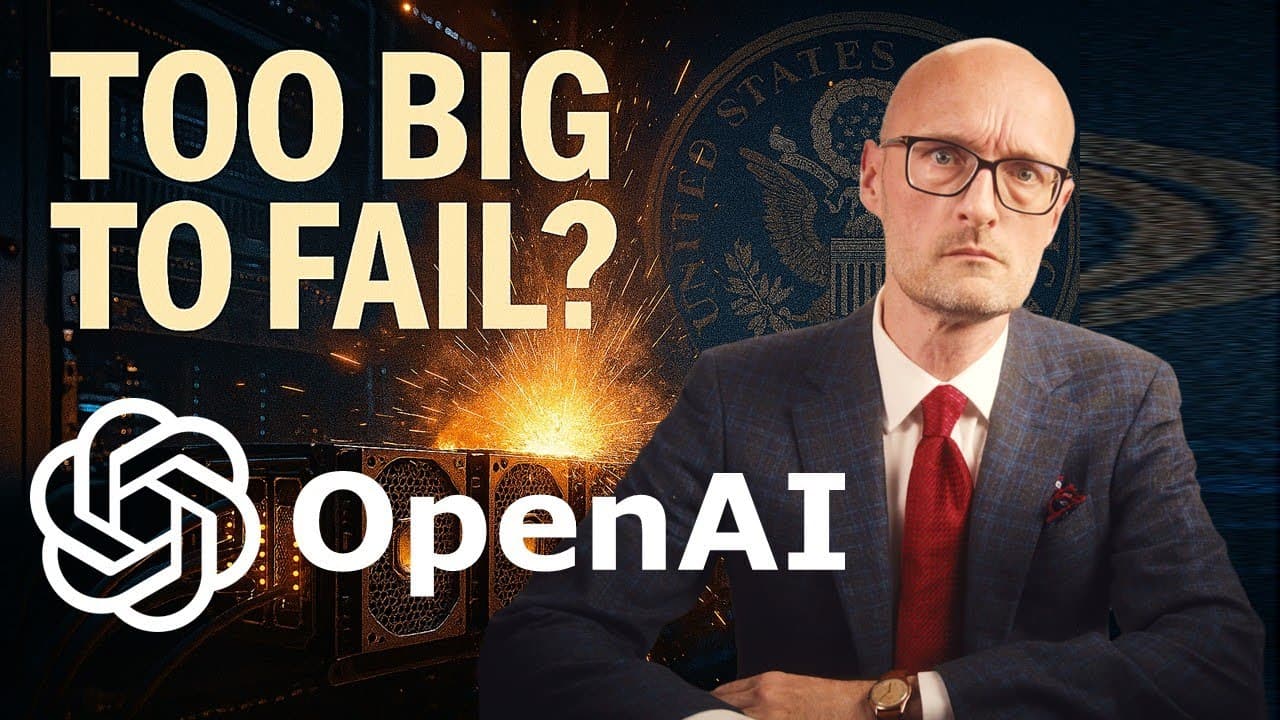
OpenAI says it neither has nor wants government guarantees for its data centers, but its financing challenge remains unresolved. The company has signed more than $1.4 trillion in infrastructure commitments while reporting large losses, and it is pursuing equity, operating cash flow growth, partner financing, warrants, semiconductor subsidies, and broader tax credits to reduce costs and attract private capital.
Transcript
In recent weeks there has been a lot of market anxiety about the sustainability of the AI boom. This was partly driven by the outrage around Sarah Friar - OpenAI’s finance chief floating the idea that a government backstop for its $1.4 trillion dollar data-center buildout might be a good idea. Friar quickly walked back her suggestion in a Linke... Read More
Key Insights
- OpenAI states that it does not have or want government guarantees for its data centers, and Sam Altman argues that governments should not select corporate winners or use taxpayer money to rescue companies that lose through poor business decisions.
- OpenAI's infrastructure commitments exceed $1.4 trillion, creating a large funding gap because the company does not currently have enough money to complete all the agreements and remains a cash-burning business with revenue that is small relative to its planned spending.
- Compute constraints can delay finished AI products because OpenAI reportedly held Sora 2 for roughly six or seven months between readiness and launch. Sarah Friar used that delay to illustrate how insufficient computing capacity can prevent the company from releasing models when they are ready.
- OpenAI has requested broader federal support for AI infrastructure through expanded semiconductor subsidies and tax credits covering chip fabrication, data centers, and grid hardware. The company argued that these policies could lower capital costs, reduce early investment risk, and draw additional private capital into the supply chain.
- AI data-center growth depends on both financing and electricity because Nvidia warned that customers might struggle to secure the capital and energy needed for new facilities. Amazon also complained that an Oregon utility was not supplying enough power for four newly built data centers.
- Nvidia's reported performance temporarily reduced market anxiety because quarterly revenue rose 62 percent, data-center sales reached $51.2 billion, and the company forecast $65 billion in revenue for the current quarter. The longer-term concern is whether that revenue growth can remain sustainable.
- OpenAI's reported losses make self-financing difficult because Microsoft disclosed an approximately $11.5 billion quarterly loss and more than $25 billion in year-to-date losses. Those figures contrast with projected annual revenue of about $20 billion and Sarah Friar's emphasis on rising free cash flow.
- The AMD warrant arrangement links OpenAI's purchases to potential equity gains because AMD granted warrants for up to 160 million shares at one cent each. Vesting requires six gigawatts of chip purchases, undisclosed milestones, and a tripling of AMD's share price.
Install to Summarize YouTube Videos and Get Transcripts
Explore YouTube Video Summarizer or Get YouTube Transcript Extractor
Questions & Answers
Q: Does OpenAI want a government bailout for its data centers?
OpenAI publicly says it does not have or want government guarantees for its data centers. After Sarah Friar discussed a possible government backstop, she clarified that OpenAI was not seeking one for its infrastructure commitments. Sam Altman likewise said governments should not pick corporate winners or use taxpayer funds to rescue companies that make poor business decisions.
Q: How does OpenAI plan to finance $1.4 trillion in infrastructure commitments?
OpenAI describes a mix of private equity, improving business cash generation, and financing arrangements with companies in its technology ecosystem. It has raised nearly $58 billion in equity, received a pledge of up to $100 billion in reciprocal investment from Nvidia, and negotiated AMD warrants. The transcript does not establish that these sources fully cover the commitments.
Q: Why are OpenAI's infrastructure commitments considered financially risky?
OpenAI has committed more than $1.4 trillion to data centers and chips without currently possessing enough money to complete those agreements. Microsoft reported that OpenAI lost roughly $11.5 billion in one quarter and more than $25 billion year to date, while projected annual revenue was about $20 billion. This creates a substantial mismatch between resources and planned spending.
Q: What government support has OpenAI requested?
OpenAI sent the White House a letter urging the federal government to expand semiconductor subsidies and make tax credits available across the AI supply chain, including chip fabrication, data centers, and grid hardware. It argued that broader eligibility would lower the effective cost of capital, reduce the risk of early investment, and unlock additional private funding.
Q: How do compute constraints affect OpenAI product launches?
Compute constraints can force OpenAI to delay products even after the underlying models are ready. Sarah Friar said Sora 2 remained unreleased for roughly six or seven months after it was ready. Her example suggests that access to sufficient computing infrastructure is a practical limit on deployment, not merely a matter of research or product development.
Q: How does the AMD warrant deal with OpenAI work?
OpenAI committed to purchasing billions of dollars of AMD AI chips, while AMD granted it warrants to buy up to 160 million shares, about a 10 percent stake, for one cent per share. The warrants vest only if OpenAI purchases six gigawatts of AMD chips, satisfies undisclosed milestones, and AMD's share price triples.
Q: Why could electricity availability limit AI data-center growth?
Large AI data centers require substantial power in addition to chips and financing. Nvidia warned that its customers' ability to secure capital and energy could slow its growth. Amazon also complained to Oregon's utility regulator that an electric utility was not providing enough power for four data centers it had built, illustrating pressure on existing grids.
Q: Why did Nvidia's earnings temporarily ease AI bubble concerns?
Nvidia reported a 62 percent increase in revenue for the three months to October, with data-center sales reaching $51.2 billion. It also raised its current-quarter revenue forecast to $65 billion. Those results supported current AI demand expectations, although the transcript emphasizes that the deeper concern is whether Nvidia's revenue and growth rate can remain sustainable.
Summary & Key Takeaways
-
OpenAI denied seeking government guarantees after finance chief Sarah Friar discussed a possible government backstop. Sam Altman said taxpayers should not rescue companies that make poor business decisions. Still, OpenAI has asked Washington to expand semiconductor subsidies and tax credits across chip fabrication, data centers, and grid hardware.
-
The central concern is the gap between OpenAI's finances and its commitments. Microsoft reported that OpenAI lost roughly $11.5 billion in one quarter, taking year-to-date losses above $25 billion, against projected annual revenue of about $20 billion. Its infrastructure agreements exceed $1.4 trillion.
-
OpenAI is combining equity funding with strategic financing from technology partners. Nvidia pledged up to $100 billion in reciprocal investments, while AMD offered warrants linked to chip deployments, milestones, and its share price. Meanwhile, limited capital, computing capacity, energy availability, and grid connections could constrain the wider AI expansion.
-
Key Insights Factors not present in source text include no external additions. OpenAI states that it does not have or want government guarantees for its data centers, and Sam Altman argues that governments should not select corporate winners or use taxpayer money to rescue companies that lose through poor business decisions.
-
OpenAI's infrastructure commitments exceed $1.4 trillion, creating a large funding gap because the company does not currently have enough money to complete all the agreements and remains a cash-burning business with revenue that is small relative to its planned spending.
-
Compute constraints can delay finished AI products because OpenAI reportedly held Sora 2 for roughly six or seven months between readiness and launch. Sarah Friar used that delay to illustrate how insufficient computing capacity can prevent the company from releasing models when they are ready.
-
OpenAI has requested broader federal support for AI infrastructure through expanded semiconductor subsidies and tax credits covering chip fabrication, data centers, and grid hardware. The company argued that these policies could lower capital costs, reduce early investment risk, and draw additional private capital into the supply chain.
-
AI data-center growth depends on both financing and electricity because Nvidia warned that customers might struggle to secure the capital and energy needed for new facilities. Amazon also complained that an Oregon utility was not supplying enough power for four newly built data centers.
-
Nvidia's reported performance temporarily reduced market anxiety because quarterly revenue rose 62 percent, data-center sales reached $51.2 billion, and the company forecast $65 billion in revenue for the current quarter. The longer-term concern is whether that revenue growth can remain sustainable.
-
OpenAI's reported losses make self-financing difficult because Microsoft disclosed an approximately $11.5 billion quarterly loss and more than $25 billion in year-to-date losses. Those figures contrast with projected annual revenue of about $20 billion and Sarah Friar's emphasis on rising free cash flow.
-
The AMD warrant arrangement links OpenAI's purchases to potential equity gains because AMD granted warrants for up to 160 million shares at one cent each. Vesting requires six gigawatts of chip purchases, undisclosed milestones, and a tripling of AMD's share price.
Read in Other Languages (beta)
Share This Summary 📚
Summarize YouTube Videos and Get Video Transcripts with 1-Click
Try YouTube Summary with ChatGPT & Claude or YouTube Transcript Generator
Explore More Summaries from Patrick Boyle 📚





Summarize YouTube Videos and Get Video Transcripts with 1-Click
Try YouTube Summary with ChatGPT & Claude or YouTube Transcript Generator