How are financial derivatives traded and what are major types?
TL;DR
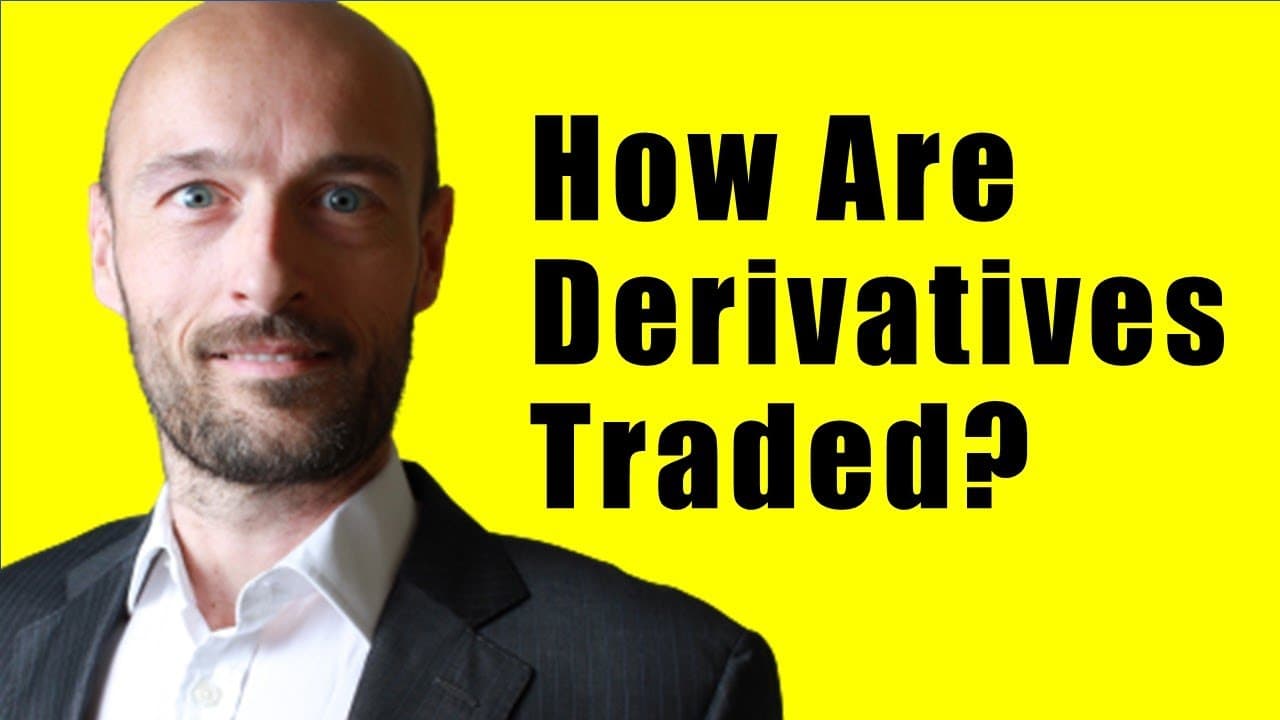
OTC derivatives are traded directly between parties and not on an exchange, increasing counterparty risk but allowing customized terms, while exchange-traded derivatives are standardized contracts traded on a derivatives exchange with a clearinghouse guarantee. The video explains forwards, futures, options, and warrants, plus the role of clearing platforms and margins in stabilizing markets.
Transcript
hi my name is patrick boyle welcome to my youtube channel this is the second video in a series on financial derivatives where I aim to take you from the solut beginner level through to expert level over the series of videos in today's video we're going to learn how derivatives are traded what are the major derivative types and what is the economic ... Read More
Key Insights
- Derivatives are split into OTC and exchange-traded groups based on where they are traded and how standardized they are.
- The OTC market is the largest derivatives market and involves sophisticated parties like banks and corporations.
- Counterparty risk exists in OTC derivatives because there is no central clearinghouse.
- Regulators have pushed many OTC trades onto clearing platforms to improve financial stability.
- Exchange-traded derivatives are standardized and traded on exchanges such as CME and Eurex.
- Clearinghouses act as intermediaries and require margin to guarantee performance of contracts.
- Futures are standardized contracts backed by a clearinghouse, unlike forwards which are OTC and nonstandard.
- Options give a right without obligation and can be either exchange-traded or OTC.
- Warrants are equity-linked and can dilute ownership when exercised.
- Derivatives improve market efficiency by enabling hedging and price discovery, while also allowing leverage.
- More videos from this channel:
- More from this channel: Patrick Boyle
Install to Summarize YouTube Videos and Get Transcripts
Explore YouTube Video Summarizer or Get YouTube Transcript Extractor
Questions & Answers
Q: What is the difference between OTC and exchange-traded derivatives?
OTC derivatives are traded directly between two parties without a central exchange, allowing customization but introducing counterparty risk since there is no single guarantor. Exchange-traded derivatives are standardized contracts traded on exchanges, facilitated by a clearinghouse that provides guarantees, margin requirements, and centralized settlement, reducing counterparty risk and increasing liquidity.
Q: What are forwards and how do they differ from futures?
Forwards are over-the-counter contracts where two parties agree to buy or sell an asset at a specific price on a future date, with terms customized by the parties involved. Futures are standardized contracts traded on an exchange and backed by a clearinghouse, which provides standard terms and daily settlement, enhancing liquidity and reducing counterparty risk.
Q: What role do clearinghouses play in derivatives markets?
Clearinghouses act as intermediaries between buyers and sellers in exchange-traded derivatives, guaranteeing performance of contracts, managing margin requirements, and enabling centralized settlement. They reduce counterparty risk by standing between the two sides and provide a mechanism for daily mark-to-market settlement to reflect current prices.
Q: How do options work and what are the two main types?
Options are contracts that give the buyer the right but not the obligation to engage in a transaction at a defined strike price in the future. The two main types are calls, which give the right to buy, and puts, which give the right to sell. They can be exchange-traded or over-the-counter depending on the terms and venue.
Q: What are warrants and how are they different from options?
Warrants are similar to call options but are typically issued by a company on its own stock. Exercise of a warrant results in new equity, potentially diluting existing shareholders. Unlike standard options, warrants are often issued as part of corporate finance transactions and may have longer maturities.
Q: Why are derivatives considered useful for the economy?
Derivatives reallocate risk from risk-averse parties to those willing to take on risk, promoting hedging and enabling broader participation in markets. They improve price discovery and market efficiency, allowing investors to gain exposure to portfolios like the S&P 500 with lower trading costs than purchasing each component individually.
Q: What are the risks associated with trading derivatives?
Derivative trading involves leverage and potential large losses when market movements amplify investment exposure. The video notes that excessive leverage and mispricing can lead to significant losses, underscoring the need for risk management, understanding contract terms, and awareness of liquidity and margin requirements.
Q: How would you explain the difference between long and short positions in derivatives?
Being long a derivative means owning the contract with the expectation of a favorable payoff, while being short means selling or writing the contract, creating an obligation to deliver on the payoff if exercised. Traders use long and short positions to express views on price movements and manage exposure to risk.
Q: What futures and forwards are used for in practice?
Futures and forwards are used to hedge against price movements in assets such as commodities or financial indices, allowing participants to lock in prices or exposures today for a known future date. Futures offer standardization and clearinghouse guarantees, while forwards offer customization to fit specific needs.
Summary & Key Takeaways
-
OTC and exchange-traded derivatives are the two main groups distinguished by trading venue and standardization, shaping risk and liquidity in markets.
-
OTC derivatives emphasize customization and direct counterparty exposure, with regulatory pushes to clear more trades on platforms since the 2007-2008 financial crisis.
-
Exchange-traded derivatives rely on standardized contracts and clearinghouses, enabling transparency, margin requirements, and centralized custody for risk management.
-
The major contract types discussed are forwards, futures, options, and warrants, each with distinct rights, obligations, and settlement features.
-
Forwards are nonstandard OTC contracts with settlement at a future date and agreed price, while futures are standardized and backed by a clearinghouse.
-
Options give buyers the right but not the obligation to transact at a strike price, with calls and puts indicating buy or sell rights.
-
Warrants are options issued by a company that can dilute equity upon exercise, typically linked to stock.
-
Derivatives serve to reallocate risk and improve market efficiency, enabling hedging, price discovery, and access to broad exposures.
Read in Other Languages (beta)
Share This Summary 📚
Summarize YouTube Videos and Get Video Transcripts with 1-Click
Try YouTube Summary with ChatGPT & Claude or YouTube Transcript Generator
Explore More Summaries from Patrick Boyle 📚


Summarize YouTube Videos and Get Video Transcripts with 1-Click
Try YouTube Summary with ChatGPT & Claude or YouTube Transcript Generator