How Do Genes Link Addiction and Impulsivity?
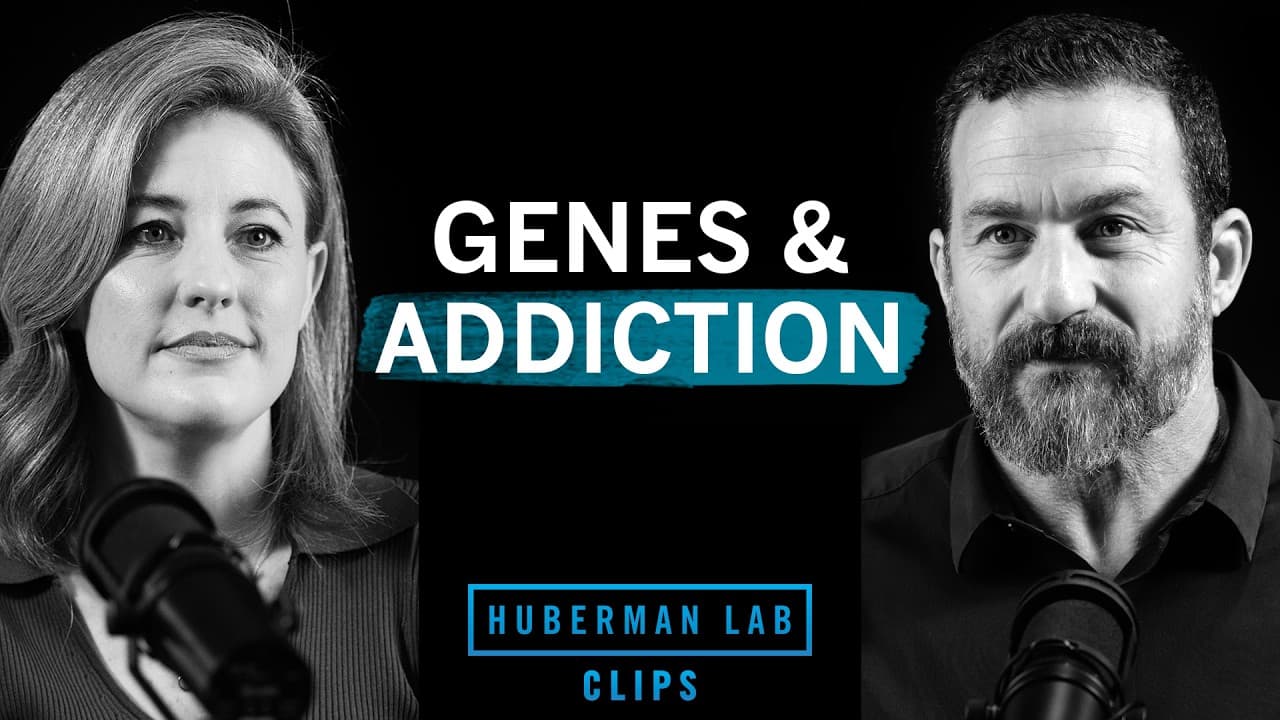
TL;DR
Genetic factors are highly polygenic, with many genes influencing addiction and impulsivity. These genes are active mainly during prenatal brain development and help shape inhibition versus excitation in neural circuits. The overlap across behavioral traits suggests addiction can be viewed as a neurodevelopmental disorder, with temperament and motivation affecting susceptibility.
Transcript
There are genes that vary between individuals that predict addiction, predict impulsivity, uh, and other things. Yeah. Um, you're exploring how the genes that predict addiction might predict impulsivity for other types of behaviors. Yes. I think I heard that the answer is yes indeed there's overlap. So, I'd be very curious to know what those genes ... Read More
Key Insights
- Genetics of addiction is polygenic and distributed across many genes, not a single gene.
- Genes linked to addiction show peak activity during prenatal cortical development in the second and third trimesters.
- The brain balance between inhibition and excitation is a key mechanism affected by these genes.
- Family and adoption studies show that a history of related behaviors increases risk across different outcomes.
- Early developmental processes influence later behavioral traits like impulsivity and risk taking.
- ADHD and conduct disorder are discussed as potentially neurodevelopmental disorders with shared genetic bases.
- Substance use disorders may reflect an imbalance in brain circuitry rather than a simple behavioral choice.
- Narratives of self medication are considered, highlighting heterogeneity in motivations for substance use.
Install to Summarize YouTube Videos and Get Transcripts
Explore YouTube Video Summarizer or Get YouTube Transcript Extractor
Questions & Answers
Q: What is the basic idea behind genetics and addiction as discussed in the video?
The basic idea is that many genes influence addiction and impulsivity, not just one. These genes are widely distributed across the genome and are most active during early brain development, particularly in the second and third trimesters. This early activity shapes the brain's balance between inhibitory and excitatory signaling, which in turn affects behavioral predispositions toward addiction and related behaviors.
Q: How do adoption and pedigree studies support the genetic link to addiction and related traits?
Adoption and pedigree studies show that a family history of various behaviors such as addiction, violence, or risky sexual behavior increases the likelihood that a person will manifest one or more of these traits. This cross-trait familial transmission suggests a shared genetic basis rather than a trait being caused by the environment alone, supporting a genetic commonality across different behavioral outcomes.
Q: What does the video say about polygenicity in relation to behavioral traits?
The video emphasizes that many genes contribute to multiple behaviors, a style of inheritance described as polygenic. This means there is not a single gene responsible for addiction or impulsivity; rather, a large collection of genes across the genome influences brain development and function, leading to a range of related behaviors and risk profiles.
Q: Which brain processes are highlighted as central to how these genes affect behavior?
The discussion centers on neural circuit systems and hormone pathways that regulate the balance between inhibition and excitation in the brain. The GABA inhibitory system and the glutamate excitatory system are specifically mentioned as being tuned during neurodevelopment, shaping how the brain processes information and controls impulse and reward responses.
Q: Why might ADHD and conduct disorder be described as neurodevelopmental disorders in this context?
ADHD and conduct disorder are described as neurodevelopmental in this context because the genes that contribute to these conditions appear to affect early brain development. The same developmental processes that shape attention and behavior in general could also influence susceptibility to addiction, implying shared neural and genetic mechanisms across these conditions.
Q: How does preterm birth relate to the topics discussed?
Preterm birth is noted as a factor that can disrupt the balance between inhibition and excitation in the developing brain. This disruption can contribute to negative psychological and behavioral outcomes later in life, illustrating how early developmental events can set trajectories that influence risk for various disorders, including addiction and impulsivity.
Q: What role does motivation and sensation seeking play according to the conversation?
Motivation and sensation seeking are discussed as part of a broader temperament that interacts with genetic risk. Some individuals pursue intense experiences or seek peak states, which can fuel risky or addictive behaviors. This drive interacts with disinhibition and other personality dimensions to shape how genetic predispositions manifest in behavior.
Q: What caveats do the speakers mention about linking genes to addiction?
The speakers stress heterogeneity and the complexity of motivations behind addiction. Not everyone with a genetic risk will engage in harmful behavior, and some individuals may use self medication as a narrative for substance use. They emphasize that the genetic underpinnings relate to probability and developmental processes rather than a direct, deterministic outcome.
Summary & Key Takeaways
-
Genetic factors are polygenic and distributed across the genome, influencing multiple behavioral outcomes.
-
Brain development, especially in the second and third trimesters, sets the balance between inhibitory and excitatory signaling.
-
Addiction and related behaviors may be neurodevelopmental disorders similar to ADHD and conduct disorder.
Read in Other Languages (beta)
Share This Summary 📚
Summarize YouTube Videos and Get Video Transcripts with 1-Click
Try YouTube Summary with ChatGPT & Claude or YouTube Transcript Generator
Explore More Summaries from Huberman Lab Clips 📚






Summarize YouTube Videos and Get Video Transcripts with 1-Click
Try YouTube Summary with ChatGPT & Claude or YouTube Transcript Generator