GJUHA SHQIPE! The Albanian Language is Awesome
TL;DR
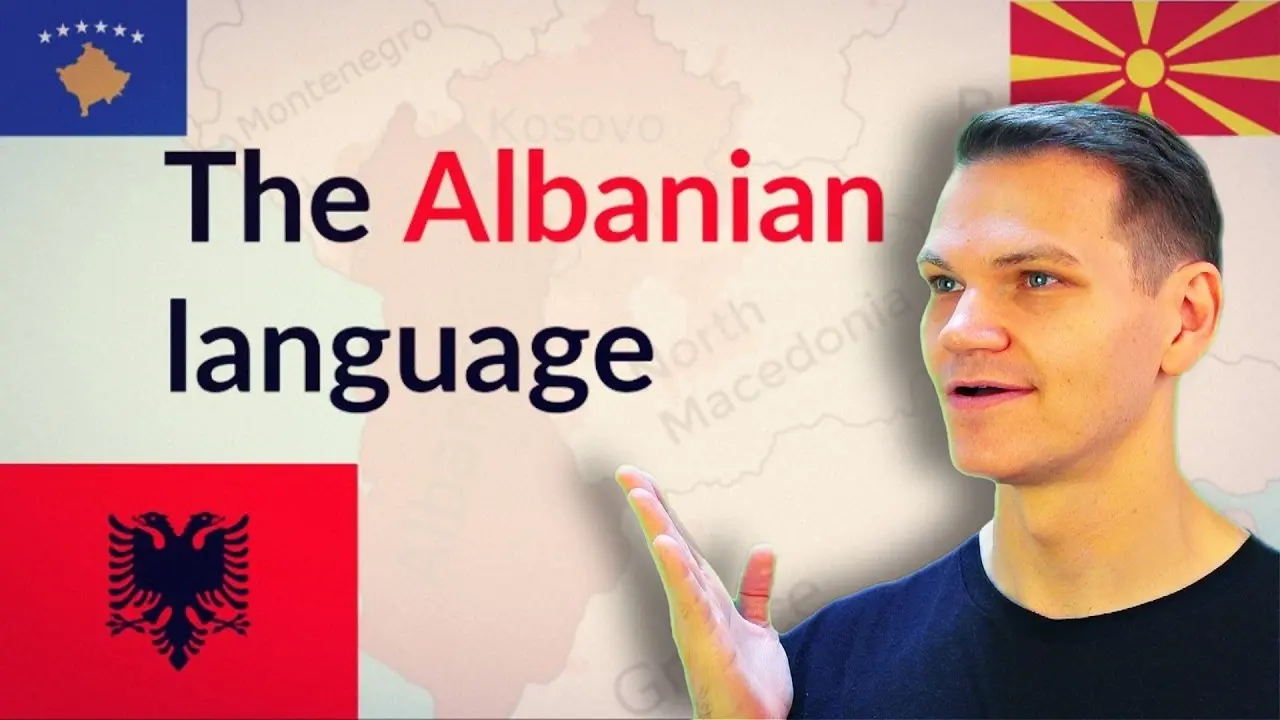
This video explains the unique characteristics of the Albanian language, which is an Indo-European language isolate. It delves into its historical development, dialects, and grammatical features such as noun cases, verb moods, and pronouns. The video serves as a comprehensive guide to understanding the intricacies of Albanian, making it a valuable resource for language enthusiasts.
Transcript
today we're going to talk about a language whose relationship to other modern languages is not exactly known that language is Albanian orip as it's called in Albanian Albanian is an Indo-European language you may be wondering which branch of Indo European is it a romance language a Slavic language a Germanic language how about a Celtic language a h... Read More
Key Insights
- Albanian is an Indo-European language isolate, meaning it forms its own branch with no other modern languages belonging to it.
- The language is primarily spoken by about 7.6 million people in the Balkans, with official status in Albania, Kosovo, and parts of North Macedonia and Montenegro.
- Albanian's earliest known writings date back to 1462, with efforts to standardize the language beginning in the early 20th century, predominantly based on the Tosk dialect.
- Albanian has a complex grammatical structure with five noun cases and various verb moods, including indicative, subjunctive, optative, admirative, conditional, and imperative.
- The language features unique phonetic elements, such as diagraphs representing specific sounds, and a flexible word order influenced by the Balkans' linguistic environment.
- Personal pronouns in Albanian vary by case and are often accompanied by clitic pronouns before verbs, highlighting the language's pro-drop nature.
- Albanian adjectives follow nouns and agree with them in case, gender, and number, with distinct forms for attributive and predicative uses.
- The video suggests resources like 'Colloquial Albanian' and 'Discovering Albanian 1' for those interested in a deeper exploration of the language.
Install to Summarize YouTube Videos and Get Transcripts
Explore YouTube Video Summarizer or Get YouTube Transcript Extractor
Questions & Answers
Q: What makes Albanian unique among Indo-European languages?
Albanian is unique among Indo-European languages because it is an isolate within the family, forming its own branch without any other modern languages. This distinctiveness is reflected in its complex grammatical structure, including unique noun cases and verb moods, and its phonetic system with specific diagraphs.
Q: How many people speak Albanian, and where is it predominantly spoken?
Approximately 7.6 million people speak Albanian, primarily in the Balkans. It is the official language of Albania and Kosovo and has official status in parts of North Macedonia and Montenegro. Additionally, Albanian-speaking minorities exist in neighboring countries like Serbia, Italy, and Greece.
Q: What historical challenges has the Albanian language faced?
The Albanian language has faced challenges due to its relatively recent written history, with the earliest known writings dating back to 1462. Efforts to standardize the language only began in the early 20th century, and the common standard wasn't widely accepted until the latter half of the century, reflecting its complex dialectal diversity.
Q: What are the main dialects of the Albanian language?
The main dialects of Albanian are Tosk and Gheg, divided by the Shkumbin River. Tosk is spoken in southern Albania, parts of Italy, Greece, and Turkey, while Gheg is used in Kosovo, northern Albania, North Macedonia, and Montenegro. Both dialects have subdialects and a transitional dialect in central Albania.
Q: How does the Albanian verb system compare to other languages?
Albanian's verb system is notably complex, featuring six moods: indicative, subjunctive, optative, admirative, conditional, and imperative. It maintains both the subjunctive and optative moods, a rarity among modern Indo-European languages. The language also has eight basic tenses, combining tense and aspect, with varying usage across moods.
Q: What role do clitic pronouns play in Albanian grammar?
Clitic pronouns in Albanian accompany personal pronouns in the accusative and dative cases, appearing before verbs. They are essential in sentences where the direct or indirect object is not the focus. Clitic pronouns reflect the language's pro-drop nature, often allowing the omission of full pronouns due to verb conjugation clarity.
Q: How do adjectives function in Albanian sentences?
In Albanian, adjectives follow nouns and agree with them in case, gender, number, and definiteness. They can be attributive, immediately following the noun, or predicative, coming after a linking verb. In plural definite forms, adjectives have different linking articles depending on whether they are attributive or predicative.
Q: What resources are recommended for learning Albanian?
For those interested in learning Albanian, the video recommends 'Colloquial Albanian: The Complete Course for Beginners' and 'Discovering Albanian 1' by Linda Mëniku and Héctor Campos. 'Colloquial Albanian' is more accessible for casual learners, while 'Discovering Albanian' offers a thorough approach for serious learners.
Summary & Key Takeaways
-
The video covers the Albanian language, an Indo-European isolate with no direct relatives. It discusses its historical context, dialects, and unique grammatical features. Spoken by 7.6 million people, Albanian is predominantly used in the Balkans and has a rich linguistic structure.
-
Albanian's grammar includes five noun cases, various verb moods, and a flexible word order. The language's phonetic system features unique diagraphs, and its adjectives follow nouns, agreeing in case, gender, and number. Efforts to standardize Albanian began in the 20th century.
-
The video highlights Albanian's complex verb system, with moods like indicative, subjunctive, and optative. It also explores pronoun usage, noun cases, and dialectal differences. Resources like 'Colloquial Albanian' are recommended for learners seeking a comprehensive understanding.
Read in Other Languages (beta)
Share This Summary 📚
Summarize YouTube Videos and Get Video Transcripts with 1-Click
Try YouTube Summary with ChatGPT & Claude or YouTube Transcript Generator
Explore More Summaries from Langfocus 📚


Summarize YouTube Videos and Get Video Transcripts with 1-Click
Try YouTube Summary with ChatGPT & Claude or YouTube Transcript Generator