What Makes Kiwi English Unique?
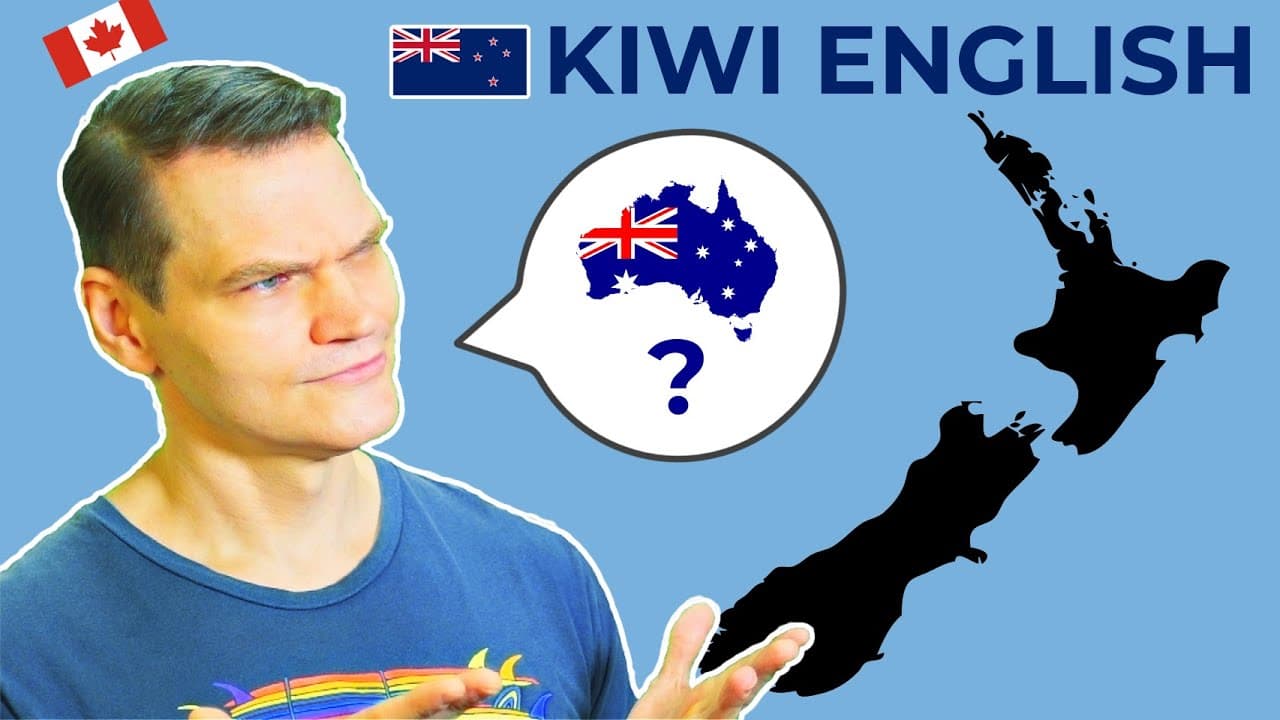
TL;DR
Kiwi English, although similar to Australian English, has unique features such as distinct vowel shifts and Maori influences. The Kiwi accent includes non-rhotic pronunciation and a variety of expressions and vocabulary. Understanding these elements helps distinguish it from other English dialects and highlights New Zealand's cultural influences.
Transcript
if you're a kiwi you're probably tired of hearing about sheep lord of the rings and people asking you where your country is you're probably also tired of people hearing your accent and asking where are you from australia while the english spoken in new zealand does share a lot of features with australian english it's a distinct variety of english t... Read More
Key Insights
- New Zealand English shares similarities with Australian English but has distinct features.
- The Kiwi accent is non-rhotic, meaning 'r' is not pronounced at the end of syllables.
- Vowel shifts in Kiwi English create unique pronunciation patterns.
- Maori influence is significant in Kiwi English, with many loanwords and expressions.
- The Kiwi accent includes a range from cultivated to broad, with various features.
- High rising terminal and 'aye' are common in Kiwi speech for listener engagement.
- Kiwi vocabulary includes unique expressions like 'sweet as' and 'chilly bin'.
- Diminutives are frequently used in Kiwi English, similar to Australian English.
Install to Summarize YouTube Videos and Get Transcripts
Explore YouTube Video Summarizer or Get YouTube Transcript Extractor
Questions & Answers
Q: What distinguishes Kiwi English from Australian English?
Kiwi English is distinguished by its unique vowel shifts, non-rhotic pronunciation, and significant Maori influences. While it shares some vocabulary with Australian English, Kiwi English has distinct expressions and pronunciation patterns, particularly in its vowels, which differ from those found in Australian English.
Q: How do vowels in Kiwi English differ from other English dialects?
In Kiwi English, vowels have undergone a chain shift, leading to unique pronunciation patterns. For example, the short front vowels have shifted, causing words like 'sit' to sound like 'set'. These shifts can lead to misunderstandings for those unfamiliar with the accent, differentiating it from other English dialects.
Q: What role does Maori play in Kiwi English?
Maori has a significant influence on Kiwi English, contributing numerous loanwords and expressions. Maori greetings like 'kia ora' are widely used, and many everyday terms have Maori origins. This influence is a key feature that sets Kiwi English apart from other English dialects.
Q: What is the high rising terminal in Kiwi English?
The high rising terminal is a speech pattern where statements end with a rising intonation, similar to a question. It's used in Kiwi English to engage listeners and ensure they are following the conversation. This feature is also found in Australian English but is a notable aspect of Kiwi speech.
Q: What are some unique Kiwi English expressions?
Unique Kiwi English expressions include 'sweet as', meaning great, and 'chilly bin', referring to a portable cooler. These expressions reflect the distinct vocabulary of Kiwi English, which also includes phrases like 'a cracker of a day' for a great day and 'jandles' for rubber sandals.
Q: How did the Kiwi accent develop?
The Kiwi accent developed through a mix of influences from early settlers, mainly from Britain and Ireland, and continuous contact with Australia. The accent features a range from cultivated to broad, with non-rhotic pronunciation and distinct vowel shifts, shaped by historical and cultural factors.
Q: What is Maori English?
Maori English is a variant of Kiwi English spoken by some people of Maori descent. It features broader vowels, sometimes rhotic pronunciation, and unique speech patterns like unaspirated 't' sounds. Maori English reflects the cultural identity and linguistic heritage of the Maori people in New Zealand.
Q: What is the significance of diminutives in Kiwi English?
Diminutives in Kiwi English are used to express familiarity or affection, often formed by adding a vowel suffix to a base word. Examples include 'smoko' for a break and 'rego' for registration. This feature is shared with Australian English and adds to the informal, friendly nature of the dialect.
Summary & Key Takeaways
-
Kiwi English is a distinct variety of English spoken in New Zealand, characterized by unique vowel shifts and Maori influences. The accent is non-rhotic, with variations ranging from cultivated to broad. Common expressions include 'sweet as' and 'chilly bin', and Maori loanwords are prevalent.
-
The Kiwi accent differs from Australian English mainly in vowel pronunciation, with notable shifts that can lead to misunderstandings. The influence of early settlers and continuous contact with Australia shaped its development. Maori English, a variant, includes features like the high rising terminal.
-
Kiwi English vocabulary features unique expressions and a mix of Maori and English words. Diminutives are commonly used, similar to Australian English. Understanding these elements highlights New Zealand's cultural and linguistic identity, distinct from other English-speaking regions.
Read in Other Languages (beta)
Share This Summary 📚
Summarize YouTube Videos and Get Video Transcripts with 1-Click
Try YouTube Summary with ChatGPT & Claude or YouTube Transcript Generator
Explore More Summaries from Langfocus 📚


Summarize YouTube Videos and Get Video Transcripts with 1-Click
Try YouTube Summary with ChatGPT & Claude or YouTube Transcript Generator