How Can AI Simulate Human Behavior and Markets?
TL;DR
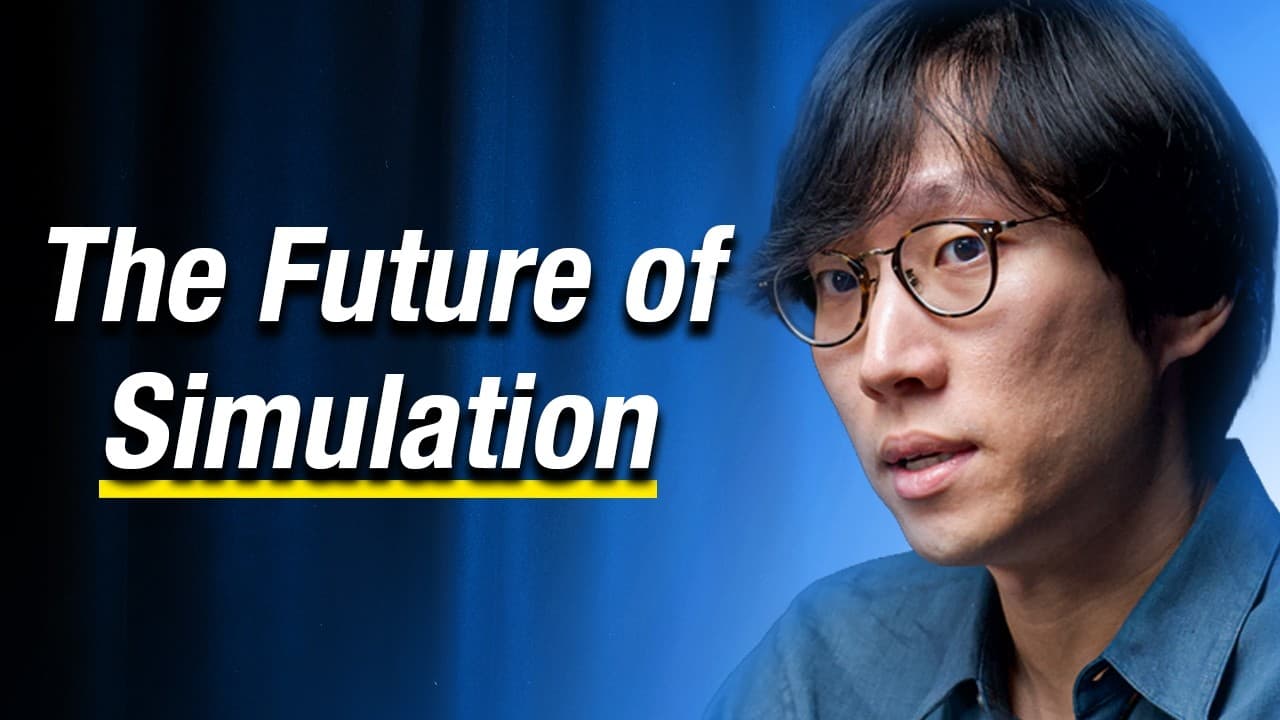
Simile builds models of human behavior so organizations can test how people may think, decide, and act before making real-world decisions. Its approach combines representative behavioral data with experiments such as randomized controlled trials and A/B tests, aiming to model causal mechanisms and counterfactual outcomes rather than merely predicting what will happen.
Transcript
I think there's a world in which in about 2 to three years we're running a single simulation session that people will pay $100 million for it. This is Jun Park, founder and CEO at Similey. They predict the future. They're a simulation market that try and predict future human behavior. It is incredible. >> My fundamental thesis here is for AI compan... Read More
Key Insights
- Simile is building a foundation model of human behavior that can support simulations of individuals, subpopulations, broader ecosystems, and eventually markets. The stated purpose is to let organizations examine how people may think, decide, and act before committing to decisions in the real world.
- The original simulated town contained 25 non-playable characters powered by GPT-3.5 text and additional agent architecture. These characters woke up, followed routines, went to work, maintained relationships, remembered encounters, planned activities, and unexpectedly coordinated a Valentine’s Day party and cafe decorations.
- Memory is necessary for persistent social behavior because agents otherwise risk treating repeated encounters as first meetings. The early system stored experiences in natural-language markdown files, taking advantage of language models’ ability to process text while working within limits created by finite context windows.
- Reflection works by periodically gathering multiple memories and asking an agent to interpret their broader meaning. Repeated actions, such as frequently eating omelettes or studying in a library, can become conclusions about preferences, pressures, personal goals, research interests, or formative experiences.
- Simile’s behavioral objective differs from the objective of frontier language-model companies. Rather than prioritizing coding, mathematics, natural sciences, or consistently rational reasoning, Simile seeks to represent people’s subjective values, preferences, tastes, biases, and context-dependent mistakes with realistic fidelity.
- Observational behavior data is useful for finding correlations between present observations and possible future events. Park argues that organizations usually need more than prediction because knowing that sales may decline does not explain what action could prevent the decline or produce a different outcome.
- Causal mechanisms and counterfactuals are central to shaping outcomes because they address how alternative actions may change behavior. Simile therefore values randomized controlled trials and A/B tests that compare what people do under different conditions, using those behavioral differences as part of its training assets.
- A defensible data strategy is presented as essential for current AI companies. Simile collects transaction and observational data, works with customers and vendors, and sources everyday people rather than only expert programmers or scientists, with particular attention to whether participants represent the relevant population.
Install to Summarize YouTube Videos and Get Transcripts
Explore YouTube Video Summarizer or Get YouTube Transcript Extractor
Questions & Answers
Q: What does Simile’s AI simulation model do?
Simile is creating a foundation model of human behavior designed to simulate how individuals, subpopulations, broader ecosystems, and eventually markets may behave. Companies can use these simulations to examine how real people might think, decide, and act before making a real-world decision. The model emphasizes subjective human characteristics, including values, preferences, tastes, biases, and predictable mistakes.
Q: How did the Valentine’s Day agent simulation work?
The research team created a game town containing 25 non-playable characters powered by GPT-3.5 text and an architecture incorporating memory, planning, and reflection. The agents woke up, performed routines, went to work, formed relationships, and remembered interactions. Because the simulation occurred before Valentine’s Day, agents spontaneously organized a party and decorated a cafe through their own social coordination.
Q: How can AI agents remember previous interactions?
The early agents stored their experiences as natural-language text in markdown files, allowing the language model to process memories using its existing text capabilities. Memory prevented recurring characters from introducing themselves as strangers during every meeting. Because accumulated experiences can exceed a model’s context window, the architecture also needed mechanisms that selected, organized, and interpreted memories over longer simulated periods.
Q: What is reflection in an AI agent architecture?
Reflection is a periodic process in which an agent gathers multiple stored memories and interprets what they mean at a higher level. Instead of retaining only isolated events, such as repeatedly ordering an omelette or studying in a library, the agent can infer preferences, pressures, goals, or deeper motivations. These conclusions help form a persistent personality and viewpoint.
Q: How is Simile different from frontier AI models?
Frontier language-model companies are described as pursuing highly rational, intelligent systems that perform well in coding, mathematics, and natural sciences. Simile focuses on a different objective: reproducing human behavior. Its models should make the kinds of mistakes people make and reflect human values, preferences, tastes, and biases, rather than optimizing exclusively for rational or technically correct answers.
Q: Why is behavioral data more useful than survey responses?
Web and survey-like data primarily capture what people say, which can differ from what they actually do. Simile therefore collects behavioral evidence, including transaction data and observational data, and also obtains data through customers and vendors. This evidence helps connect real actions with later outcomes, although Park distinguishes correlational prediction from the causal information needed to actively change those outcomes.
Q: Why does Simile prioritize causal analysis over prediction?
Prediction can warn an organization that an undesirable event may occur, but it may not identify how to prevent it. Park gives the example of a company learning that sales could decline and then asking what it should do. Causal mechanisms and counterfactual reasoning address that practical question by estimating how different interventions could alter behavior and produce another future.
Q: What data does Simile use to model human behavior?
Simile uses transaction data, observational behavior data, and information collected with customers and vendors. It also places substantial value on randomized controlled trials and A/B tests, which reveal how behavior changes across alternative conditions. Its participant strategy focuses on representative everyday people rather than primarily recruiting expert programmers or scientists, because population representation matters for realistic behavioral simulation.
Summary & Key Takeaways
-
Joon Sung Park’s early research created a game town populated by 25 language-model agents that followed routines, worked, formed relationships, remembered interactions, and planned their days. Set before Valentine’s Day, the experiment produced emergent coordination, including agents organizing a party and decorating a cafe without those activities being directly scripted.
-
The original agent architecture supplemented GPT-3.5 text with memory, planning, and reflection. Memories were initially stored as natural-language text, while periodic reflection helped agents combine many individual experiences into higher-level conclusions. This process gave them more persistent personalities, interests, motivations, and perspectives across interactions and extended simulated periods.
-
Simile is developing a foundation model of human behavior for simulating individuals, subpopulations, ecosystems, and eventually markets. Unlike frontier models optimized for coding, mathematics, and scientific reasoning, its models seek to reproduce human preferences, values, biases, tastes, and mistakes. Experimental behavioral data supports causal and counterfactual analysis for changing future outcomes.
Read in Other Languages (beta)
Share This Summary 📚
Summarize YouTube Videos and Get Video Transcripts with 1-Click
Try YouTube Summary with ChatGPT & Claude or YouTube Transcript Generator
Explore More Summaries from 20VC with Harry Stebbings 📚



Summarize YouTube Videos and Get Video Transcripts with 1-Click
Try YouTube Summary with ChatGPT & Claude or YouTube Transcript Generator