How AI Changes Product Teams and Human Judgment
TL;DR
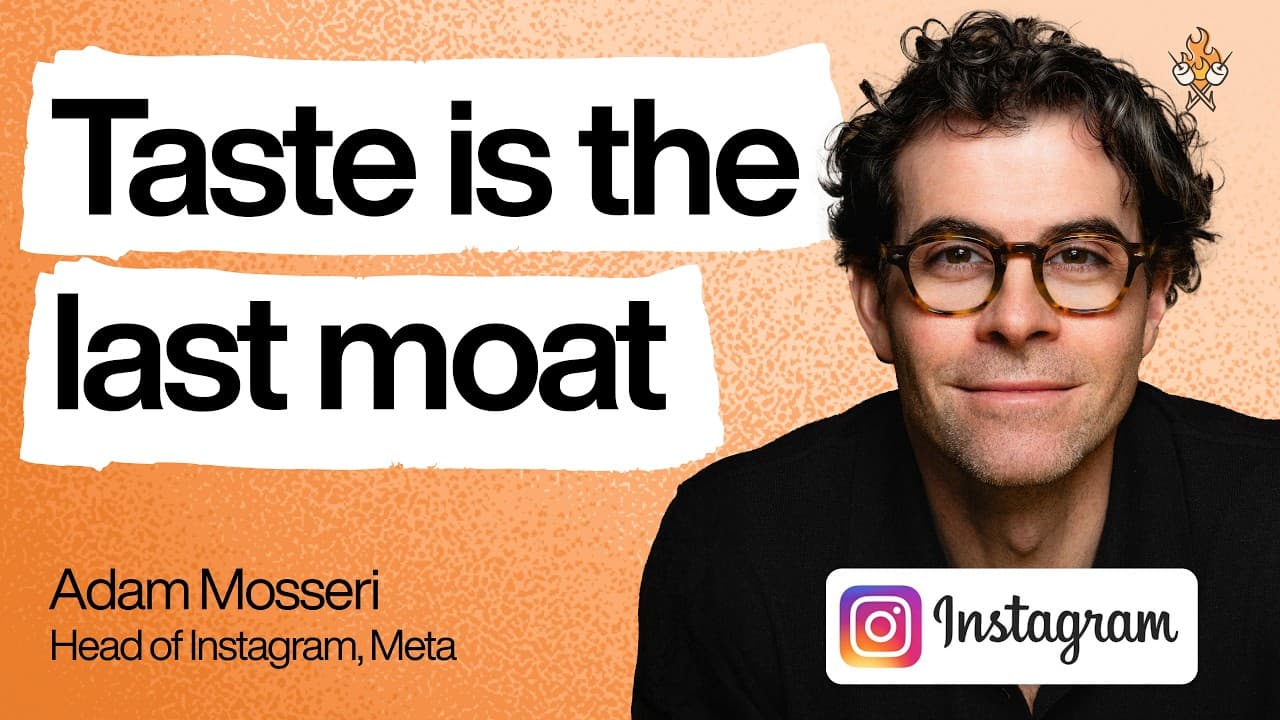
AI makes building products easier, so choosing what deserves to be built becomes more important. Instagram is responding with smaller pods, broader generalist roles, and specialists added when the work demands deep expertise, while human taste, creativity, authenticity, and judgment become increasingly valuable as synthetic content grows.
Transcript
No, I think taste matters a ton. In a world where it's easier to build things, it's more important to make sure that your time is spent figuring out what you should be building in the first place. The people who I think are going to make the most of it are the ones who are cleareyed about what AI is good at and what it's not good at and also have a... Read More
Key Insights
- Taste is increasingly important because easier product creation shifts the central challenge from executing an idea to deciding what deserves to be built. Teams that use AI effectively still need human judgment to select worthwhile problems, recognize quality, and avoid spending time on undifferentiated output.
- Instagram’s canonical product team is changing from roughly a baker’s dozen people to a much smaller core of about six or seven. These pods typically combine four to six broadly capable engineers with one product staff member and add specialists according to the particular demands of the work.
- The product staff role is an evolution of product management that spans parts of design, data science, and research. New tools let one generalist perform work that previously required several specialized functions, although unusually complex decisions can still justify dedicated expert participation.
- Basic data analysis is becoming more accessible through internal tools. A product staff member can now generate a waterfall analysis of a process such as creating Reels, identify where people abandon each step, and look for improvement opportunities without commissioning extensive bespoke work from a data scientist.
- Specialists remain valuable when a problem requires unusual depth, creativity, or strategic expertise. Pricing work may need a senior data scientist, a novel user experience may need a senior product designer, and difficult research questions may still require a particularly strong researcher.
- Designers can remain influential because taste is harder to automate than mechanical production work. Strong designers may also become product staff members, expanding beyond interaction and visual design into product strategy, business considerations, and go-to-market decisions while retaining distinctive craft expertise.
- Functional boundaries are becoming less rigid as engineers, designers, product managers, data scientists, and researchers use AI tools to cover adjacent responsibilities. The emerging workforce combines end-to-end generalists with a smaller number of experts who bring exceptional ability in a particular craft.
- Synthetic content can be a tailwind for Instagram because an abundance of generated material may increase demand for human creativity, authenticity, and recognizable people. Mosseri favors informing users when content is AI-generated instead of automatically filtering that content out, while acknowledging that reliable disclosure is difficult.
Install to Summarize YouTube Videos and Get Transcripts
Explore YouTube Video Summarizer or Get YouTube Transcript Extractor
Questions & Answers
Q: How is AI changing the structure of product teams?
AI is enabling product teams to operate with smaller cores and broader individual responsibilities. Instagram is moving from teams of roughly a baker’s dozen specialists toward pods that usually contain four to six generalist engineers, one product staff member, and only the specialists required by the work. Reduced coordination can help these teams move faster and make decisions with less design by committee.
Q: What is a product staff role at Instagram?
A product staff member is a generalist whose responsibilities extend beyond traditional product management. The role can include portions of design, data science, and research, supported by newer tools that make formerly specialized tasks easier to perform. The person helps a small pod move from analysis through product decisions while bringing in senior specialists when a problem requires deeper expertise.
Q: Why does taste matter more when AI makes building easier?
Taste matters more because faster production does not determine which ideas are worth pursuing. When AI lowers the effort needed to create products, teams must spend more attention deciding what should be built in the first place. Human judgment helps identify valuable problems, recognize strong work, and distinguish purposeful products from output that merely reflects the default style of an AI tool.
Q: Which product specialists remain valuable in AI-enabled teams?
Specialists remain valuable when the work requires depth that a generalist cannot provide. Mosseri gives the examples of a senior data scientist for a pricing strategy and a senior product designer for a genuinely novel experience. The smaller-team model does not eliminate expertise. It makes specialist participation conditional on the problem instead of embedding every function in every core team.
Q: Why is Adam Mosseri optimistic about designers?
Mosseri is optimistic about designers because they often possess taste, which he considers difficult to automate. Strong designers may also have informed views about product strategy, business questions, and go-to-market decisions. As functional boundaries blur, some designers can move into product staff roles, broaden their influence across disciplines, and retain a particularly strong foundation in design craft.
Q: How can AI tools reduce routine data science work?
AI-enabled internal tools can automate relatively mechanical analysis that previously required bespoke work from a data scientist. Mosseri uses waterfall analysis as an example: a team can examine every step involved in creating Reels, measure where people stop, and identify possible improvements. A product staff member can now retrieve this analysis directly, leaving data scientists available for harder and more creative problems.
Q: How should Instagram handle AI-generated content?
Mosseri argues that Instagram should not simply filter out AI-generated content. Instead, the platform should try to tell people whether content was created with AI, although he acknowledges that doing this reliably is difficult. His approach allows synthetic material to remain available while giving users context that can help them evaluate its origin, authenticity, and relationship to a real creator.
Q: Why could synthetic content benefit Instagram?
Synthetic content could benefit Instagram because its abundance may increase the value people place on human creativity, authentic identity, and recognizable individuals. Mosseri expects users to seek out people and authentic expression when generated material becomes common. That dynamic could favor a platform centered on creators and identity, even though the platform must still address the difficult challenge of labeling AI content.
Summary & Key Takeaways
-
Instagram is shifting from product teams of roughly a baker’s dozen specialists to smaller core pods. A typical pod may contain four to six generalist engineers, one product staff member, and selected specialists whose expertise matches the work. Fewer coordination demands can help these teams move faster and avoid design by committee.
-
The product staff role combines responsibilities traditionally associated with product management, design, data science, and research. AI-enabled internal tools can now automate mechanical tasks such as basic waterfall analysis, allowing generalists to handle more work independently. Senior designers, data scientists, or researchers still join when difficult problems require exceptional depth or creativity.
-
As AI lowers the effort required to build products and generate content, human judgment becomes more important. Mosseri argues that designers remain valuable because taste is difficult to automate. He also expects abundant synthetic content to increase demand for recognizable people, authentic identity, and creativity, with disclosure preferred over filtering AI content out.
Read in Other Languages (beta)
Share This Summary 📚
Summarize YouTube Videos and Get Video Transcripts with 1-Click
Try YouTube Summary with ChatGPT & Claude or YouTube Transcript Generator
Explore More Summaries from Lenny's Podcast 📚




Summarize YouTube Videos and Get Video Transcripts with 1-Click
Try YouTube Summary with ChatGPT & Claude or YouTube Transcript Generator