What Are YouTube's New AI Content Rules for Creators?
TL;DR
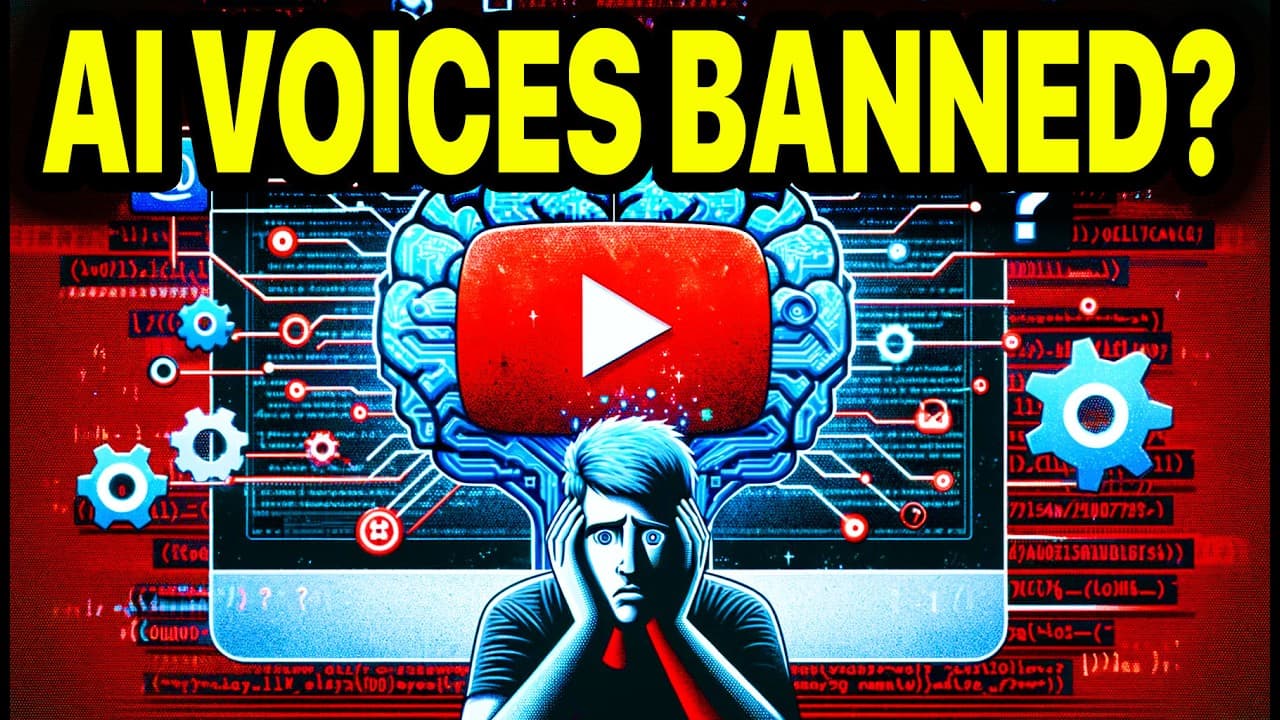
YouTube plans to implement AI content checks in 2024, requiring creators to self-certify AI use in their videos. While AI voices and text-to-speech tools may need labeling, the current policies are not finalized, and demotion of AI content will depend on whether it misleads viewers. Creators should prepare for potential false labeling due to YouTube's vast content volume.
Transcript
- YouTube have just announced new rules that will start to police AI content on the YouTube platform and impact creators just like you. And naturally, you have questions, a lot of questions. And so in this video, we're going to explore the concerns, fears, hopes, and expectations of how AI content will look like on YouTube in the future. And we're ... Read More
Key Insights
- 🤳 YouTube plans to introduce AI content checks and self-certification for creators in 2024.
- 🎮 The usage of AI in videos and the extent of labeling requirements remain unclear.
- 😯 AI voices and text-to-speech tools are generally permissible but may require labeling.
- 🫵 Demonetization of AI content will depend on factors such as misleading or misinforming viewers.
- ❓ False positives in labeling AI-generated content may occur, and creators should be prepared for potential issues.
- ❓ The YouTube algorithm already heavily relies on AI.
- 🪜 There may not be a dedicated AI content filter added to YouTube.
Install to Summarize YouTube Videos and Get Transcripts
Explore YouTube Video Summarizer or Get YouTube Transcript Extractor
Questions & Answers
Q: Do creators need to label a video as AI-generated if they use AI tools to write a script?
No, an automated system cannot detect if a script is AI-generated. However, if an AI-generated character reads the AI script using an AI voice, it becomes blurrier and may require labeling.
Q: Will AI-generated videos be demonetized solely because they contain AI content?
No, purely based on AI content, demonetization is unlikely. YouTube may demonetize AI content that misleads or misinforms viewers, as well as programmatically generated content intended to flood the platform.
Q: How can creators protect their content from wrongful labeling as AI-generated?
Given the scale of YouTube, false positives in AI labeling are inevitable. Double-checking content and monitoring for mislabeling is crucial, even though a foolproof protection method may not exist.
Q: Will YouTube add a dedicated AI content filter for viewers who do not want to watch AI-generated videos?
It is unlikely that YouTube will implement a specific AI content filter. Filters may be influenced by users' viewing habits, and a dedicated AI filter may not be a priority among the many potential filters.
Summary & Key Takeaways
-
YouTube intends to introduce AI content checks and balances in 2024, with creators being required to self-certify the use of AI in their videos.
-
The scope of AI usage in videos and the extent to which creators need to label AI-generated content is currently unclear.
-
AI voices and text-to-speech tools are permissible, but may require a label on the video.
-
Demonetization of AI content will depend on factors such as whether it misleads or misinforms viewers.
-
False positives in labeling content as AI-generated may occur due to the immense volume of content on YouTube.
-
The YouTube algorithm already relies on AI, and there may not be a dedicated AI content filter added to the platform.
-
Channels focused on educating users about AI should clearly indicate which parts of their videos are AI-generated, but specific policies are yet to be seen.
Read in Other Languages (beta)
Share This Summary 📚
Summarize YouTube Videos and Get Video Transcripts with 1-Click
Try YouTube Summary with ChatGPT & Claude or YouTube Transcript Generator
Explore More Summaries from vidIQ 📚
Summarize YouTube Videos and Get Video Transcripts with 1-Click
Try YouTube Summary with ChatGPT & Claude or YouTube Transcript Generator