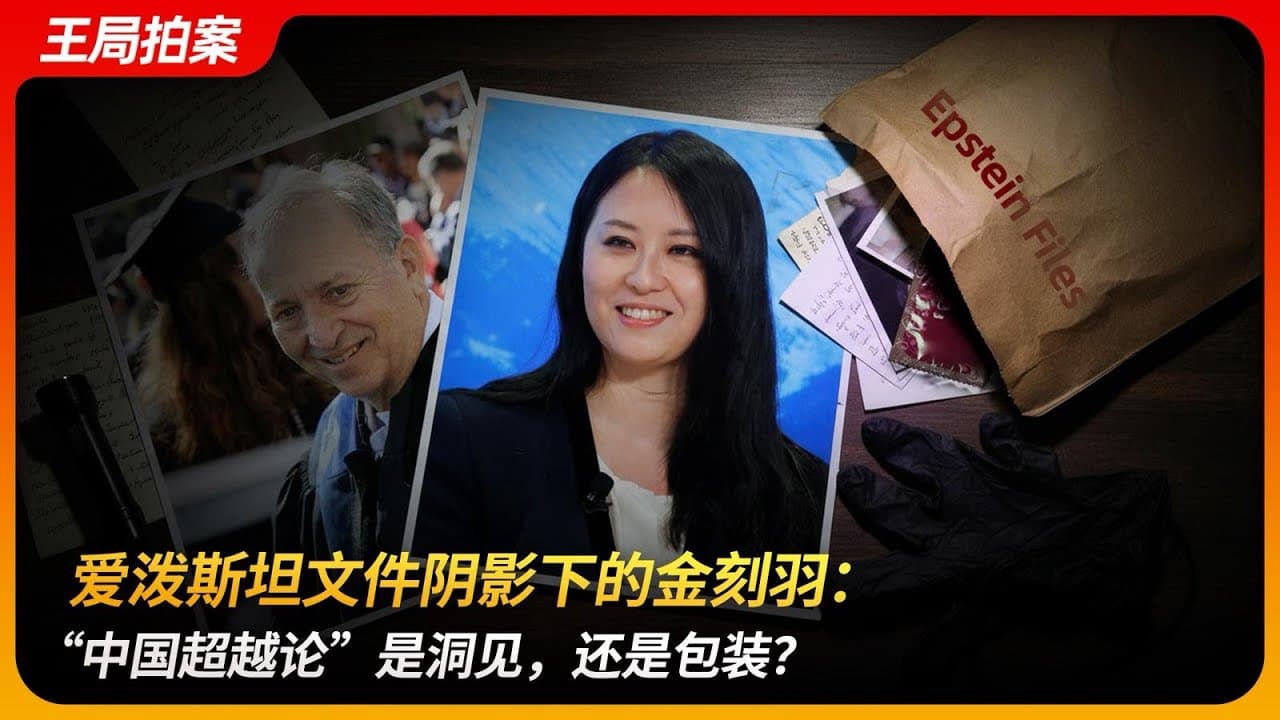
金刻羽是谁,她与爱泼斯坦文件和萨默斯有何关系?“中国超越论”、特朗普、黄亚生、市长经济|王局拍案 20251120
TL;DR
金刻羽 is a Chinese economist who returned to public attention after Epstein files revealed that Lawrence Summers and Jeffrey Epstein referred to her as “Danger” while discussing Summers pursuing her. Born in 1983, she is Jin Liqun’s daughter and entered Harvard at age 17 to study economics. Read on for the emails, Summers’ Epstein connections, and the political battle that led to their release.
Transcript
For the longest time, they were actually comfortably importing American chips. And now all of a sudden, they have to start buying Chinese chips. And not because the Chinese government forced them to, but rather it's because of these policies from America. So and in fact, they said, well, thank you. Thank you for keeping us on our toes. There were h... Read More
Key Insights
- Jin Keyu is a Chinese economist, born in 1983, and the daughter of Jin Likun, a former Chinese vice minister of finance who later became president of the Asian Infrastructure Investment Bank. She was admitted to Harvard at age 17 to study economics.
- The Epstein Files Transparency Act passed the U.S. House on November 18 by a vote of 427 to 1, then cleared the Senate with zero objections, a level of near-unanimity previously matched only by legislation supporting Taiwan.
- The bill requires the Epstein documents to be fully released and uploaded online for anyone to download, except for a small portion involving sensitive personal privacy, demonstrating that the U.S. president is bound to enforce laws passed by Congress.
- Lawrence Summers, former Harvard president and former U.S. Treasury secretary, was among the first big names caught in the released files, which showed he took Epstein's private jet four times and maintained a years-long friendship.
- Epstein donated $25 million to Harvard, and in return, under Summers' leadership, Harvard gave Epstein his own office on campus, illustrating the mutual benefit of their relationship.
- In their email exchanges, Summers and Epstein referred to Jin Keyu using the code name "Danger," and the two men discussed strategy for how Summers could pursue her romantically rather than academic economics.
- Epstein advised Summers not to reply to Jin Keyu right away and to make her wait, treating the situation like a game, with their coded emails continuing until 2019, up to the day before Epstein was arrested.
- After the emails became public, Summers issued an apology expressing shame and stepped down from all his public roles, including the OpenAI board, keeping only his Harvard professorship, while Harvard said it would review whether his conduct violated ethical standards.
Install to Summarize YouTube Videos and Get Transcripts
Explore YouTube Video Summarizer or Get YouTube Transcript Extractor
Questions & Answers
Q: Who is 金刻羽, also known as Jin Keyu?
Jin Keyu is a Chinese economist born in 1983 and the daughter of Jin Liqun, a former Chinese vice minister of finance who later became president of the Asian Infrastructure Investment Bank. She entered Harvard at age 17 to study economics.
Q: Why is Jin Keyu connected to the Epstein files?
Emails in the released Epstein documents showed Lawrence Summers and Jeffrey Epstein discussing how Summers could pursue Jin Keyu. They referred to her by the code name “Danger” rather than using her real name.
Q: Why did Summers and Epstein call Jin Keyu “Danger”?
The emails did not use Jin Keyu’s name, but the identification was linked to Summers meeting her father, Jin Liqun, and then writing to Epstein about it. Jin Keyu was also sending Summers research papers for feedback, which Summers forwarded to Epstein.
Q: What advice did Epstein give Lawrence Summers about Jin Keyu?
Epstein advised Summers not to reply to Jin Keyu immediately and to make her wait for his attention. Their discussion treated Summers’ pursuit of her as a game rather than focusing on her economics research.
Q: How was Lawrence Summers connected to Jeffrey Epstein?
Summers maintained a years-long friendship with Epstein and took his private jet four times. Epstein donated $25 million to Harvard, received a campus office, and was asked by Summers to donate $1 million to an organization run by Summers’ wife.
Q: What did the Epstein Files Transparency Act require?
The act required the Epstein documents to be released and uploaded online for public download, apart from a small portion involving sensitive personal privacy. The U.S. House passed it on November 18 by 427 votes to 1, and the Senate approved it with zero objections.
Q: Why did Marjorie Taylor Greene break with Trump over the Epstein files?
Greene demanded full transparency even though Trump and most Republicans had opposed releasing the documents. She contacted Democrats and helped form a bipartisan group seeking passage of the Epstein Files Transparency Act.
Q: What happened to Lawrence Summers after the emails became public?
Summers apologized and expressed shame after the emails were released. He resigned from public roles, including the OpenAI board, retained only his Harvard professorship, and faced a Harvard ethics review.
Summary & Key Takeaways
-
The Epstein documents resurfaced Chinese economist Jin Keyu in the spotlight. Republican congresswoman Marjorie Taylor Greene broke ranks with Trump, allied with Democrats, and helped pass the Epstein Files Transparency Act, which the House approved 427 to 1 and the Senate passed with zero objections.
-
The released files, including around 20,000 documents related to Epstein's estate, exposed former Treasury secretary and Harvard president Lawrence Summers. He took Epstein's jet four times, Epstein donated $25 million to Harvard in exchange for a campus office, and Summers asked Epstein to donate $1 million to his wife's organization.
-
Emails showed Summers and Epstein used the code name "Danger" for Jin Keyu and discussed how Summers could pursue her. Summers apologized, resigned from public roles including the OpenAI board, and kept only his Harvard professorship, while Harvard opened an ethics review.
Read in Other Languages (beta)
Share This Summary 📚
Summarize YouTube Videos and Get Video Transcripts with 1-Click
Try YouTube Summary with ChatGPT & Claude or YouTube Transcript Generator
Explore More Summaries from 王志安 📚



Summarize YouTube Videos and Get Video Transcripts with 1-Click
Try YouTube Summary with ChatGPT & Claude or YouTube Transcript Generator