How to Build Focus and Practice Deep Work
TL;DR
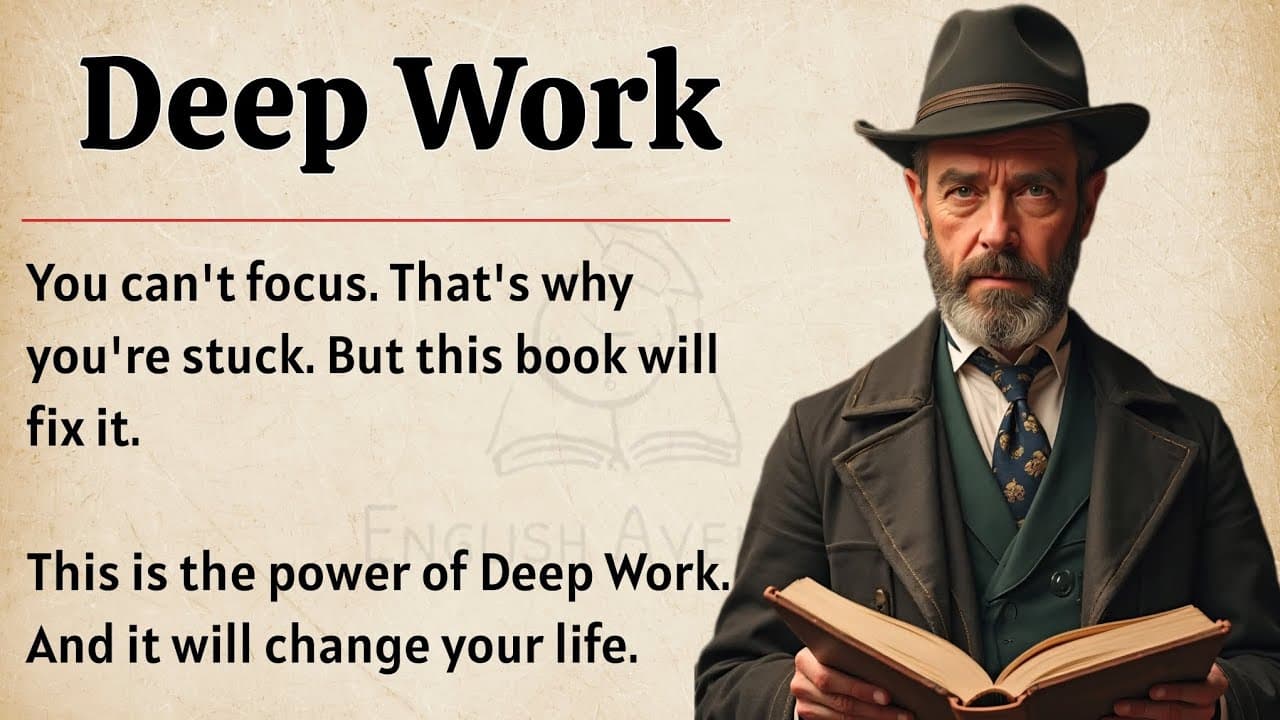
Deep work means concentrating fully on a difficult, meaningful task without multitasking, notifications, or other distractions. Protecting this focus helps you learn hard skills faster, remember more, and create higher-quality results, while constant messages, meetings, scrolling, and tab switching produce shallow activity that can feel exhausting without delivering meaningful progress.
Transcript
Hello everyone. Welcome back to the channel. Or if you're here for the first time, I'm so happy you're here. Today, we're going to talk about a book that can change your life completely. A book that will help you focus. A book that will teach you how to do the best work of your life. A book that will make you more successful, more respected, and mo... Read More
Key Insights
- Deep work is concentrated effort on a difficult and meaningful task without distractions, multitasking, or background noise. It uses full mental attention and is presented as a way to think faster, learn more deeply, remember more, and produce higher-quality results.
- Shallow work is surface-level activity that creates busyness without meaningful progress. Examples include repeatedly checking messages, switching tabs, scrolling, replying to comments, and attending numerous meetings while failing to complete the difficult work that produces lasting value.
- The quality of focus matters more than the apparent length of a work session. The transcript contrasts one distracted hour of English study with thirty minutes of uninterrupted study, arguing that the shorter, fully focused session leads to faster growth.
- Deep work is valuable because useful results come from learning hard skills and creating meaningful things. The summary argues that people are rewarded for building, writing, designing, and solving difficult problems, rather than merely answering many emails or appearing constantly available.
- The ability to learn hard things quickly depends on sustained attention. Goals such as mastering English, learning coding, creating digital content, starting a channel, or building a business require deep focus because shallow attention produces shallow understanding and weaker results.
- Deep work is rare because many environments reward quick responses, constant availability, frequent meetings, and multitasking. These behaviors create a false image of productivity while gradually weakening a person's ability to concentrate for extended periods.
- Social media works by capturing and selling attention, according to the transcript. Repeated app checking makes the mind more restless, encourages avoidance of boredom, and can reduce a person's ability to read, sit quietly, or focus on one activity.
- Protecting silence is essential for focused creation because notifications, conversations, and open environments repeatedly interrupt mental flow. A person who controls these interruptions can spend less time reacting and more time learning, thinking, building, and completing meaningful work.
- Related book: Deep Work
- Export your Kindle highlights to Glasp: How to Download Highlights and Notes from Kindle
Install to Summarize YouTube Videos and Get Transcripts
Explore YouTube Video Summarizer or Get YouTube Transcript Extractor
Questions & Answers
Q: What is deep work and how does it improve results?
Deep work is the practice of concentrating fully on a difficult and meaningful task without checking a phone, multitasking, switching tabs, or allowing background interruptions. The transcript says this state helps the brain think faster, learn more deeply, remember more, and produce stronger results. Its main advantage is that mental energy stays directed toward one valuable objective instead of being scattered across small activities.
Q: What is the difference between deep work and shallow work?
Deep work requires sustained concentration on tasks that create meaningful value, such as learning a hard skill, writing, designing, building, or solving a difficult problem. Shallow work consists of surface-level activities such as checking messages, scrolling, switching tabs, replying quickly, and attending meetings. Shallow work can make someone feel busy and tired, but it may produce little meaningful progress or lasting value.
Q: Why is focused study better than longer distracted study?
Focused study uses a learner's full mental power, while distracted study repeatedly breaks attention and weakens engagement with the material. The transcript compares one person studying English for one hour while checking a phone every five minutes with another person studying for thirty uninterrupted minutes. It concludes that the fully focused learner grows faster because effective study depends on the quality of attention, not time alone.
Q: Why is deep work considered a valuable skill?
Deep work is valuable because it supports two abilities emphasized in the summary: learning difficult things quickly and producing high-quality work. People create value by building useful products, writing books, solving hard problems, designing strong work, or mastering demanding skills. Answering many emails or attending numerous meetings can show activity, but concentrated creation is presented as the work that earns greater rewards and respect.
Q: Why is deep work becoming rare?
Deep work is becoming rare because modern routines often reward constant availability, quick email responses, frequent meetings, multitasking, and visible online activity. Open rooms, conversations, phone alerts, and message notifications repeatedly interrupt concentration. These conditions train people to react throughout the day instead of creating, and the transcript argues that many people eventually lose the ability to remain focused in silence.
Q: How does social media affect attention and concentration?
Social media captures attention by encouraging users to check apps repeatedly and avoid boredom. According to the transcript, each check can make the brain more restless and reinforce the habit of seeking another stimulus. Over time, a person may struggle to read a full page, sit alone quietly, or concentrate for more than a short period. Controlling app use therefore helps protect attention from commercial distraction.
Q: How can someone create an environment for deep work?
A deep-work environment reduces the interruptions that prevent sustained concentration. The transcript recommends conditions with no phone, no notifications, no multitasking, and minimal background noise. Quiet and protected time allows the brain to stop reacting to messages and conversations. By working alone with one clearly chosen task, a person can direct more energy toward learning, thinking, building, or creating something meaningful.
Q: How can deep work help someone learn English?
Deep work can improve English learning by placing full attention on listening, reading, vocabulary, comprehension, speaking, or another specific practice task. The transcript argues that uninterrupted study produces better growth than a longer session broken by phone checks. Clear graded reading, combined with listening, reading, and repetition, can support fluency when the learner protects the session from messages, scrolling, tab switching, and other distractions.
Summary & Key Takeaways
-
Deep work is the practice of giving a demanding and meaningful task your full mental attention. It excludes phone checking, multitasking, background noise, and repeated tab switching. According to the summary, focused effort improves learning, memory, thinking, and output, making attention more important than simply spending many hours appearing busy.
-
Focused work is valuable because the economy rewards useful results and difficult skills rather than visible activity alone. Building an app, writing a book, solving a hard problem, mastering English, or growing a business requires sustained concentration. The ability to learn challenging things quickly can therefore increase a person's value and competitiveness.
-
Deep work is becoming rare because workplaces and digital platforms encourage rapid replies, meetings, constant availability, notifications, and social media use. These habits train the brain to jump between stimuli and avoid boredom. Protecting quiet time and controlling attention allow people to create rather than spend the day merely reacting.
Read in Other Languages (beta)
Share This Summary 📚
Summarize YouTube Videos and Get Video Transcripts with 1-Click
Try YouTube Summary with ChatGPT & Claude or YouTube Transcript Generator
Explore More Summaries from English Avenue 📚




Summarize YouTube Videos and Get Video Transcripts with 1-Click
Try YouTube Summary with ChatGPT & Claude or YouTube Transcript Generator