How Did Ancient Humans Survive the Night?
TL;DR
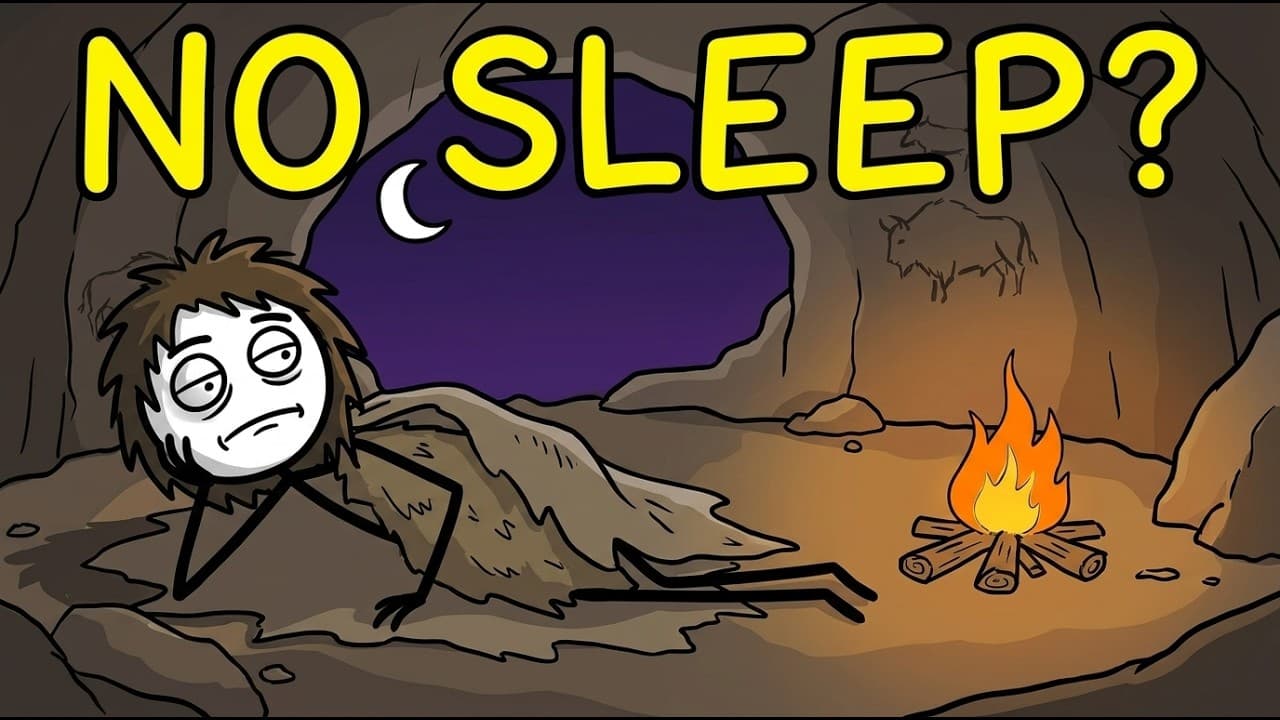
Ancient humans survived the night by gathering in defensible places, sharing body heat, keeping watch, and later using controlled fire to deter predators. Night also became a time for storytelling, cultural transmission, and social bonding. In pre-modern societies, people often divided rest into a first and second sleep, separated by a calm waking period.
Transcript
You go to bed tonight. You pull up your blanket, you scroll your phone for 40 minutes watching videos of dogs failing to catch frisbees, and eventually, after three trips to the kitchen for no reason, you fall asleep. Simple. Comfortable. Honestly, kind of beautiful. Now, imagine doing all of that minus the blanket, minus the phone, minus the bed, ... Read More
Key Insights
- Nighttime was especially dangerous because lions, hyenas, leopards, saber-toothed cats, and other major predators were described as nocturnal or crepuscular, making humans more vulnerable after sunset when their own vision and defensive options were limited.
- Group sleeping was a survival strategy that provided shared warmth, rapid awareness of danger, and a natural watch system. Even without formally assigned guards, light sleepers and people who stirred during the night could alert everyone else to an approaching threat.
- Caves were valuable shelters because a cave offered rock at the occupants' backs and usually only one direction from which danger could approach. This defensible arrangement allowed early human groups to use the surrounding landscape as part of their protection.
- Reliable control of fire emerged around 400,000 years ago and changed the balance between humans and nighttime predators. Fire offered heat and cooking, while its light created an unusual environment that most large predators were reluctant to enter.
- Campfire conversation was primarily narrative rather than practical. Research on the Ju / 'Hoansi and Hadza described roughly 80% of nighttime campfire conversation as storytelling, compared with about 6% during the day, when discussion focused mainly on logistics and work.
- Storytelling was a form of cultural storage before writing and books existed. Stories about ancestors, creation, bravery, generosity, conflict, and consequences allowed communities to transmit values, history, identity, and ideas from one generation to another.
- Segmented sleep divided the night into first sleep and second sleep. People slept for roughly three to four hours, naturally remained awake for one or two hours, and then returned to sleep until morning without treating the waking interval as a disorder.
- Artificial lighting was presented as the likely reason segmented sleep declined. Gas lamps and electric lights extended evening activity, delayed bedtime, and compressed total rest into a single block, making ordinary nighttime waking feel abnormal to many modern sleepers.
Install to Summarize YouTube Videos and Get Transcripts
Explore YouTube Video Summarizer or Get YouTube Transcript Extractor
Questions & Answers
Q: How did ancient humans protect themselves at night?
Ancient humans protected themselves by gathering in groups and choosing high, enclosed, or defensible sleeping places. Caves were especially useful because they generally limited danger to one entrance and allowed occupants to keep their backs against rock. Group members shared warmth, heard one another moving or breathing, and benefited when light sleepers noticed possible threats. After fire became reliable, its light also discouraged many large predators.
Q: Why were caves useful to early humans after dark?
Caves functioned as an early security system because they offered solid protection behind the occupants and concentrated possible danger at one entrance. This was safer than resting in an exposed forest where predators could approach from multiple directions. A group could sleep close together inside, share body heat, listen for movement, and react quickly if an animal attempted to enter during the night.
Q: How did fire change nighttime life for early humans?
Fire changed nighttime life by supplying warmth, enabling cooking, and creating a visible boundary between a human group and the surrounding darkness. The transcript states that reliable control of fire developed around 400,000 years ago. Because many large predators evolved to hunt in darkness, an open fire disrupted their preferred conditions and made them reluctant to enter the illuminated area. Fire also created a setting for extended social interaction.
Q: What did ancient humans do around campfires at night?
Ancient humans gathered around campfires and told long, emotionally rich stories about ancestors, creation, bravery, generosity, identity, and proper behavior. Research on modern hunter-gatherer communities described in the transcript found that roughly 80% of nighttime campfire conversation involved storytelling, compared with about 6% during the day. These narratives entertained listeners while transmitting cultural memories, moral expectations, and shared interpretations of the world.
Q: Why was nighttime storytelling important to human culture?
Nighttime storytelling preserved information in societies without writing, books, or another external storage medium. Narratives allowed history, identity, values, and lessons about social behavior to pass between generations. Gathering around a fire also encouraged people to focus on one another rather than daytime logistics. The transcript argues that this practice may have supported language, empathy, cultural memory, complex social bonding, and the ability to imagine nonexistent possibilities.
Q: What were first sleep and second sleep?
First sleep and second sleep were two separate periods of nightly rest described in historical documents across cultures, continents, and centuries. People went to bed a couple of hours after darkness, slept for roughly three to four hours, and then awoke calmly for one or two hours. After that waking interval, they returned to sleep until morning. The interruption was treated as an ordinary phase of the night, not as insomnia.
Q: What did people do between first sleep and second sleep?
During the waking period between sleeps, people prayed, reflected on dreams, had sex, tended fires, checked livestock, nursed infants, completed household tasks, or visited neighbors. Some religious traditions treated the quiet period between midnight and dawn as especially suitable for communication with the divine. These activities appeared in medical texts, court records, literature, diaries, and household accounts as normal parts of nighttime life.
Q: Why did segmented sleep become less common?
Segmented sleep likely became less common as artificial lighting extended useful activity into the evening. Gas lamps and later electric lights allowed people to remain awake in brightly illuminated spaces, which pushed bedtime later and compressed total sleep into a single continuous block. As the traditional interval between first and second sleep disappeared, waking during the middle of the night increasingly felt like a problem instead of a normal pattern.
Summary & Key Takeaways
-
Darkness exposed early humans to lions, hyenas, leopards, saber-toothed cats, and other predators active around dusk or during the night. Groups responded by staying together and choosing elevated, enclosed, or defensible locations. Caves were particularly useful because their single entrance made approaching danger easier to detect and confront.
-
Reliable control of fire, dated in the transcript to around 400,000 years ago, reshaped nighttime life. Fire supplied warmth, supported cooking, and created a circle of light that discouraged many large predators. It also provided a gathering place where people could talk, tell stories, preserve memories, and strengthen relationships.
-
Historical records describe segmented sleep as an ordinary pattern across cultures and centuries. People commonly experienced a first sleep lasting roughly three to four hours, awoke calmly for one or two hours, and then entered a second sleep until morning. Artificial lighting later pushed bedtime back and compressed rest into one block.
Read in Other Languages (beta)
Share This Summary 📚
Summarize YouTube Videos and Get Video Transcripts with 1-Click
Try YouTube Summary with ChatGPT & Claude or YouTube Transcript Generator
Explore More Summaries from Stickly 📚
Summarize YouTube Videos and Get Video Transcripts with 1-Click
Try YouTube Summary with ChatGPT & Claude or YouTube Transcript Generator