How Did People Survive Without Modern Medicine?
TL;DR
Ancient people survived illness and injury by combining instinctive behaviors, medicinal plants, practical experimentation, shared knowledge, and community care. Archaeological evidence of healed amputations and trepanation shows that some prehistoric practitioners performed major operations successfully, while remedies such as honey, garlic, willow bark, aloe, and opium poppy produced observable benefits despite limited understanding of their mechanisms.
Transcript
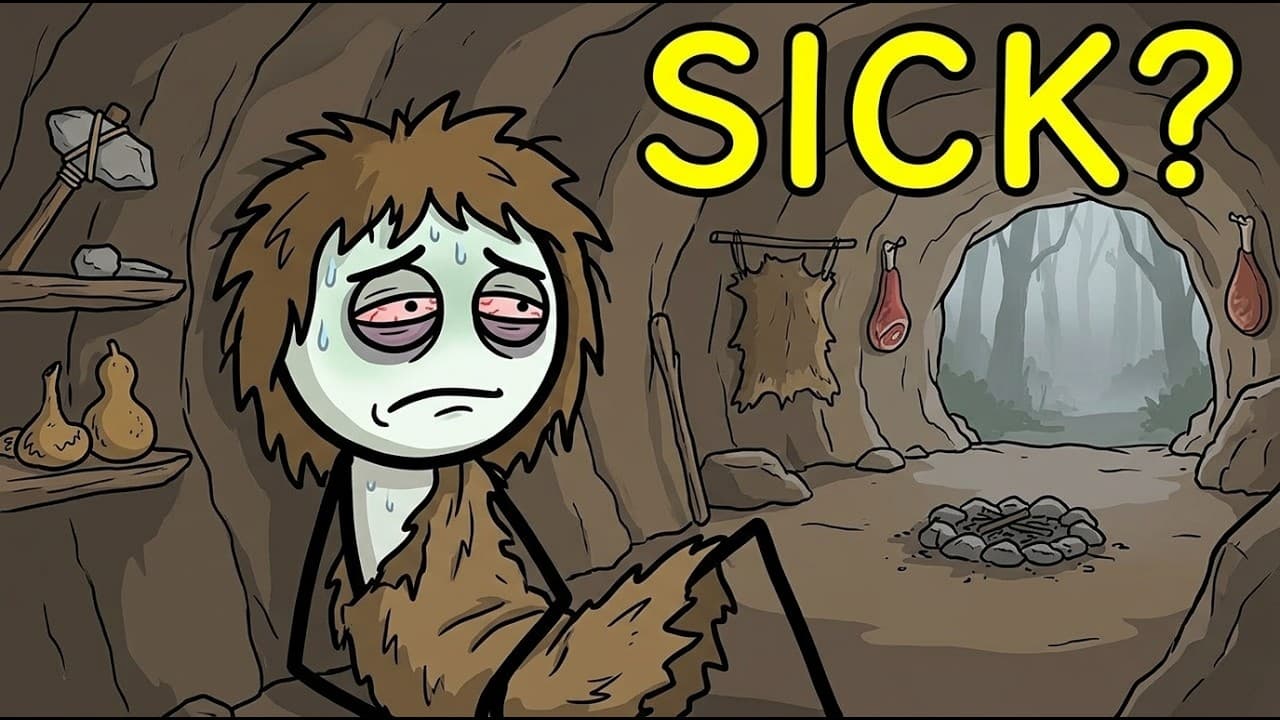
You wake up with a splitting headache. You pop an ibuprofen, drink some water, and move on with your life. Total time invested, maybe 45 seconds. Now imagine waking up with that same headache 50,000 years ago. No pills, no pharmacy, no doctor, no internet to self-diagnose yourself with 17 different rare diseases. Just you, the pain, and a cave full... Read More
Key Insights
- The earliest healthcare was based on biological instincts such as resting, licking wounds, avoiding food, and seeking warmth. These behaviors could help with minor problems long before organized medical systems, specialized practitioners, written records, or scientific explanations of illness existed.
- The first medicine emerged when humans noticed useful natural treatments, remembered their effects, and taught them to others. Unlike a single animal benefiting from a plant, human communities could preserve one observation and pass it across many generations as a growing medical tradition.
- Chimpanzees deliberately consume unusual plants when sick, including rough leaves that can scrape parasites from intestinal walls and bitter plant material containing compounds toxic to parasites. This behavior supports the idea that early hominids could also have recognized and used medicinal plants.
- A surgical amputation was successfully performed about 31,000 years ago in Borneo. The skeleton's clean cut and regrown bone indicate that the patient survived, showing that people practiced complex surgery before agriculture, writing, and the institutions normally associated with civilization.
- Trepanation was practiced across multiple unconnected cultures and involved carefully removing part of the skull, possibly to relieve pressure, treat seizures, or address head injuries. Bone regrowth around many openings demonstrates that a significant number of patients survived the procedure.
- Neanderthals consumed plants with recognized medicinal properties. Residues preserved in dental calculus at archaeological sites include evidence associated with yarrow and groundsel, although the interpretation of medicinal plant pollen found around a burial at Shanidar Cave remains debated.
- Ancient Egyptian medicine combined extensive records with observation-based treatments. The Ebers Papyrus, written around 1550 BCE from older knowledge, lists over 700 remedies for problems including inflammation, infections, digestive disorders, skin conditions, eye diseases, and psychological disorders.
- Germ theory was not established until the 1860s, so earlier medical systems lacked knowledge of bacteria and viruses. Incorrect explanations could produce harmful treatments, including bloodletting based on the Greek belief that disease resulted from imbalances among four bodily humors.
Install to Summarize YouTube Videos and Get Transcripts
Explore YouTube Video Summarizer or Get YouTube Transcript Extractor
Questions & Answers
Q: How did ancient humans survive without modern medicine?
Ancient humans relied on instinctive responses, practical observation, medicinal plants, experimental procedures, community support, and knowledge passed between generations. Resting, seeking warmth, and tending wounds addressed minor problems, while accumulated experience identified treatments that appeared to work. Healers, shamans, midwives, and herbalists preserved this knowledge, allowing communities to manage some injuries, infections, fevers, painful conditions, and difficult births.
Q: What was the earliest form of human medicine?
The earliest medicine was probably not a formal invention but a useful behavior that people noticed, remembered, and shared. Early hominids likely began with basic responses such as rest, wound licking, food avoidance, and warmth. They then deliberately used plants, observed the results, and taught successful practices to others. This capacity to accumulate knowledge across generations created the beginnings of a medical tradition.
Q: Did prehistoric humans perform successful surgery?
Archaeological evidence indicates that prehistoric people performed major operations and that some patients survived. A skeleton from Borneo dating to approximately 31,000 years ago had part of its left leg surgically amputated. The cut was clean, and bone regrowth around the injury showed survival after the operation. Healed skull openings also demonstrate survival following trepanation with stone tools.
Q: What is trepanation, and why was it practiced?
Trepanation is a surgical procedure in which part of the skull is carefully drilled, shaped, or removed. Prehistoric practitioners may have used it to relieve pressure, treat seizures, or address head injuries, although their exact reasoning is unknown. Healed bone around many openings shows that some patients survived. Its appearance across multiple unconnected cultures suggests that it produced enough perceived benefit to be repeated.
Q: Did Neanderthals use medicinal plants?
Evidence from Neanderthal sites suggests that they consumed plants known for medicinal properties. Researchers found plant residues in dental calculus, which is fossilized plaque, including evidence connected with yarrow and groundsel. Pollen from several medicinal plants was also found around a roughly 60,000-year-old burial at Shanidar Cave in Iraq, although whether those plants were deliberately placed there remains debated.
Q: Which ancient Egyptian remedies had observable benefits?
Ancient Egyptians used several remedies that produced real effects despite their lack of knowledge about biological mechanisms. Honey aided wound care by creating conditions where bacteria could not easily survive. Garlic had antibacterial and antifungal properties. They also used willow bark for pain and fever, aloe for burns, and opium poppy for pain relief. These practices reflected accumulated empirical observation rather than mechanistic understanding.
Q: Why was medical knowledge essential to ancient communities?
Medical knowledge preserved everything a community had learned about remaining alive through illness, injury, infection, fever, and childbirth. Healers, shamans, midwives, and herbalists served as repositories for those observations and practices. If disease, violence, or failed teaching erased that knowledge, a community could lose treatments that had supported survival for centuries. Knowledge itself therefore functioned as a critical medical resource.
Q: Why did ancient medicine include harmful treatments?
Ancient practitioners lacked germ theory and did not know that bacteria, viruses, and other microorganisms caused many infectious diseases. They created alternative explanations from the patterns they could observe. Greek medicine, for example, attributed disease to imbalances among blood, phlegm, yellow bile, and black bile. Attempts to restore balance encouraged bloodletting, which remained standard practice for over 2,000 years and probably harmed many patients.
Summary & Key Takeaways
-
Early healthcare began with biological responses such as resting, licking wounds, avoiding food, and seeking warmth. Humans advanced beyond these instincts by observing medicinal plant effects, remembering useful results, teaching others, and accumulating practical knowledge across generations. Shared experience transformed isolated discoveries into medical traditions that helped entire communities survive.
-
Prehistoric people attempted sophisticated surgery much earlier than once believed. A roughly 31,000-year-old skeleton from Borneo shows a clean amputation followed by bone regrowth, proving survival. Healed skull openings from multiple cultures also show that trepanation was repeatedly performed, possibly for pressure, seizures, or head injuries, with some patients surviving.
-
Ancient Egyptian medicine preserved extensive empirical knowledge in texts such as the Ebers Papyrus, which lists over 700 remedies. Treatments included honey for wounds, garlic for infections, willow bark for pain and fever, aloe for burns, and opium poppy for pain relief. However, ineffective theories also encouraged harmful practices such as bloodletting.
Read in Other Languages (beta)
Share This Summary 📚
Summarize YouTube Videos and Get Video Transcripts with 1-Click
Try YouTube Summary with ChatGPT & Claude or YouTube Transcript Generator
Explore More Summaries from Stickly 📚



Summarize YouTube Videos and Get Video Transcripts with 1-Click
Try YouTube Summary with ChatGPT & Claude or YouTube Transcript Generator