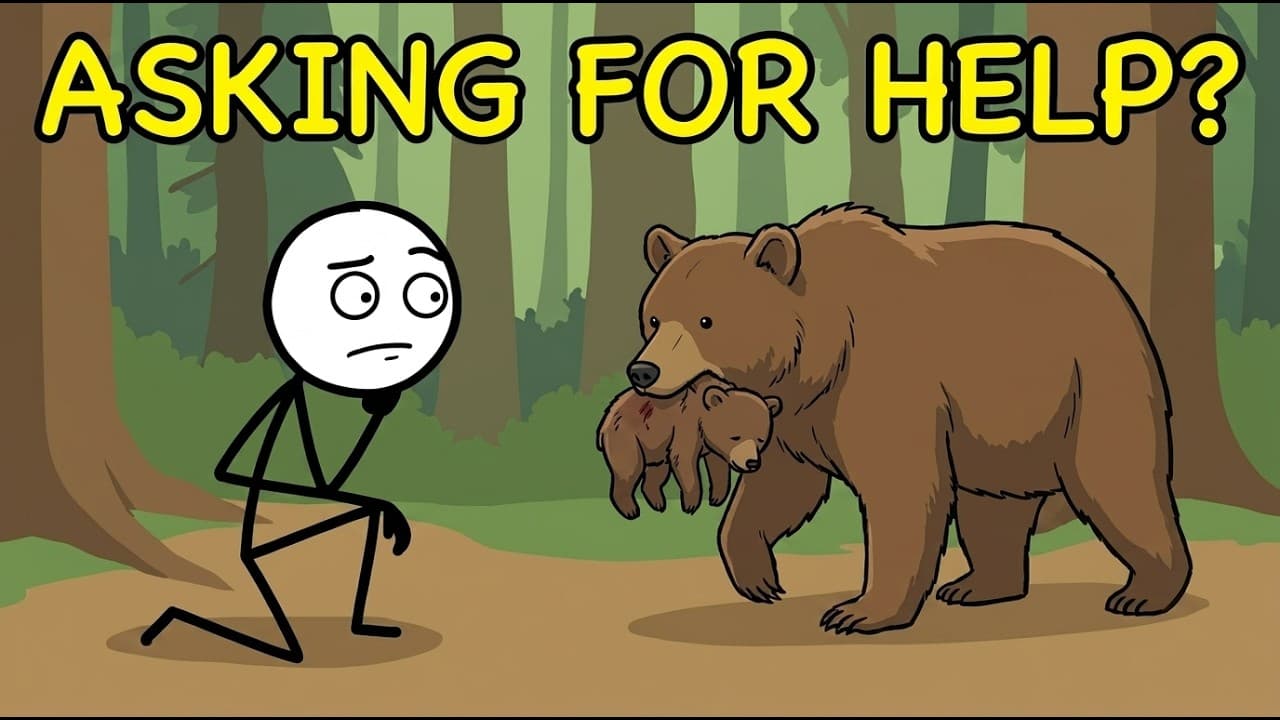
Why Do Wild Animals Entrust Babies to Humans?
TL;DR
Animals may bring vulnerable offspring to particular humans because repeated gentle encounters, strong memory, social learning, and desperation can make those people seem safer or more capable than other available options. The behavior is not explained by one universal motive: it can reflect learned trust, cooperative social instincts, domestication, recognition of human caregiving, or an urgent response to danger and injury.
Transcript
Picture this. A fisherman is out on a quiet stretch of water minding his own business when a wild dolphin suddenly appears next to his boat nudging something toward him. He leans over expecting maybe a fish, maybe trash, maybe nothing at all. Instead, it's a baby dolphin tangled in fishing line barely breathing. The mother is right there circling, ... Read More
Key Insights
- Animal approaches are often selective rather than random. Cats, crows, and elephants can identify particular humans whose earlier behavior appeared calm, predictable, helpful, or food-providing, making an established personal history central to many reported encounters.
- Trust develops through repeated evaluation. A cat can build a mental map that separates safe entities from unsafe ones, eventually reclassifying a reliable person from a potential threat into something resembling an extension of its social group.
- Cetacean help-seeking may build on cooperative social behavior. Dolphins and whales already participate in shared care and coordinated rescue within their pods, which may help them recognize that a nearby human could assist an injured or entangled calf.
- Human responses to visibly injured animals can signal low threat. Slow movements, quiet voices, and careful handling provide body-language cues that animals can observe, remember, and potentially associate with safety during later emergencies.
- Crow trust can persist and spread socially. Crows recognize individual human faces for years, remember harmful or helpful treatment, and may pass assessments of particular people to offspring that have not directly interacted with those humans.
- Domestication strengthened canine reliance on humans. Dogs evolved alongside people for roughly 15,000 years around shared resources, cooperation, and protection, helping explain why a trusting mother dog may carry newborn puppies directly to her owner.
- Elephant approaches can depend on long-term recognition. Herds have reportedly presented injured or orphaned calves to conservationists, rangers, or sanctuary workers, while individual elephants may remember helpful caretakers after a decade of separation.
- Desperation can resemble deliberate trust. A parent facing injury, predators, flooding, or another unsolvable danger may move toward a large, slow, apparently non-predatory human because that person is the most practical available option, not because of affection.
Install to Summarize YouTube Videos and Get Transcripts
Explore YouTube Video Summarizer or Get YouTube Transcript Extractor
Questions & Answers
Q: Why do wild animals sometimes bring their babies to humans?
Wild animals may approach humans with vulnerable offspring because several motives overlap. A particular person may have earned trust through calm behavior, feeding, or earlier assistance. Socially complex animals may also recognize that humans can perform actions they cannot, such as removing fishing line. In other situations, the parent may simply be desperate and move toward the safest available large presence.
Q: How do animals decide which humans are safe?
Animals can evaluate repeated behavior and remember whether an individual is calm, predictable, food-providing, helpful, loud, erratic, or threatening. Cats are described as forming a mental map of safe and unsafe entities, while crows and elephants can retain memories of particular people. Trust therefore tends to follow an accumulated history of low-threat encounters instead of appearing instantly or applying to every human.
Q: Do animals actually ask humans to rescue their young?
Some encounters look deliberate because a parent positions an injured young animal near a person, remains nearby, and waits. Mother whales have reportedly held calves alongside boats, and elephant mothers have presented injured calves to caretakers. However, the behavior cannot always be reduced to a conscious request. It may combine recognition of human ability, learned trust, social instincts, and urgent desperation.
Q: Why do dolphins and whales approach boats with injured calves?
Dolphins and whales live in tightly connected pods that practice cooperative care, shared babysitting, and coordinated rescue. That social framework may allow them to identify an individual in trouble and another individual capable of helping. Boats can also become familiar through generations of non-threatening exposure, while gentle human reactions to visible injury may reinforce the association between people and assistance.
Q: Why do cats bring kittens to particular people?
A mother cat may bring kittens to a person who has passed a long, unspoken evaluation. Cats notice who supplies food, moves calmly, offers help, or behaves aggressively. Once a particular person is categorized as safe, the cat may treat that human more like a trusted member of its social environment. Injured, newborn, or otherwise helpless kittens may then be placed near that person.
Q: Can animal trust in humans pass from parents to offspring?
Animal trust may be socially transmitted when young animals observe how their parents respond to particular people. The transcript describes crow offspring appearing to recognize safe humans before directly interacting with them. A young animal can absorb a parent's relaxed or trusting response just as it learns other environmental cues, allowing an established assessment of a person to persist beyond one individual's experience.
Q: How did domestication affect dogs bringing puppies to humans?
Domestication changed how dogs process trust and dependency around people. Dogs have spent roughly 15,000 years evolving alongside humans through cooperative care, shared resources, and mutual protection. A mother dog that regards her owner as a trusted pack member may carry newborn puppies to that person one by one. Access to the puppies reflects the deeply established human-dog social relationship.
Q: Is bringing a baby to a human always a sign of trust?
Bringing young near a human is not always a thoughtful gesture of trust or affection. A mother confronting a predator, a flooded den, or an injury she cannot treat may have very few choices. Humans are large, conspicuous, and sometimes behave non-aggressively around vulnerable animals, so approaching one may be a practical survival response driven by urgency rather than a stable social bond.
Summary & Key Takeaways
-
Animals that approach humans with vulnerable young often target particular people rather than strangers. Cats may evaluate who provides food, behaves calmly, or previously offered help. Once a person is classified as safe, the animal may treat that human more like a trusted social partner than a potential threat.
-
Dolphins, whales, crows, dogs, and elephants illustrate how memory and social intelligence may support cross-species help-seeking. Animals capable of cooperative care can recognize individual needs and remember helpful people. Trust may also spread socially when offspring observe and adopt a parent's established assessment of a particular human.
-
Not every encounter proves deliberate communication or affection. An injured, threatened, or displaced mother may approach a human because few alternatives remain. Across the examples, the recurring ingredients are vulnerability, prior low-threat contact, reliable human behavior, strong memory, social complexity, and an immediate problem the parent cannot solve alone.
Read in Other Languages (beta)
Share This Summary 📚
Summarize YouTube Videos and Get Video Transcripts with 1-Click
Try YouTube Summary with ChatGPT & Claude or YouTube Transcript Generator
Explore More Summaries from Stickly 📚




Summarize YouTube Videos and Get Video Transcripts with 1-Click
Try YouTube Summary with ChatGPT & Claude or YouTube Transcript Generator