Why Do Wild Predators Avoid Sleeping Humans?
TL;DR
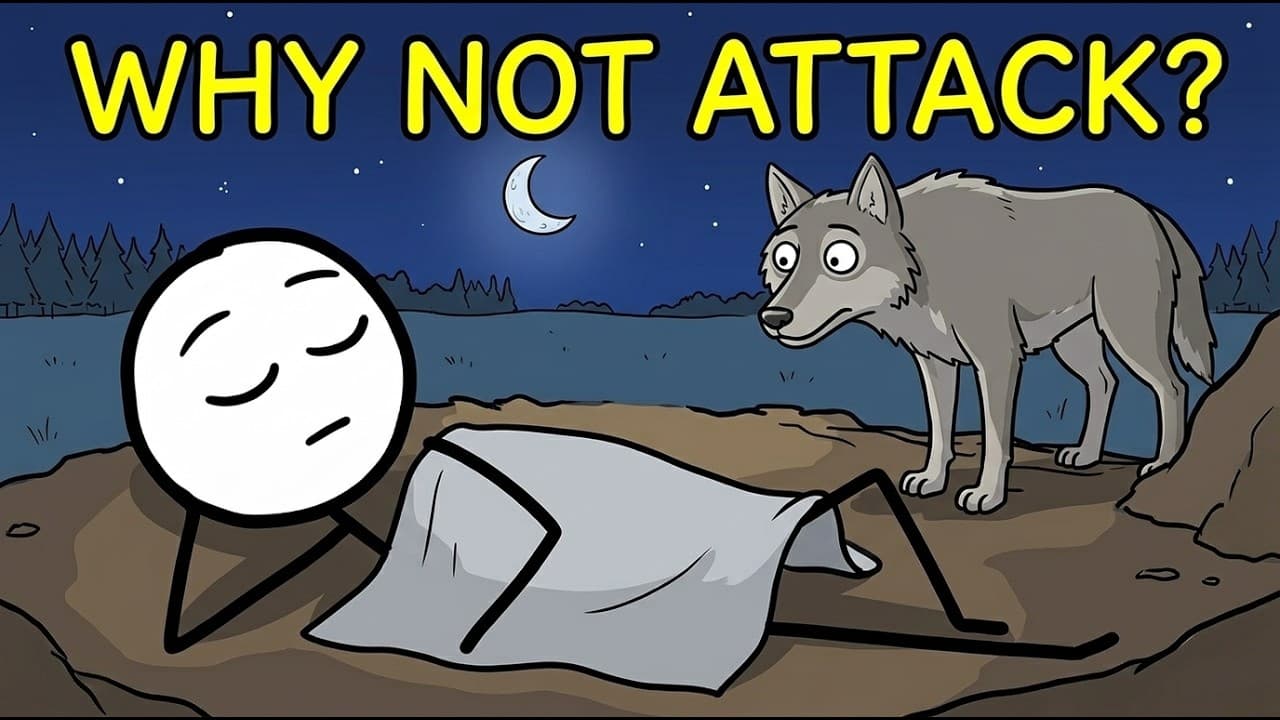
Wild predators usually avoid sleeping humans because people seem unfamiliar, unpredictable, and historically dangerous, making an attack riskier than its potential reward. A 2019 UC Santa Cruz study found that pumas fled from ordinary human voices and sometimes abandoned food they were already eating. Human scents, tools, companions, and campfires add further uncertainty, while generations of hunting reinforced predators’ caution. Read on to see how each warning signal shapes their behavior.
Transcript
You're asleep, completely out, drooling on your pillow, probably snoring, zero awareness of the world around you. You are, by every biological definition, helpless. Now, imagine you're not in your bedroom. You're in a tent. A thin piece of nylon, uh like embarrassingly thin, separating you from a forest full of animals that could absolutely end you... Read More
Key Insights
- Humans are perceived as dangerous by many large predators despite lacking claws, exceptional speed, or strong night vision. The transcript attributes this fear to a long history in which people effectively hunted predators and eliminated animals that approached human settlements too boldly.
- Human voices can trigger strong avoidance behavior in pumas. A 2019 UC Santa Cruz study described in the transcript found that pumas fled from ordinary human speech and sometimes abandoned kills they were actively eating, accepting a significant caloric loss to avoid people.
- Predator caution has been reinforced through natural selection. Lions, wolves, leopards, and other predators that kept their distance from humans were more likely to survive and reproduce than individuals that approached camps, settlements, or people and were consequently killed.
- Human scent does not match the chemical profile of familiar prey. Synthetic fabrics, processed food, soap, shampoo, sunscreen, insect repellent, and an underlying primate odor create an unusual combination that predators may interpret as an anomaly requiring caution.
- Predatory behavior is calibrated to particular prey rather than every vulnerable animal. Wolves respond to characteristics associated with ungulates, while lions recognize familiar prey through established combinations of shape, movement, speed, and smell that sleeping humans do not reliably reproduce.
- Fire produces widespread avoidance among land animals and has protected sleeping humans for a very long time. Smoke and flame signal danger, while a campfire also indicates the presence of a creature capable of controlling something that wild animals instinctively fear.
- Large predators avoid unnecessary injury because even one broken leg, damaged eye, or deep wound can prevent successful hunting and lead to starvation. Each attempted attack therefore involves a calculation involving calories, energy expenditure, familiarity, uncertainty, and the probability of injury.
- Sleeping humans remain unpredictable targets because they may awaken screaming, thrash unexpectedly, reach for tools, or alert nearby companions. Predators cannot rely on well-practiced hunting responses when they do not know how the target will react, making avoidance the safer option.
Install to Summarize YouTube Videos and Get Transcripts
Explore YouTube Video Summarizer or Get YouTube Transcript Extractor
Questions & Answers
Q: Why do wild predators avoid sleeping humans?
Predators often avoid sleeping humans because people do not match the familiar scent, shape, movement, and behavior of their usual prey. Humans may awaken, scream, thrash, use tools, or receive help from companions, so attacking them presents uncertain rewards and a serious risk of injury.
Q: How has human hunting shaped predator behavior?
For generations, predators that approached human camps and settlements too boldly were more likely to be killed, while cautious animals survived and reproduced. The transcript describes this natural-selection pressure as an inherited alarm that encourages modern predators to avoid humans.
Q: What did the 2019 UC Santa Cruz puma study find?
Researchers played recordings of ordinary human voices near pumas in California’s Santa Cruz Mountains, and the animals fled at the same rate as they did from barking dogs, and often faster. Some pumas even abandoned food they had already killed and were eating, showing that avoiding humans outweighed the immediate caloric reward.
Q: Why does human scent make predators cautious?
A camper may carry an unfamiliar mixture of nylon, polyester, processed food, soap, shampoo, sunscreen, insect repellent, and an underlying primate odor. Because predators are calibrated to recognize the chemical profiles of familiar prey, this unusual combination can prompt caution instead of an attack.
Q: How can a campfire protect sleeping humans from predators?
A campfire produces smoke, light, heat, and flame, all of which signal danger to land animals. It also reveals that humans can control something animals instinctively avoid, encouraging predators to remain away from the campsite.
Q: Why are apex predators cautious about possible injuries?
Large predators must stay healthy enough to hunt, so even a broken leg, damaged eye, or deep wound can threaten their survival. They weigh calories and likely success against energy use, unfamiliarity, uncertainty, and the possibility of injury before attacking.
Q: Why are humans not recognized as normal prey?
Predatory responses are tuned to particular animals and combinations of smell, shape, speed, and movement. Wolves are accustomed to ungulates, while lions rely on patterns learned from familiar prey, so a sleeping human appears more like an anomaly than an automatic target.
Q: How does unpredictability discourage predators from attacking sleeping people?
A predator cannot know whether a sleeping person will awaken screaming, move unexpectedly, grab a tool, stand upright, or alert nearby companions. Without a practiced response to those possibilities, withdrawing is often safer than attempting an unfamiliar hunt.
Summary & Key Takeaways
-
Humans appear vulnerable while sleeping, but large predators do not automatically treat helpless creatures as prey. Hunting behavior is calibrated to familiar species, scents, shapes, and movements. Because humans do not match those established prey patterns, an encounter often produces uncertainty and avoidance instead of triggering an immediate attack.
-
Human hunting has influenced predator behavior across many generations. Animals that boldly approached camps or settlements were more likely to be killed, while cautious individuals survived and reproduced. The resulting inherited caution helps explain why leopards, wolves, lions, pumas, tigers, and jaguars commonly avoid places where humans are present.
-
Predators carefully balance food rewards against injury, wasted energy, and uncertainty. Sleeping humans may awaken, scream, thrash, use tools, or receive help from nearby people. Synthetic materials, hygiene products, food odors, smoke, and fire make camps even stranger, encouraging predators to move away instead of attempting an unfamiliar hunt.
Read in Other Languages (beta)
Share This Summary 📚
Summarize YouTube Videos and Get Video Transcripts with 1-Click
Try YouTube Summary with ChatGPT & Claude or YouTube Transcript Generator
Explore More Summaries from Stickly 📚


Summarize YouTube Videos and Get Video Transcripts with 1-Click
Try YouTube Summary with ChatGPT & Claude or YouTube Transcript Generator