How Did Japan Secure a 15% U.S. Tariff Rate?
TL;DR
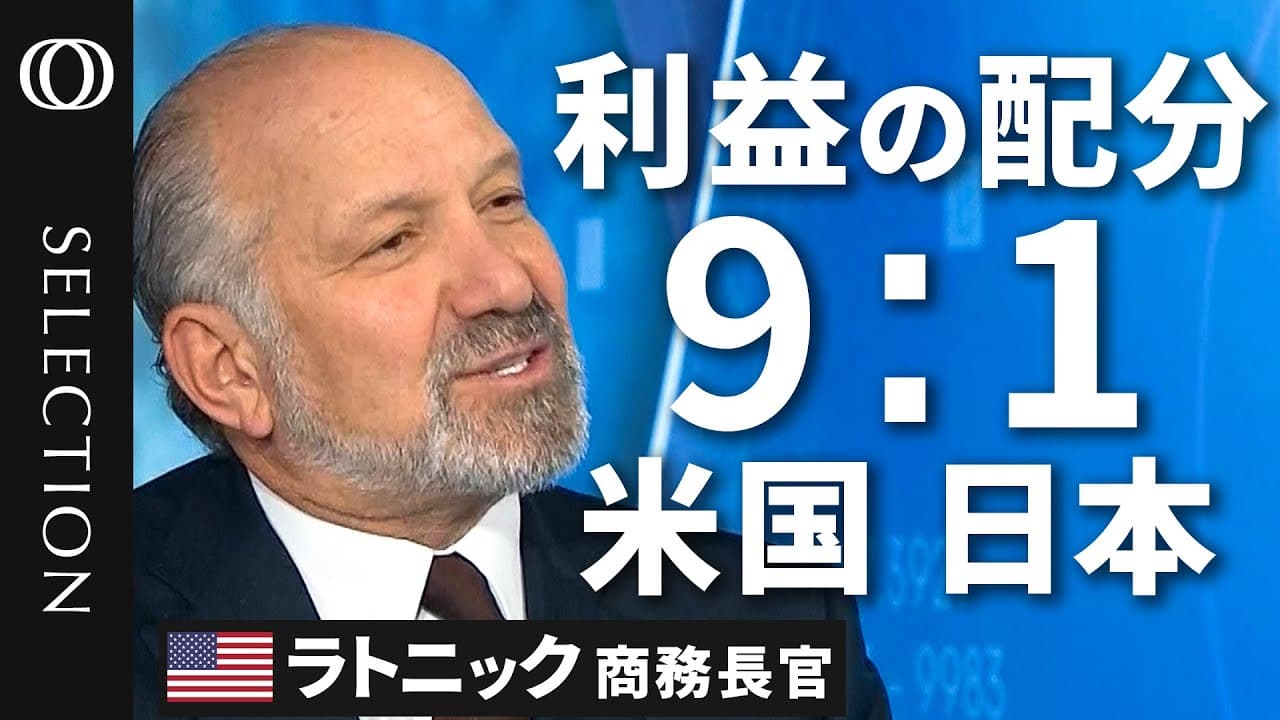
Japan secured a 15% U.S. tariff rate by committing $550 billion in financing for American projects selected and executed by the United States, according to Commerce Secretary Howard Lutnick. Japan would act as the banker rather than the operator, using equity, loans, and loan guarantees, while project profits would be divided 90% for U.S. taxpayers and 10% for Japan.
Transcript
another negotiator that was at that table with the president last night, commerce secretary Howard Lutnik. I want to pick up on this idea and good morning. Thanks for joining us. I want to pick up this idea of innovative financing mechanisms and this $550 billion fund the Japanese are going to be investing into. What exactly is that fund going to l... Read More
Key Insights
- Japan's $550 billion commitment is financing for projects that the United States would choose, structure, and execute, according to Lutnick. Japan would provide the required capital through equity, loans, loan guarantees, or a combination of those mechanisms.
- Japan's role is to be the banker, not the project operator. The financing would not necessarily support Japanese companies, because American authorities could choose an operator to run each project after deciding which domestic capabilities should be built.
- Project profits would be divided 90% for U.S. taxpayers and 10% for Japan under Lutnick's description. He used this proposed distribution to distinguish the commitment from ordinary foreign direct investment by companies such as Toyota.
- National security priorities are the intended focus of the financing arrangement. Lutnick identified generic pharmaceuticals, antibiotics, semiconductor fabrication, and critical minerals as examples of industries that the United States could choose to develop with Japanese financial backing.
- The 15% tariff rate was effectively purchased through Japan's investment commitment, in Lutnick's characterization. He said the lower rate gives Japanese automakers room to retain some production in Japan while continuing to build substantial manufacturing capacity in the United States.
- A 25% automotive tariff is intended to encourage production inside the United States, according to Lutnick. He described 15% as being near the threshold at which Japanese manufacturers could still economically produce some vehicles in Japan for export.
- The Japan agreement could become a model for negotiations with the European Union. Lutnick said major economies would have difficulty obtaining tariff rates below 15%, while smaller countries might have a greater possibility of receiving lower rates at the president's discretion.
- Market access could influence the tariff offered to Europe. Lutnick highlighted acceptance of vehicles built to U.S. standards as an example, arguing that genuine access for American cars, agricultural goods, fish, and other products would create significant export opportunities.
Install to Summarize YouTube Videos and Get Transcripts
Explore YouTube Video Summarizer or Get YouTube Transcript Extractor
Questions & Answers
Q: How did Japan secure a 15% U.S. tariff rate?
Japan secured the 15% rate by committing $550 billion to finance projects in the United States, according to Commerce Secretary Howard Lutnick. He characterized the arrangement as Japan effectively buying down its tariff rate. In return, the United States would choose and execute projects considered important to national security, while Japan would provide equity, loans, loan guarantees, or a mixture of those forms of financing.
Q: How would Japan's $550 billion investment fund work?
The United States would identify the projects, decide which ones should proceed, and arrange their execution. Japan would then finance the required development through equity, loans, loan guarantees, or other combinations it selected. An operator would run each completed project. Lutnick said the resulting profits would be divided 90% for U.S. taxpayers and 10% for Japan.
Q: Would Japanese companies operate the projects financed by Japan?
Japanese companies would not automatically operate the projects. Lutnick emphasized that Japan would serve as the financier or banker, while the United States would select the projects and give them to operators. He contrasted this structure with a Japanese company such as Toyota independently building its own factory. The financing could therefore support projects operated by parties other than Japanese businesses.
Q: What industries could receive financing under the U.S.-Japan agreement?
Lutnick identified generic pharmaceuticals, antibiotics, semiconductor fabrication, and critical minerals as possible areas for financing. His examples centered on capabilities that the United States considers important to national security. He said the president could decide to build such capacity in America, after which Japan would be responsible for financing the selected project and delivering the required funding.
Q: How would profits from the financed projects be divided?
Lutnick said profits would be split so that 90% went to the taxpayers of the United States and 10% went to Japan. He presented this division as part of a structure in which America chooses and executes projects while Japan supplies the financing. The transcript does not provide further details about how profits, losses, costs, or individual project returns would be calculated.
Q: Why is the 15% automotive tariff important to Japan?
The 15% rate is important because Lutnick described it as being near the point at which Japanese automakers can continue producing some vehicles in Japan. He said a 25% tariff pushes companies toward building in America, while 15% leaves Japanese manufacturers more room to retain domestic production. Japan also agreed to support substantial investment and manufacturing activity in the United States.
Q: Could the Japan agreement become a model for European Union negotiations?
The agreement could become a model, but Lutnick said the outcome would depend on what European negotiators offered. He suggested that large economies would have difficulty obtaining a tariff rate below Japan's 15%. Genuine market opening, including accepting American vehicles built to U.S. standards, could influence President Trump by creating export opportunities for American manufacturers, farmers, ranchers, and fishermen.
Q: What could Europe offer to obtain a lower U.S. tariff rate?
Europe could offer broader access for American products, according to Lutnick. His clearest example was accepting cars manufactured in Detroit under U.S. standards without requiring a different vehicle specifically for Europe. He also referenced opportunities for American agricultural goods and other exports. However, he did not promise Europe a rate below 15% and said large countries would have difficulty obtaining one.
Summary & Key Takeaways
-
Commerce Secretary Howard Lutnick described Japan's $550 billion commitment as financing for American projects chosen and executed by the United States. Potential projects include generic pharmaceuticals, semiconductor fabrication, and critical minerals. Japan would supply equity, loans, or loan guarantees, but American authorities would determine priorities and select operators to run the projects.
-
Lutnick said Japan effectively purchased a lower tariff rate through its investment commitment. The 15% rate allows Japanese automakers to continue producing some vehicles in Japan while also building extensively in America. He contrasted Japan's position with Europe and South Korea, which he said were then facing 25% tariffs.
-
The Japan agreement could influence negotiations with the European Union, although Lutnick said large economies would struggle to obtain rates below 15%. He argued that accepting American cars under U.S. standards and genuinely opening European markets to American products could create major export opportunities and affect President Trump's negotiating position.
Read in Other Languages (beta)
Share This Summary 📚
Summarize YouTube Videos and Get Video Transcripts with 1-Click
Try YouTube Summary with ChatGPT & Claude or YouTube Transcript Generator
Explore More Summaries from TBS CROSS DIG with Bloomberg 📚
Summarize YouTube Videos and Get Video Transcripts with 1-Click
Try YouTube Summary with ChatGPT & Claude or YouTube Transcript Generator