How to Design a Reliable Agentic Coding Workflow
TL;DR
Maintainable agent-generated code requires human program design, measurable outcomes, strong testing, and deliberate trust-building. Agents can dramatically accelerate implementation, incident analysis, and small fixes, but removing code review safely demands better automated reviews, regression tests, live validation, CI/CD checks, linters, and systematic prevention of repeated failure modes.
Transcript
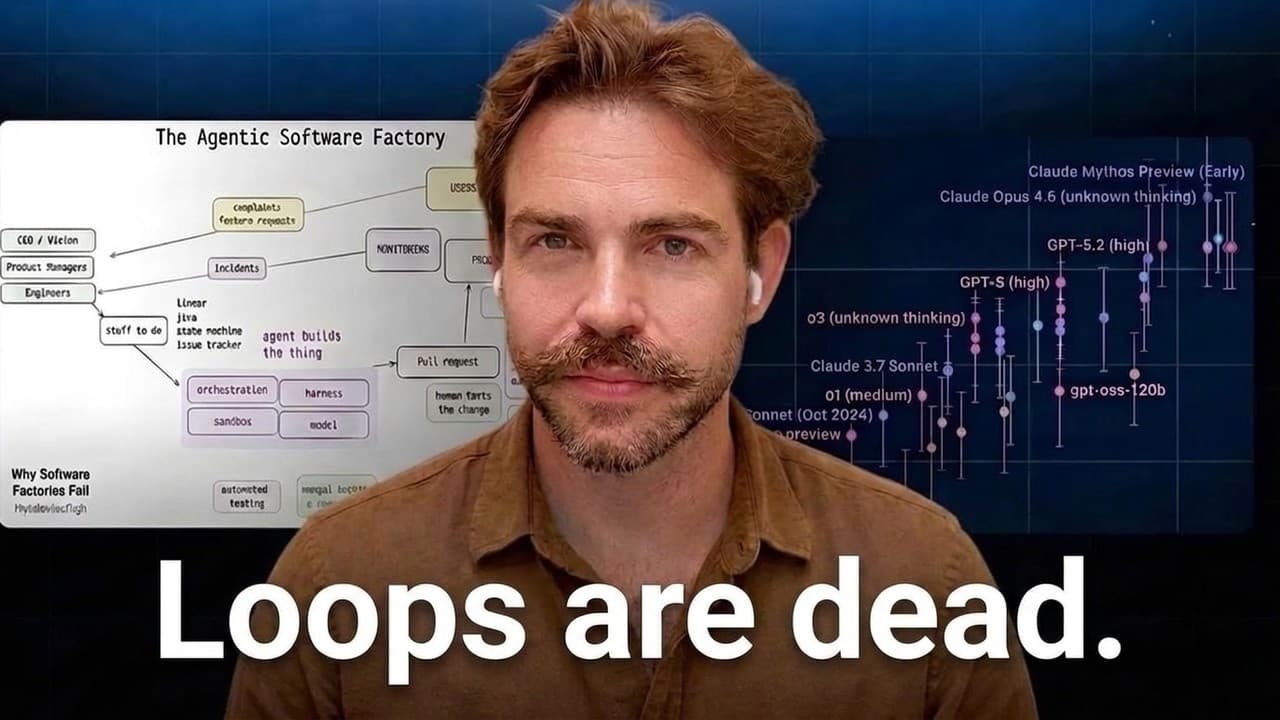
Stop playing with your coding agents and get back to work. They can solve problems really, really well, but they're not going to be able to write maintainable code without you in the loop helping. The thing that I think most people skip is actually what I call like program design. It's like before you let the agent go cook, there are decisions that... Read More
Key Insights
- Coding agents are effective problem solvers, but they cannot reliably produce maintainable code without engineers remaining involved. Human responsibility shifts toward program design, trust assessment, testing strategy, platform evolution, and deciding which changes require direct inspection before reaching production.
- Program design is the work of making important decisions before an agent starts coding. It reduces the chance that the agent selects an undesirable architecture or implementation and can save time during both generation and review by clarifying the intended result early.
- Measurable outputs give agents a concrete target they can pursue. Engineers can prescribe how a task should be completed, but leaving selected implementation details open may allow the model to identify an approach that the engineer would not have considered independently.
- Agentic implementation makes building faster while review can remain slow. When agents generate tens of thousands of lines, complete manual inspection becomes impractical, so the central challenge becomes establishing confidence that changes work today and will remain maintainable later.
- Trust in generated code can be increased through independent model reviews, automated testing, browser-based validation, regression checks, and stronger CI/CD controls. These mechanisms catch different failure types and help teams decide when a change can ship without exhaustive human code review.
- Incidents can be routed directly into an agentic software factory. Instead of waking to an alert, an engineer could receive a pull request, while an agent may also determine that an external provider caused the incident and draft a suitable user communication.
- Small, familiar changes may justify lighter review when an engineer understands the prompt and the model's likely failure modes. Uncertain changes call for additional testing, another frontier model's review, and direct human examination before deployment.
- Repeated failures should become permanent workflow improvements. When a specific problem appears, the team can add regression coverage, linters, complexity monitoring, or CI/CD checks designed to stop that failure mode from recurring in later agent-generated changes.
Install to Summarize YouTube Videos and Get Transcripts
Explore YouTube Video Summarizer or Get YouTube Transcript Extractor
Questions & Answers
Q: How do you design a reliable agentic coding workflow?
A reliable workflow begins with program design before the agent writes code. Define a measurable result, communicate important implementation constraints, and decide how the finished change will be validated. Build confidence through independent agent reviews, live application testing, regression tests, robust CI/CD checks, linters, and complexity monitoring. Human judgment remains necessary for maintainability and risk assessment.
Q: Why is program design important before an agent starts coding?
Program design surfaces decisions that an agent would otherwise make on its own, including choices an engineer might dislike. Discussing the intended behavior and implementation before generation can prevent the wrong feature or approach from being built. It also reduces later review work because the generated result is more likely to match what the team already agreed upon.
Q: Why do coding-agent benchmarks fail to show full agent capability?
The critique presented is that many benchmarks focus on one-off problems, such as completing a quick task, fixing tests, or producing a solution in a single attempt. Real software work involves a continuing factory with implementation, review, deployment, monitoring, incidents, user feedback, and repeated improvement. A short benchmark does not represent that broader operational loop.
Q: What is the main bottleneck after agents accelerate implementation?
Review and trust become the primary bottlenecks because implementation may take minutes or hours while validation can still take hours or days. Engineers must determine whether the generated software works now, whether it will create maintenance problems later, and whether it could cause incidents, complaints, or additional feature requests. Large code volumes make complete manual review impractical.
Q: How can teams trust agent-generated code without reading all of it?
Teams can strengthen automated code review, regression testing, live application testing, browser-based validation, CI/CD checks, linters, and complexity monitoring. An agent may also provide a short video showing the finished behavior. Using multiple frontier models to review the same change can identify additional issues, although the workflow still requires human judgment about risk and maintainability.
Q: When can an agent-generated change ship with minimal review?
A small and familiar change, such as a minor front-end adjustment, may receive minimal review when the engineer understands the prompt and knows the model's likely mistakes. If the engineer is uncertain, the transcript recommends basic safeguards such as review by another frontier model, more direct testing, and human inspection. Review depth should reflect confidence and potential consequences.
Q: How can AI agents respond to production incidents?
Production alerts can be routed into an agentic workflow that analyzes the incident before an engineer intervenes. The agent may identify an external provider outage, explain that the team cannot directly fix it, and draft a user message. For an actionable issue such as a missing migration, it may diagnose the cause and recommend or prepare the necessary change.
Q: How can user feedback feed an agentic software factory?
Some support requests can be triaged directly to an agent instead of moving through the entire support queue. The agent can investigate a reported bug and attempt a fix, while product analytics, error data, surveys, and session recordings can reveal friction. The described sponsored example also has an AI tool inspect recordings and open a pull request containing a proposed correction.
Summary & Key Takeaways
-
Agentic coding changes the software factory by replacing human implementation work with agents that can finish tasks in minutes or hours. Review and trust remain bottlenecks because teams must determine whether generated code works now, avoids future slowdowns, and will not cause incidents or excessive user complaints.
-
Program design happens before an agent begins implementation. Engineers can improve results by defining measurable outputs, discussing intended changes, and specifying important implementation constraints. Leaving some choices open can also be useful because the model may discover an effective approach that the engineer had not previously considered.
-
Reducing manual code review requires investment elsewhere in the workflow. Agents need live testing, automated code review, regression coverage, robust CI/CD checks, linters, complexity monitoring, and feedback loops. Incidents and support requests can sometimes flow directly into the factory, allowing agents to diagnose problems or prepare fixes.
Read in Other Languages (beta)
Share This Summary 📚
Summarize YouTube Videos and Get Video Transcripts with 1-Click
Try YouTube Summary with ChatGPT & Claude or YouTube Transcript Generator
Explore More Summaries from David Ondrej 📚


Summarize YouTube Videos and Get Video Transcripts with 1-Click
Try YouTube Summary with ChatGPT & Claude or YouTube Transcript Generator