How to Write Short Messages People Actually Read
TL;DR
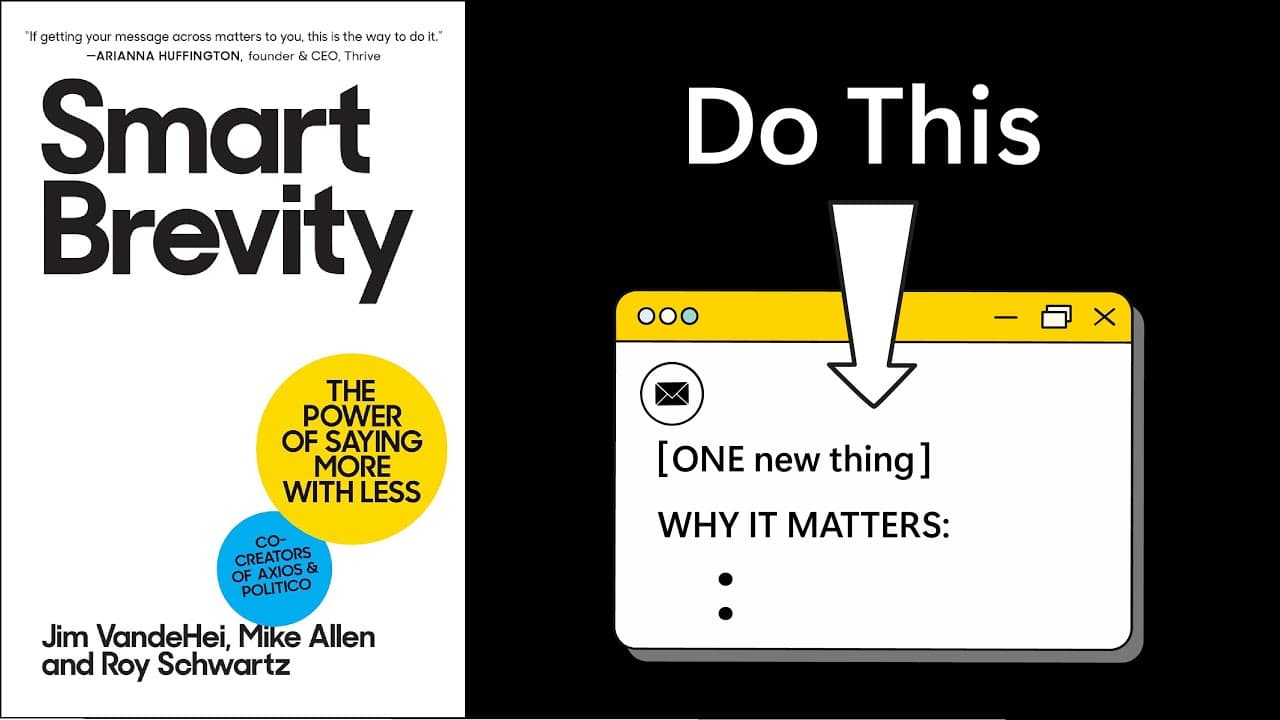
Lead with the one new thing readers need to know, express it in a strong first sentence, and use as few words as possible. Then explain why it matters and offer details for readers who want more. Specific subject lines, active voice, short words, bullets, bold phrases, strategic emojis, and simple visuals help people skim without missing the message.
Transcript
I recently read Smart Brevity by Jim Vanderhigh, Mike Allen, and Roy Schwarz. This is what people see when they open your emails. If you don't give them something valuable in the first dozen words, you'll lose them. The average worker receives 75 more emails per day than they did a decade ago and skims online content incredibly fast. We've hit peak... Read More
Key Insights
- The most important writing principle is to give readers the one new thing they need to know in a strong first sentence, using as few words as possible. Greetings, long introductions, and background delay the value and increase the chance that busy readers will leave.
- The core message structure is: this happened, this is why it matters, and here are the details. It gives every reader the essential news and its significance first, while allowing interested readers to continue into supporting information at their own pace.
- A strong subject line is provocative and specific in six words or fewer. The transcript says 80% of writing success comes down to the subject line, because a subject that fails to create curiosity can leave the entire message unread.
- Active voice makes sentences direct by following a who-did-what structure. The example "The wildfire destroyed 200 homes" is easier to read than its passive alternative because the actor and action appear immediately, without forcing readers to untangle the sentence.
- Short words and short sentences create more impact. Replacing formal phrases such as introducing innovative technology to streamline operations with plain language, such as using a new tool to cut work time, makes the meaning faster to grasp and easier to remember.
- Reading the subject line and first sentence aloud helps writers test how the message sounds in conversation. The recommended standard is to keep polishing both until the imagined listener's facial expression suggests intense interest rather than confusion, indifference, or impatience.
- Axiom headers and bullets function as attention magnets for people who skim. Headers such as "Why it matters," "The impact," and "By the numbers" should be followed by two to three bullets that quickly explain why the reader should care.
- Visual structure helps readers reach the end of a message. Paragraph breaks, bold key phrases, strategic emojis, and simple images or charts create visual pauses, convey meaning quickly, and help partially attentive readers identify the most important details.
- More videos from this channel:
- More from this channel: Productivity Game
Install to Summarize YouTube Videos and Get Transcripts
Explore YouTube Video Summarizer or Get YouTube Transcript Extractor
Questions & Answers
Q: How do you write a concise message people will read?
Start with the one new thing the reader needs to know and state it in the shortest strong sentence you can write. Follow that sentence with an explanation of why the information matters, then provide supporting details for readers who want them. Remove routine greetings, unnecessary backstory, and rhetorical setup because they postpone the value readers came to receive.
Q: What is the Smart Brevity message structure?
The structure has three parts: this happened, this is why it matters, and here are the details. The first part delivers the news immediately. The second connects that news to the reader's needs or actions. The final part supplies addresses, times, evidence, or other supporting information, allowing readers to stop after receiving the essentials or continue for more context.
Q: How should an email subject line be written?
An email subject line should be provocative, specific, and six words or fewer. The transcript recommends spending more time on it because 80% of writing success comes down to the subject line. Concrete wording such as "seven time-saving templates" creates more curiosity and value than a vague label such as "work templates" or "meeting follow-up."
Q: Why should important information appear in the first sentence?
Important information belongs first because workers receive 75 more emails per day than they did a decade ago and skim online content quickly. If the opening dozen words do not provide something valuable, readers may leave. A useful first sentence saves their time, delivers an immediate reward, and can earn enough attention for them to read the explanation and details.
Q: How can active voice improve business writing?
Active voice improves business writing by identifying who did what in a direct order. "The wildfire destroyed 200 homes" presents the actor, action, and result clearly, while the passive version delays the actor. After writing an active sentence, shorten it further and replace long, formal terms with plain words that readers can understand with less effort.
Q: What formatting helps readers skim an email?
Useful formatting includes an axiom header, two to three bullets, short paragraphs, and bold key phrases. Headers such as "Why it matters," "The impact," or "By the numbers" tell readers where the value is. Paragraph breaks prevent dense blocks of text, while bold phrases let skimmers capture key information quickly and decide where to slow down.
Q: How should emojis and visuals be used in messages?
Emojis should be used strategically, such as placing a bar chart emoji beside an important data point so readers can anticipate the topic immediately. Simple visuals, including a chart screenshot or an AI-generated illustration, can break up consecutive paragraphs and reinforce a point. Their purpose is to convey information and provide a visual pause, not merely decorate the message.
Q: How can you test whether an opening is interesting?
Read the subject line and first sentence aloud as though you were speaking to someone in person. Imagine the listener's facial expression, then revise the wording until that imagined response shows intense interest. This test encourages conversational language, exposes awkward or overly formal phrasing, and helps confirm that the opening delivers a clear and valuable idea quickly.
Summary & Key Takeaways
-
Effective messages begin with the most important new information, not greetings, background, or rhetorical questions. The recommended structure is simple: state what happened, explain why it matters, and then provide optional details. This ordering rewards readers immediately, saves time, and makes them more likely to continue reading the message.
-
Subject lines determine whether readers open a message, so they should receive significant attention. The book recommends provocative, specific wording in six words or fewer, which can display fully in mobile inboxes. Concrete details, useful numbers, recognizable figures, or current events can create curiosity and signal that the message deserves attention.
-
Readable messages use active voice, short sentences, and familiar words, including one-syllable words where possible. Axiom headers, brief bullet lists, paragraph breaks, bold phrases, strategic emojis, and simple visuals guide readers through the content. Reading the subject and opening aloud also helps reveal whether they sound natural and interesting.
Read in Other Languages (beta)
Share This Summary 📚
Summarize YouTube Videos and Get Video Transcripts with 1-Click
Try YouTube Summary with ChatGPT & Claude or YouTube Transcript Generator
Explore More Summaries from Productivity Game 📚
Summarize YouTube Videos and Get Video Transcripts with 1-Click
Try YouTube Summary with ChatGPT & Claude or YouTube Transcript Generator