How to Succeed by Faking It: Joel Buckley's Argument
TL;DR
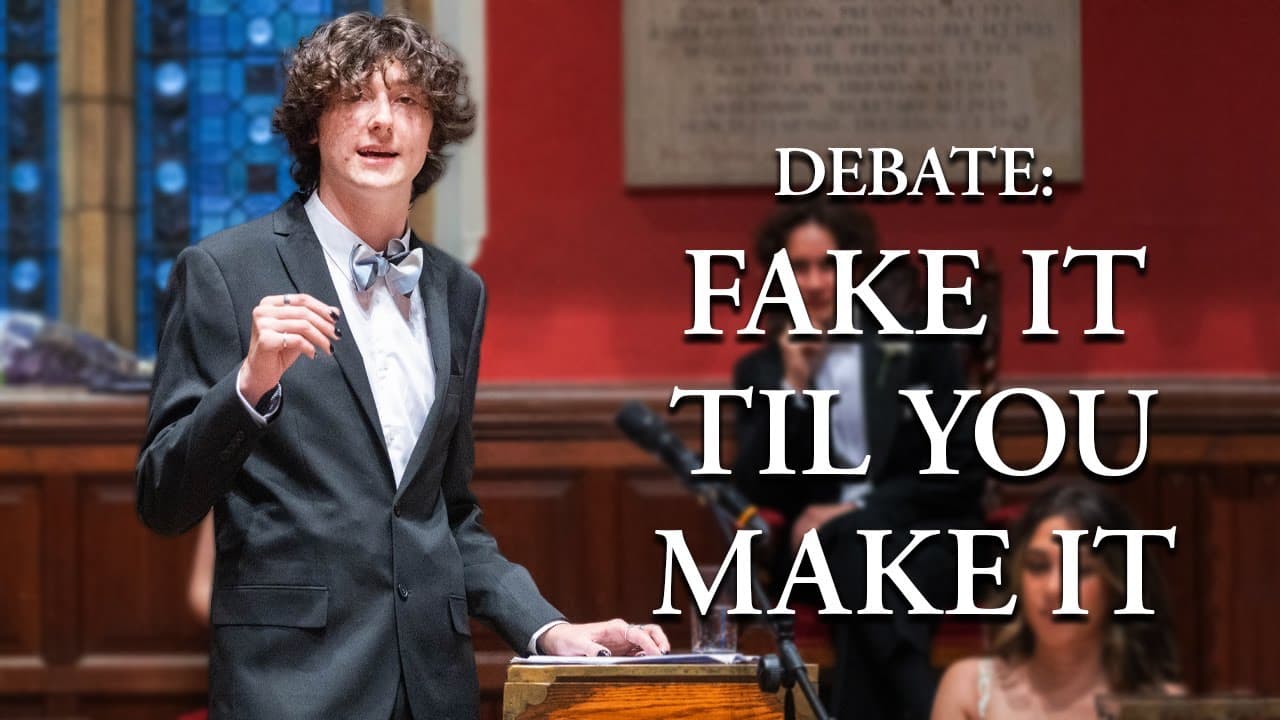
Faking confidence and skills can sometimes be beneficial in achieving success. Joel Buckley argues that in certain situations, pretending to be more capable than one actually is can lead to personal and professional advancement. However, this approach should be used wisely, as it can also lead to ethical dilemmas and potential failures.
Transcript
all can say ladies and gentlemen is to keep faking it and you have the best chance possible to make it good evening ladies and gentlemen at the house thank you all for coming and welcome to perhaps the most elaborate and pompous examples of clowns spouting mediocre confused speeches ever seen by the public at least since last week's televis... Read More
Key Insights
- Faking confidence can help individuals achieve success in various aspects of life.
- Pretending to have certain skills may lead to opportunities that would otherwise be inaccessible.
- The debate highlights the importance of using fakery wisely to avoid ethical issues.
- Personal anecdotes and humor are used to illustrate the effectiveness of 'faking it.'
- The speaker acknowledges the potential dangers of faking expertise in critical situations.
- Faking enjoyment or interest is common in social settings to enhance personal experiences.
- The debate context is set within an Oxford Union comedy debate, adding a humorous tone.
- The speaker emphasizes the role of fakery in securing positions or roles one desires.
Install to Summarize YouTube Videos and Get Transcripts
Explore YouTube Video Summarizer or Get YouTube Transcript Extractor
Questions & Answers
Q: How can faking confidence help in achieving success?
Faking confidence can help individuals appear more competent and capable, which can lead to increased opportunities in both personal and professional settings. By projecting confidence, even if not genuinely felt, individuals may be perceived as more trustworthy and capable, leading to advancements or new roles that might have been otherwise inaccessible.
Q: What are the potential risks of faking expertise?
Faking expertise can lead to serious ethical and practical risks, especially in critical situations where genuine knowledge and skills are required. It can result in poor decision-making, loss of credibility, and potential harm to others. In professional settings, it may lead to legal consequences or damage to one's reputation if the fakery is discovered.
Q: Why is humor used in the debate about faking it?
Humor is used in the debate to engage the audience and make the controversial topic of 'faking it' more relatable and less confrontational. By incorporating humor, the speaker can present arguments in a light-hearted manner, encouraging the audience to consider the nuances of the topic without feeling defensive or judged.
Q: Is faking it always an effective strategy for success?
Faking it is not always an effective strategy for success, as it depends on the context and the individual's ability to balance fakery with genuine skills and knowledge. While it can open doors and create opportunities, it also carries the risk of being exposed, leading to loss of trust and credibility. It is important to use this strategy judiciously and ethically.
Q: How does the speaker use personal anecdotes in the debate?
The speaker uses personal anecdotes to illustrate the concept of 'faking it' in a relatable and engaging way. By sharing humorous and personal stories, the speaker demonstrates how fakery can be applied in everyday situations and highlights its potential benefits and drawbacks. This approach helps to humanize the debate and connect with the audience.
Q: What role does the Oxford Union play in this debate?
The Oxford Union provides a prestigious platform for the debate, allowing speakers to present their arguments on a wide range of topics. As a renowned debating society, it fosters an environment of intellectual discussion and free speech. The comedic context of the debate adds an entertaining dimension, encouraging both speakers and audience members to explore the topic creatively.
Q: Can faking enjoyment enhance social experiences?
Faking enjoyment can enhance social experiences by creating a positive atmosphere and encouraging interaction. By pretending to enjoy certain activities or events, individuals may foster better relationships and social cohesion. However, it is important to ensure that this fakery does not lead to inauthentic connections or personal dissatisfaction in the long run.
Q: What ethical considerations should be taken into account when faking it?
When faking it, ethical considerations include the potential impact on others, the risk of deception, and the importance of maintaining integrity. It is crucial to assess whether fakery could cause harm or mislead others, and to ensure that it does not compromise one's values or professional responsibilities. Balancing fakery with authenticity is key to maintaining ethical standards.
Summary & Key Takeaways
-
Joel Buckley argues that faking confidence and skills can be a strategic approach to achieving success. He uses humor and personal anecdotes to suggest that pretending to be more capable than one is can lead to personal and professional advancement. However, he cautions that this strategy should be used wisely to avoid ethical dilemmas and potential failures.
-
The debate takes place at the Oxford Union, where Buckley humorously discusses the benefits and pitfalls of 'faking it.' He suggests that while faking skills or confidence can open doors, it is important to recognize the potential consequences and use this strategy judiciously.
-
Buckley concludes that 'faking it' can be a valuable tool in navigating life's challenges, but it is essential to balance this approach with authenticity and ethical considerations. The debate is framed within a comedic context, highlighting the lighter side of this controversial topic.
Read in Other Languages (beta)
Share This Summary 📚
Summarize YouTube Videos and Get Video Transcripts with 1-Click
Try YouTube Summary with ChatGPT & Claude or YouTube Transcript Generator
Explore More Summaries from OxfordUnion 📚


Summarize YouTube Videos and Get Video Transcripts with 1-Click
Try YouTube Summary with ChatGPT & Claude or YouTube Transcript Generator