How to Plan an AI SaaS MVP and Write Specs for Launch
TL;DR
The video demonstrates turning a broad AI SaaS vision into a focused MVP plan by identifying the core user action, validating the idea with real feedback, and documenting a minimal, testable spec before any coding begins. It emphasizes scope reduction, clear user flows, and early validation to avoid overbuilding.
Transcript
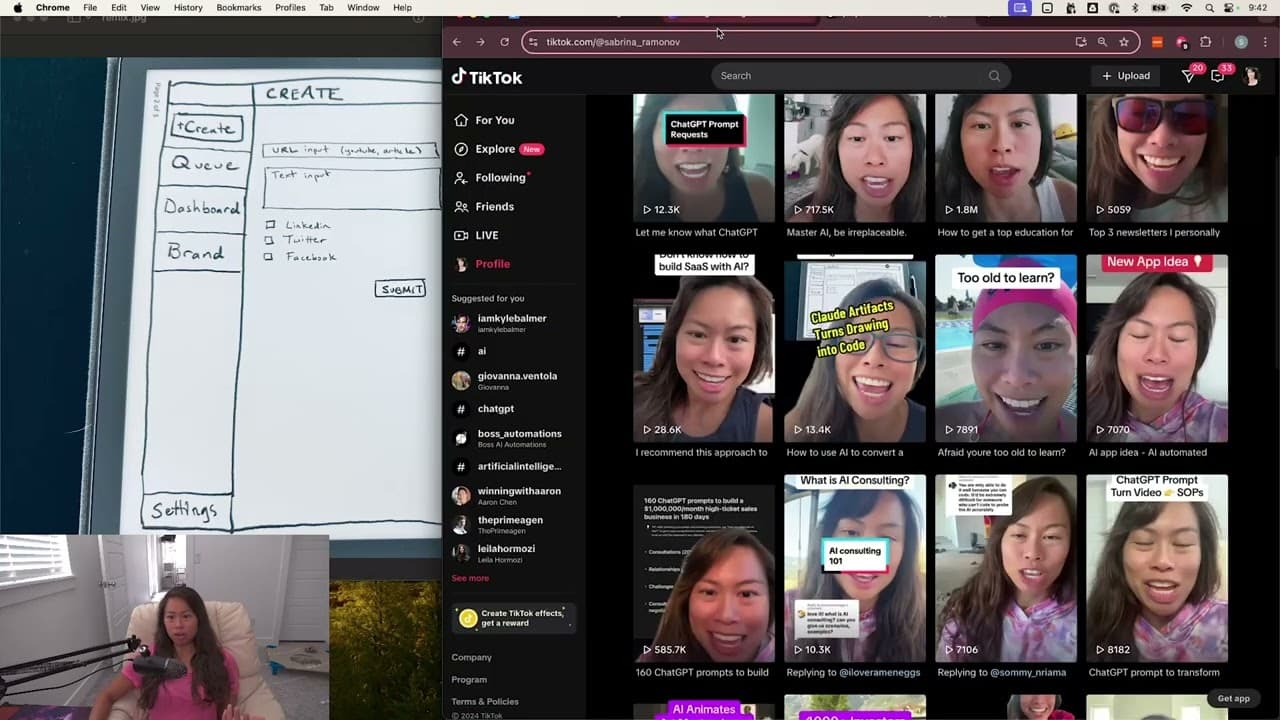
my name is Sabrina Romanov and this is part one of my video series building SAS with AI where I'm going to walk through from start to finish building a SAS MVP here's the idea that I want to build out it's basically a AI powered remixing platform or repurposing platform for social media content so you'll be able to connect any social media Source s... Read More
Key Insights
- X is the core idea that must be tested first by distilling it to the simplest user action that delivers value.
- The key to moving from vision to MVP is scope reduction, which prevents overbuilding and accelerates launch.
- Validation comes from conversations with real users, not only internal assumptions, and should shape the MVP spec.
- The speaker recommends outlining exact user workflows to improve communication with developers and AI systems.
- The MVP should specify the tech stack and constraints upfront to keep the project focused and feasible.
- Clarity about the end state helps in communicating the product to stakeholders and potential users.
- Starting with the easiest media type and incremental complexity reduces risk when building the initial version.
- The process encourages launching quickly to collect data and iterate, rather than chasing perfection at the outset.]
- The approach is practical and action oriented, emphasizing rapid feedback loops and disciplined scoping.
Install to Summarize YouTube Videos and Get Transcripts
Explore YouTube Video Summarizer or Get YouTube Transcript Extractor
Questions & Answers
Q: What is the first step to take when planning an AI SaaS MVP.
The first step is to distill the grand vision into a core hypothesis and identify the single or few user actions that would deliver the most value. This step sets the foundation for a minimal, testable spec and guides all subsequent decisions, ensuring the team remains focused on what truly matters for early adopters.
Q: How can you validate an AI SaaS idea before coding.
Validation should involve real potential users rather than internal assumptions. The speaker suggests engaging with an audience or relevant communities to gather feedback, ask about pain points, and confirm interest in the core functionality. This input helps shape the MVP and prevents wasted development time on features users do not need.
Q: Why is scope reduction important in early product development.
Scope reduction prevents overbuilding and accelerates time to launch by concentrating on the essential value proposition. It helps avoid feature creep, makes it easier to communicate the product to stakeholders, and provides a clear framework for testing hypotheses. A focused MVP increases the chances of learning what truly resonates with users.
Q: What should a minimal viable product spec include.
A minimal viable product spec should include the user goal, the core action the user will take, the AI capabilities involved, the target platform, the basic workflow, and any technical constraints. This document serves as a blueprint for developers and AI systems, guiding implementation while staying adaptable to feedback.
Q: How does early user feedback influence the MVP.
Early feedback identifies real user needs and validates assumptions, which helps reprioritize features and adjust the MVP scope. It also reveals practical issues in the user journey and informs design decisions, improving the product’s chances of market fit and reducing the risk of building something misaligned with user expectations.
Q: What role does the tech stack play in MVP planning.
The tech stack is defined upfront to set expectations, guide development, and prevent scope drift. By clearly stating the chosen tools and architectures, the team ensures compatibility, accelerates onboarding, and creates a concrete boundary for what the MVP can and cannot do, which aids in timely delivery.
Q: How should you handle the vision versus the MVP tension.
Handle the tension by separating the long term vision from the MVP. Write down the end state you aim to reach while explicitly specifying what will be built in V1. This separation keeps the team focused on a feasible launch while maintaining a roadmap for future improvements and expansion.
Q: What is the recommended attitude toward perfection in the MVP process.
The recommended attitude is to prioritize speed and learning over perfection. Launch a barely working version, observe user interactions, gather data, and iterate. This approach accelerates validation, reduces risk, and helps the product evolve based on real usage rather than assumptions. It also keeps energy and momentum alive.
Summary & Key Takeaways
-
The speaker explains starting with a grand vision and progressively narrowing scope to a barely working MVP, ensuring focus on core value for users.
-
Feedback from potential users is gathered early, using social media audience input to refine the product concept and priorities.
-
A concrete MVP plan is drafted by outlining the stack, goals, and what the AI will do, avoiding feature creep in the initial release.
Read in Other Languages (beta)
Share This Summary 📚
Summarize YouTube Videos and Get Video Transcripts with 1-Click
Try YouTube Summary with ChatGPT & Claude or YouTube Transcript Generator
Explore More Summaries from Sabrina Ramonov 🍄 📚





Summarize YouTube Videos and Get Video Transcripts with 1-Click
Try YouTube Summary with ChatGPT & Claude or YouTube Transcript Generator