How to Build a Solo Business and Brand With AI
TL;DR
Choose a topic at the intersection of what you enjoy, what you do well, and what people already pay for, then commit to one platform and study proven content. Use AI to identify viable topics and established creators, verify its suggestions manually, and model the openers of unusually successful posts instead of spending more than three days deciding what to pursue.
Transcript
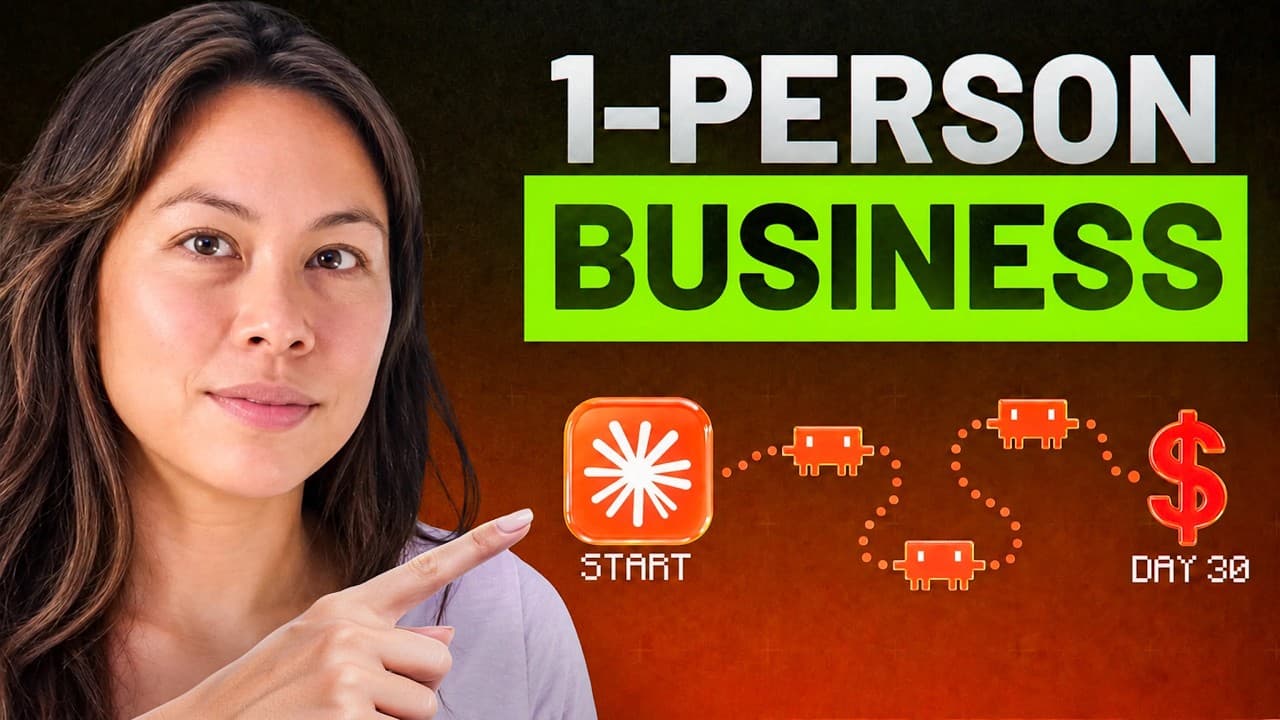
I've grown from zero to three million followers solo. I built my first AI company at age 30, sold it for over $10 million. And today, I'm going to show you how I would build a profitable oneperson business and personal brand in 30 days with AI. Starting with choosing your topic. So, days 1 through three, you want to choose a topic you actually enjo... Read More
Key Insights
- A viable topic is the overlap of personal enjoyment, demonstrated skill, and an area where people already spend money. Aligning all three improves the ability to remain consistent, earn a living, and persist long enough to build momentum.
- AI can help identify promising topics by analyzing a list of your skills, interests, and activities for which people have paid or thanked you. The suggested topics should already attract spending, and each suggestion should include established creators for further research.
- AI-generated research requires manual verification because tools such as ChatGPT or Claude can hallucinate creators. Search the recommended names and keywords on platforms such as Instagram, then inspect what people discuss and which videos receive unusually strong attention.
- A useful positioning statement is, “I teach who how to what?” This sentence forces clarity about the intended audience and the result being taught, turning a broad interest into a more specific topic for content and a potential business.
- AI is a collection of distinct subsegments rather than one narrow topic. Image and video generation, vibe coding, governance, upskilling, training, compliance, cybersecurity, tool education, agentic systems, and productivity attract people with different interests and forms of creativity.
- Topic selection should take no more than days 1–3. The decision matters, but extending the process beyond three days becomes overthinking, and an imperfect initial choice can be adjusted after observing audience needs and personal interests.
- Platform choice should reflect content format and starting audience. TikTok is recommended when showing your face, while Substack is favored for faceless publishing unless you already have roughly 5,000–10,000 LinkedIn connections. Written content can also be copied between Substack and LinkedIn.
- Winning content is content that substantially exceeds a creator’s normal performance. The suggested benchmark is roughly 10 times the usual engagement, followed by saving the post URL and examining or copying its opener to understand why it attracted attention.
Install to Summarize YouTube Videos and Get Transcripts
Explore YouTube Video Summarizer or Get YouTube Transcript Extractor
Questions & Answers
Q: How do you choose a profitable topic for a solo business?
Choose a topic where three conditions overlap: you enjoy working on it, you already have relevant skills, and people demonstrably spend money in the market. Enjoyment supports endurance, skill provides a credible starting point, and existing spending indicates demand. A topic that satisfies only one or two conditions can make consistency, income, or long-term motivation much harder.
Q: How can ChatGPT or Claude help find a business niche?
Give ChatGPT or Claude lists of your skills, the activities you enjoy, and things people have paid or thanked you for. Ask it to suggest three topics where people already spend money and name three large creators for each topic. Treat the response as a research starting point, then verify that every creator exists and investigate the suggested markets yourself.
Q: Why should AI-generated creator recommendations be verified?
AI tools can hallucinate, which means a recommended creator may not exist or may not fit the proposed topic. Manually search each name and explore related keywords on platforms such as Instagram. This verification also lets you see what audiences currently discuss, what formats creators use, and which videos appear to be gaining unusually strong attention.
Q: How specific should an AI content niche be?
An AI niche should be specific enough to match a distinct audience and your genuine interests. Possible segments mentioned include image and video generation, vibe coding, governance, upskilling, training, compliance, cybersecurity, individual tools, technical agentic systems, and personal or business productivity. The person teaching visual generation will generally differ from the person teaching vibe coding.
Q: What positioning statement clarifies a personal brand?
Use the sentence, “I teach who how to what?” Identify a defined group of people and the outcome or capability you help them achieve. This framing converts a broad topic into a practical teaching proposition. It also exposes vague positioning because you must state both the intended audience and the specific transformation your content or business provides.
Q: Which platform should a new personal brand start on?
Start on TikTok if you are willing to show your face. For a faceless brand, use Substack or LinkedIn, with Substack recommended when you do not already have roughly 5,000–10,000 LinkedIn connections. Written posts can be copied between Substack and LinkedIn in about five seconds, making limited cross-platform distribution relatively easy.
Q: Why is TikTok recommended for new creators?
TikTok is presented as generous to new creators after the account demonstrates normal human behavior through genuine platform use and engagement. Warming up the account can take several weeks. The platform is recommended because a fast first win can help creators continue publishing, and gaining that early traction is described as possible within the first 30 days of posting.
Q: How do you research winning content in your niche?
Find leading creators in your topic and review their most popular work. On platforms without a convenient popularity sort, scroll through their posts and look for examples receiving roughly 10 times their usual engagement. Save each winning post’s URL, copy its opener, and analyze the structure. The goal is to identify proven patterns before producing your own content.
Summary & Key Takeaways
-
During days 1–3, choose a topic by finding the overlap among enjoyment, existing ability, and demonstrated spending. AI can interview you and suggest possible markets based on your skills, interests, and things people have paid or thanked you for. Verify every suggested creator because AI can invent names or details.
-
Define the topic with the sentence, “I teach who how to what?” Broad fields such as AI contain distinct segments, including image and video generation, vibe coding, governance, training, compliance, cybersecurity, specific tools, agentic systems, and personal or business productivity. Selecting the right subsegment supports consistency and reduces burnout.
-
During days 4–7, choose one primary platform and research winning content. TikTok is recommended for a face-led personal brand, while Substack or LinkedIn can support faceless publishing. Study leading creators, identify posts with roughly 10 times their normal engagement, save the URLs, and copy their opening structures for analysis.
Read in Other Languages (beta)
Share This Summary 📚
Summarize YouTube Videos and Get Video Transcripts with 1-Click
Try YouTube Summary with ChatGPT & Claude or YouTube Transcript Generator
Explore More Summaries from Sabrina Ramonov 🍄 📚


Summarize YouTube Videos and Get Video Transcripts with 1-Click
Try YouTube Summary with ChatGPT & Claude or YouTube Transcript Generator