How to Write Facebook Ad Copy That Converts
TL;DR
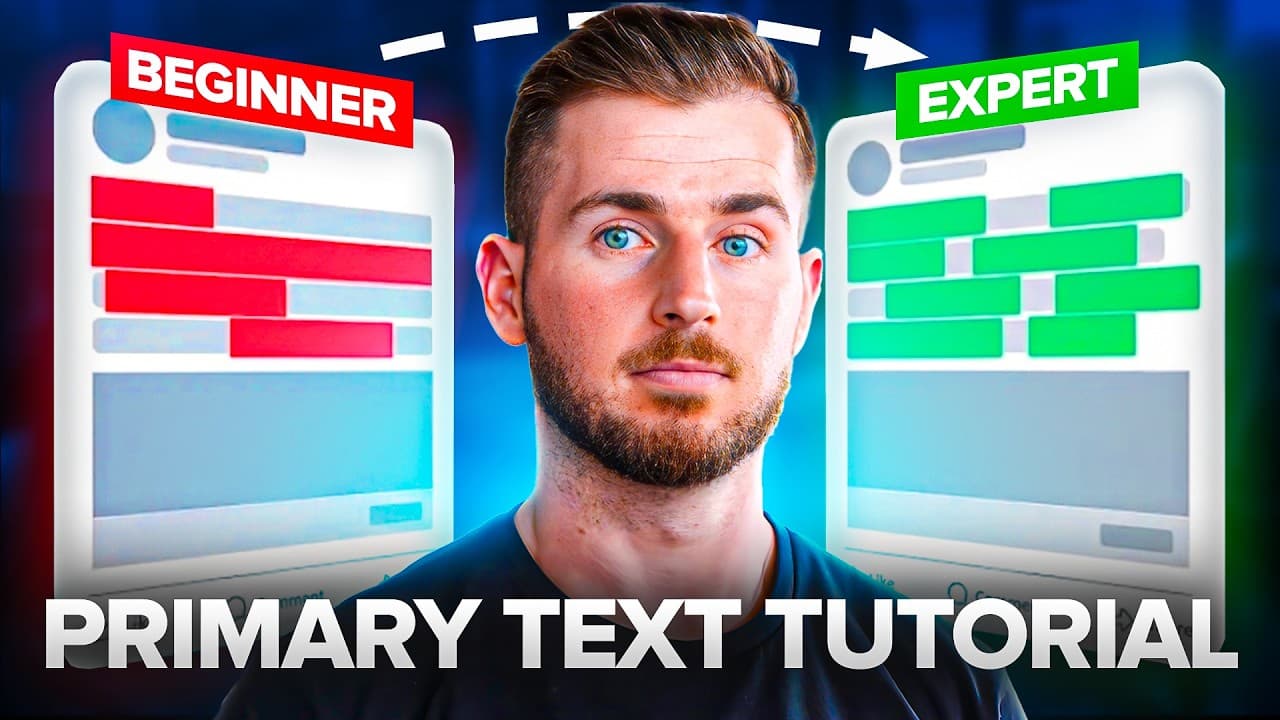
Match Facebook ad primary text to the creative’s market-awareness stage, target avatar, and desired outcome. Creative drives about 80% of performance, while primary text contributes about 20%, so reuse proven copy when those elements remain consistent and write fresh copy when the audience, awareness stage, desire, season, or promotional angle changes.
Transcript
All right, one of y'all pretty much asked how we create primary text that converts in 2026. Shout out Siligy. Probably said your name wrong. My apologies, but he asked in one of my free community chats that's in the description. Basically, how do we create primary text that converts? So, today we'll be just going over kind of my processes for creat... Read More
Key Insights
- Creative is responsible for about 80% of ad performance in the creator’s framework, while primary text accounts for about 20%. This makes visual creative the main testing priority in most campaigns, although primary text still deserves focused testing when the message or marketing segment changes.
- Primary text is the written copy placed above an image in the Facebook feed or near the creative on Instagram. Its role changes with the ad format: video creative may handle most of the selling, while a native-style ad may rely on a long written story.
- Market awareness consists of five stages in the presented framework: unaware, problem aware, solution aware, product aware, and fully aware. These stages also relate to movement from top-of-funnel prospects toward smaller, lower-funnel groups that already know, like, trust, or want to buy from the brand.
- Fully aware copy is often limited to an offer enhancer, such as a temporary discount. These prospects already want the product and may simply be waiting for a better price, so explaining the problem or introducing the solution again is unnecessary in the example discussed.
- Product-aware copy can emphasize a product’s unique selling points, a customer testimonial, or an authority figure. The examples pair concise text with features, benefits, social validation, or recognizable authority, while allowing video creative to perform much of the product explanation and persuasion.
- Solution-aware and problem-aware copy begins higher in the funnel. Solution-aware text challenges previously tried approaches before introducing the advertised solution, benefits, social proof, and a call to action. Problem-aware text names a specific audience and struggle, then presents the product and its promised benefits.
- Unaware native-style ads can resemble ordinary organic posts by pairing a casual-looking photo with a long story revealed after the reader selects “see more.” This format gives the copy more responsibility for opening the audience to the problem and sales message than typical short video-ad text.
- Primary text should be reused only when the new creative matches the proven ad’s awareness stage, avatar, and desire. When a campaign introduces a different audience, seasonal context, desire, or promotional theme, the creator recommends launching fresh copy aligned with that new marketing segment.
- More videos from this channel:
- More from this channel: Nick Theriot
Install to Summarize YouTube Videos and Get Transcripts
Explore YouTube Video Summarizer or Get YouTube Transcript Extractor
Questions & Answers
Q: What is primary text in a Facebook ad?
Facebook ad primary text is the written copy that accompanies the advertisement’s main creative. It usually appears above the image in a Facebook feed and near the creative on Instagram placements. It can introduce an offer, identify a problem, explain a solution, state product benefits, present social proof, or tell a longer story, depending on the audience’s market-awareness stage.
Q: How important is primary text compared with ad creative?
The creator treats primary text as roughly 20% of performance and the visible creative as about 80%. For most campaigns, this means the image or video deserves more testing attention than the accompanying copy. An important exception is a native-style ad, where a simple organic-looking photo and a long written story make the primary text central to the sales approach.
Q: How should Facebook ad copy match market awareness?
Facebook ad copy should reflect whether the audience is unaware, problem aware, solution aware, product aware, or fully aware. Fully aware prospects may only need a clear offer. Product-aware prospects can receive unique selling points, testimonials, or authority cues. Problem-aware and solution-aware prospects need messaging that identifies their situation, introduces the solution, explains benefits, and may add proof and a call to action.
Q: What primary text works for fully aware customers?
Fully aware customers can receive short, direct copy focused on an offer enhancer, such as a limited discount. These customers already know, like, and trust the brand, want to buy, and may simply be waiting for a favorable price. Because they already understand the problem and solution, the copy does not need to repeat a detailed problem explanation or extensive product education.
Q: How do you write primary text for product-aware audiences?
Primary text for product-aware audiences should highlight what makes the product distinctive. The presented approaches include explaining unique product features and benefits, leading with a customer testimonial, or using an authority figure connected to the product. The text can remain relatively short when a video performs most of the selling, but it should still reinforce the product’s relevant reason to buy.
Q: What is a native-style Facebook ad?
A native-style Facebook ad is designed to resemble an ordinary social-media post. The example uses a casual photo that appears as if someone captured it with a phone, followed by a long story that expands after the reader selects “see more.” This format is often used for unaware audiences because the written narrative can gradually introduce the subject and guide readers toward the sales message.
Q: When should proven Facebook primary text be reused?
Proven primary text should be reused when a new creative targets the same awareness stage, avatar, and desire as the existing successful ad. For example, an iteration of a winning problem-aware creative aimed at the same audience and the same struggle can use the established copy. Reusing it keeps the test simple and avoids replacing language that already works for that marketing segment.
Q: How can new Facebook primary text be tested?
New primary text can be tested by selecting an existing strong ad in Ads Manager, duplicating it, labeling the duplicate as a primary-text test, and editing the copy while keeping the existing creative available for comparison. The creator also demonstrates searching active English-language United States Father's Day ads in Trend Track to review competing copy and identify wording that attracts attention.
Summary & Key Takeaways
-
Facebook primary text is the copy displayed above an image in the Facebook feed and near an ad on Instagram. It generally has less influence than the visible creative. The creator estimates that creative accounts for about 80% of performance, while primary text contributes roughly 20%, although native ads can depend heavily on written copy.
-
Primary text should correspond to one of five market-awareness stages: unaware, problem aware, solution aware, product aware, or fully aware. Fully aware audiences may only need an offer, while product-aware audiences respond to unique features, testimonials, or authority. Less-aware audiences require problem, solution, benefit, proof, and action-oriented messaging tailored to their situation.
-
Existing primary text can be reused when a new creative addresses the same awareness stage, avatar, and desire as a proven ad. Fresh copy is appropriate when any of those elements changes, such as a new Father's Day promotion or beach-season angle. A current ad can be duplicated in Ads Manager for a controlled text test.
Read in Other Languages (beta)
Share This Summary 📚
Summarize YouTube Videos and Get Video Transcripts with 1-Click
Try YouTube Summary with ChatGPT & Claude or YouTube Transcript Generator
Explore More Summaries from Nick Theriot 📚
Summarize YouTube Videos and Get Video Transcripts with 1-Click
Try YouTube Summary with ChatGPT & Claude or YouTube Transcript Generator