How to Create Native Long-Form Facebook Ads
TL;DR
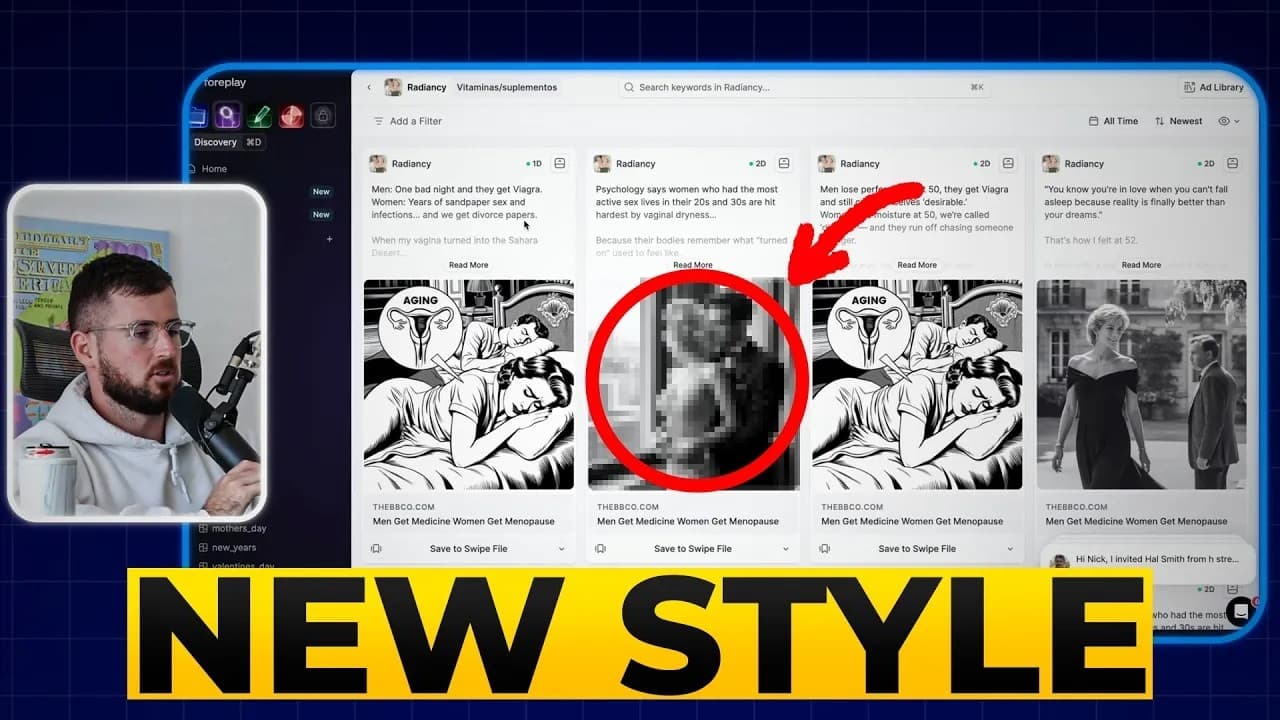
Pair a casual, native-looking image with roughly 2,500 words of engaging primary text, using the opening lines as the hook. The format is designed for Facebook audiences aged 35 and older, particularly unaware prospects, and relies on storytelling or listicles to increase reading time, signal engagement, and introduce the problem before presenting the product.
Transcript
Over the what I would say probably the last two months now, I've been seeing this one particular ad concept. I haven't seen it in a while and it's good to see that it's back. I've had one inner circle member scale to $992,000. Uh I had another inner circle student just take this particular ad concept scale pretty much from zero to I think he capped... Read More
Key Insights
- The core creative format is a native-looking image paired with approximately 2,500 words of primary text. The image should feel like a quickly captured iPhone photo rather than a polished advertisement, while the copy must be engaging enough to justify its unusual length.
- The proposed performance mechanism is increased time on the Facebook post. The speaker believes that longer reading time signals strong engagement and keeps users on Facebook longer, which may encourage the platform to distribute or spend more on the advertisement.
- The strongest audience fit is people aged 35 and older. According to the speaker's observations, this group is more likely to read long-form Facebook posts, while products aimed at younger audiences, such as clothing for younger women, may not suit the format.
- The opening lines are the advertisement's primary hook. They must immediately create curiosity, emotional tension, or a compelling story because users decide at that point whether to expand and continue reading the lengthy primary text.
- The preferred awareness level is the unaware market, although lower-funnel applications can also work. An unaware angle should begin with an indirect entry point, such as a hidden fear or big win, instead of immediately naming the product, problem, or solution.
- Listicles are an effective structure for this creative style. The speaker reports seeing formats such as five-reason lists perform well and suggests they may be more suitable for this concept than advertorial-style approaches.
- Third-party Facebook pages can make the placement feel more native. The suggested method is to create a separate page with a suitable identity, run the advertisement through it, and keep the creative inside the same campaign budget optimization testing structure.
- ChatGPT can imitate a desired advertising style when given product context and reference examples. The demonstrated process uses a detailed product explanation plus a PDF of primary-text screenshots, followed by a prompt asking the model to understand and reproduce the writing style for another product.
Install to Summarize YouTube Videos and Get Transcripts
Explore YouTube Video Summarizer or Get YouTube Transcript Extractor
Questions & Answers
Q: How do you create a native long-form Facebook ad?
Use an image that appears casually captured, such as an unpolished iPhone photo, and pair it with approximately 2,500 words of primary text. Write the first lines as a strong hook, then sustain attention through a story or listicle. The copy should introduce an emotionally relevant situation, develop the problem and failed alternatives, and eventually connect the reader to the product and its link.
Q: Why can long primary text work in Facebook ads?
The speaker's explanation is that compelling long-form copy increases the amount of time users spend reading a Facebook post. That reading time may signal to Facebook that the advertisement is engaging and keeping people on the platform. The format still depends on writing quality, because text that is long but uninteresting will not persuade users to stop scrolling and continue reading.
Q: Which audience is most suitable for long-form Facebook ads?
The speaker finds the format better suited to audiences aged 35 and older because they appear more willing to read long Facebook posts. Younger audiences from 18 to 35 are characterized as more likely to consume fast Instagram Reels. Consequently, the approach may fit products for older women and men better than clothing or similar products intended for younger women.
Q: What kind of image should accompany long Facebook ad copy?
The image should look organic and native to the Facebook feed, as if someone quickly captured it with an iPhone. It should avoid appearing highly polished, heavily edited, or obviously designed as an advertisement. The goal is to resemble ordinary platform content so the image and long text feel natural while users scroll through their feeds.
Q: How should the first lines of a long-form Facebook ad be written?
The first lines should function as the advertisement's main hook and give users an immediate reason to keep reading. The examples use emotionally charged statements, personal stories, problems, and curiosity. Because the remaining text can reach approximately 2,500 words, the opening must establish tension or interest quickly, then transition into storytelling that eventually reveals the problem and solution.
Q: How can ChatGPT help write long-form Facebook ad copy?
First, give ChatGPT enough information to understand the product, including a detailed description framed as if it must explain the item to someone who cannot see it. Next, upload a PDF containing screenshots of primary-text examples and ask it to study and mimic their writing style for the new product. Then specify the desired awareness stage, angle, structure, and approximately 2,500-word length.
Q: How do awareness stages change a Facebook ad angle?
An offer-aware angle can emphasize a promotion, while a product-aware angle can compare one product with another. A solution-aware angle can focus on the desire to achieve a result, and a problem-aware angle can begin with the recognized problem. An unaware angle should start more indirectly with a hidden fear, surprising outcome, or symptom before revealing the problem, solution, and product.
Q: How could an unaware ad promote a wallet tracker card?
The speaker proposes beginning with a surprising story rather than announcing a lost wallet or tracker card. A big-win angle could open with finding $5,000, then explain that locating a missing wallet led to that discovery. A hidden-fear angle could describe becoming stranded in an undesirable city because a lost driver's license prevented boarding a flight, before introducing the tracking solution.
Summary & Key Takeaways
-
The recommended creative combines an organic-looking image, such as a quickly captured iPhone photo, with approximately 2,500 words of primary text. It should resemble ordinary Facebook content instead of a polished advertisement, while using strong storytelling to hold attention and lead readers naturally from an engaging opening into the commercial message.
-
The format primarily targets unaware audiences, although the speaker has also seen it work at problem-aware, solution-aware, and product-aware stages. Listicles and stories are highlighted as effective structures. The opening lines function as the hook, so they must create enough curiosity, tension, or relevance to persuade users to continue reading.
-
The demonstrated ChatGPT workflow begins by describing the product thoroughly, then uploading a PDF containing screenshots of successful Facebook primary text as stylistic references. The advertiser selects an awareness stage and develops a matching angle, such as a hidden fear or surprising win, before generating the long-form copy and testing it with native images.
Read in Other Languages (beta)
Share This Summary 📚
Summarize YouTube Videos and Get Video Transcripts with 1-Click
Try YouTube Summary with ChatGPT & Claude or YouTube Transcript Generator
Explore More Summaries from Nick Theriot 📚

Summarize YouTube Videos and Get Video Transcripts with 1-Click
Try YouTube Summary with ChatGPT & Claude or YouTube Transcript Generator