How to Test Facebook Ad Landing Pages Simply
TL;DR
Test a pre-sale landing page by placing it between the Facebook ad and product page, then compare performance using proven ads whose messaging matches the page. Duplicate winning ads and change only the URL when the desire, awareness, sophistication, and customer avatar align. Otherwise, create fresh ads specifically for the new page to preserve congruence and produce a more meaningful test.
Transcript
So, I've been pretty transparent over the last couple months that we've been testing significantly more landing pages outside of just doing the traditional product page for ecom. And this has substantially helped our performance a lot for our clients because it's allowing us to increase the conversion rate for a lot of our products and it's also he... Read More
Key Insights
- Pre-sale pages are destinations placed between Facebook ads and product pages. Advertorials, listicles, video sales letter pages, and quiz funnels can provide additional context that develops desire and prepares visitors to purchase before they reach the standard product page.
- A higher landing-page conversion rate can lower cost per acquisition and improve return on ad spend. The example states that doubling conversion rate could move a campaign from a 2x return on ad spend to a 4x return on ad spend.
- Meta’s targeting process scans both the advertisement and the page linked directly from the ad. According to the presentation, it examines that destination one level deep, so page content can help the algorithm identify a relevant audience and improve targeting efficiency.
- Ad congruence is the alignment between an advertisement and its destination page. A visitor should encounter consistent messaging after clicking, rather than moving from a persuasive ad to a product page that does not clearly continue the same desire, problem, or promise.
- Advertorials are article-style pre-sale pages that resemble news content and conclude with a product call to action. Listicles organize the sales message around a numbered set of reasons or benefits, then direct readers to the website or product page.
- The basic test uses a new ad set containing duplicates of the three best-performing ads. Each duplicate points to the new landing page, while the broader campaign structure allows the algorithm to allocate more or less money based on performance.
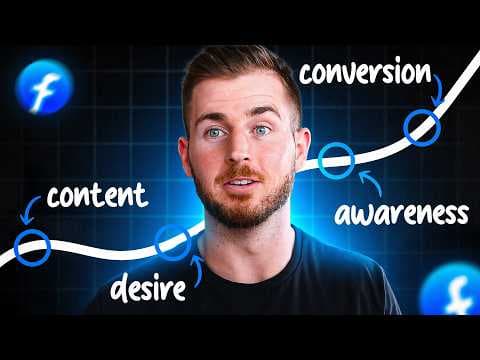
- The decision to reuse an ad depends on whether its desire, awareness, sophistication, and customer avatar match the landing page. If all four dimensions align, the winning ad can be duplicated. If they do not align, dedicated creative should be developed.
- A simple testing process can make consistent execution more likely. Advanced split-testing tools can divide traffic more evenly, but the presentation notes that added setup difficulty and monthly costs of roughly $500 to $600 can discourage regular landing-page experimentation.
- More videos from this channel:
- More from this channel: Nick Theriot
Install to Summarize YouTube Videos and Get Transcripts
Explore YouTube Video Summarizer or Get YouTube Transcript Extractor
Questions & Answers
Q: How do you test landing pages with Facebook ads?
Create a new ad set within the broad campaign for the relevant business objective, then duplicate the three ads that have performed best. Change their destination URLs so they send visitors to the new pre-sale page before the product page. If the ads and page share the same desire, awareness, sophistication, and customer avatar, this provides a simple test structure.
Q: Why should Facebook ads send traffic to a pre-sale page?
A pre-sale page gives prospects more context before asking them to buy. It can develop a desire, explain a problem, and position the product as a solution before directing readers to the product page. According to the presentation, this can raise conversion rates, lower cost per acquisition, improve return on ad spend, and make the ad-to-page experience more coherent.
Q: What types of pre-sale landing pages work for ecommerce?
The formats discussed include advertorials, listicles, video sales letter pages, and quiz funnels. Advertorials present the offer through an article and place a product call to action near the end. Listicles use a numbered collection of reasons, benefits, or ways the product helps, followed by a call to action that sends readers to the website or product page.
Q: When should you duplicate a winning Facebook ad for a landing-page test?
Duplicate a winning ad when its core message matches the new landing page across four factors: customer desire, level of awareness, market sophistication, and customer avatar. When those elements align, the existing ad can be copied and its URL changed. The matching message helps preserve continuity between the click and the content prospects see on the page.
Q: When should you create new ads for a landing page?
Create fresh ads when the new landing page does not match the desire, awareness, sophistication, or customer avatar addressed by the existing winners. Simply changing the URL in that situation would not provide a proper test because the visitor would encounter inconsistent messaging. The new creative should be designed around the specific combination already expressed by the landing page.
Q: How does a landing page affect Facebook ad targeting?
The presentation states that Meta scans both the advertisement and the landing page linked directly from it. It examines the destination page one level deep rather than moving through the entire website. The words, positioning, and context on that page can therefore help the algorithm understand whom the offer is relevant to and contribute to better targeting and ad relevance.
Q: What campaign structure is used for landing-page testing?
The recommended structure uses one broad campaign for each business objective, which could be a product, collection, product category, gender, or target country. Campaign budget optimization allows the algorithm to spend more or less on the available ads. For a landing-page test, a separate ad set is created and populated with duplicated top-performing ads that point to the test page.
Q: Why use a simple test instead of dedicated split-testing software?
A simple setup is easier to launch repeatedly, which can support long-term consistency. Dedicated tools can split traffic equally and produce a more controlled test, but the presentation says they require more setup and may cost about $500 to $600 per month. The simpler method is described as less than ideal scientifically, yet practical enough to uncover winning pages and lower acquisition costs.
Summary & Key Takeaways
-
Pre-sale pages can improve conversion rates, lower acquisition costs, and strengthen the transition from a Facebook ad to a product page. Common formats include advertorials, listicles, video sales letter pages, and quiz funnels. The page should develop the customer’s desire, need, or problem before presenting a call to action.
-
The testing structure uses one broad campaign per business objective, such as product, collection, category, gender, or country. A new ad set contains duplicates of the three strongest ads, with their URLs changed to the test page. The campaign budget optimization system then determines how spending is distributed among the ads.
-
Ad and landing-page congruence determines whether existing winners should be reused. Matching pages can receive duplicated winning ads with new URLs. Mismatched pages require fresh creative based on the page’s desire, awareness, sophistication, and avatar. This simplified approach sacrifices perfectly equal traffic allocation but makes consistent testing easier to sustain.
Read in Other Languages (beta)
Share This Summary 📚
Summarize YouTube Videos and Get Video Transcripts with 1-Click
Try YouTube Summary with ChatGPT & Claude or YouTube Transcript Generator
Explore More Summaries from Nick Theriot 📚
Summarize YouTube Videos and Get Video Transcripts with 1-Click
Try YouTube Summary with ChatGPT & Claude or YouTube Transcript Generator