Why Did SpaceX's IPO Sideline Wall Street?
TL;DR
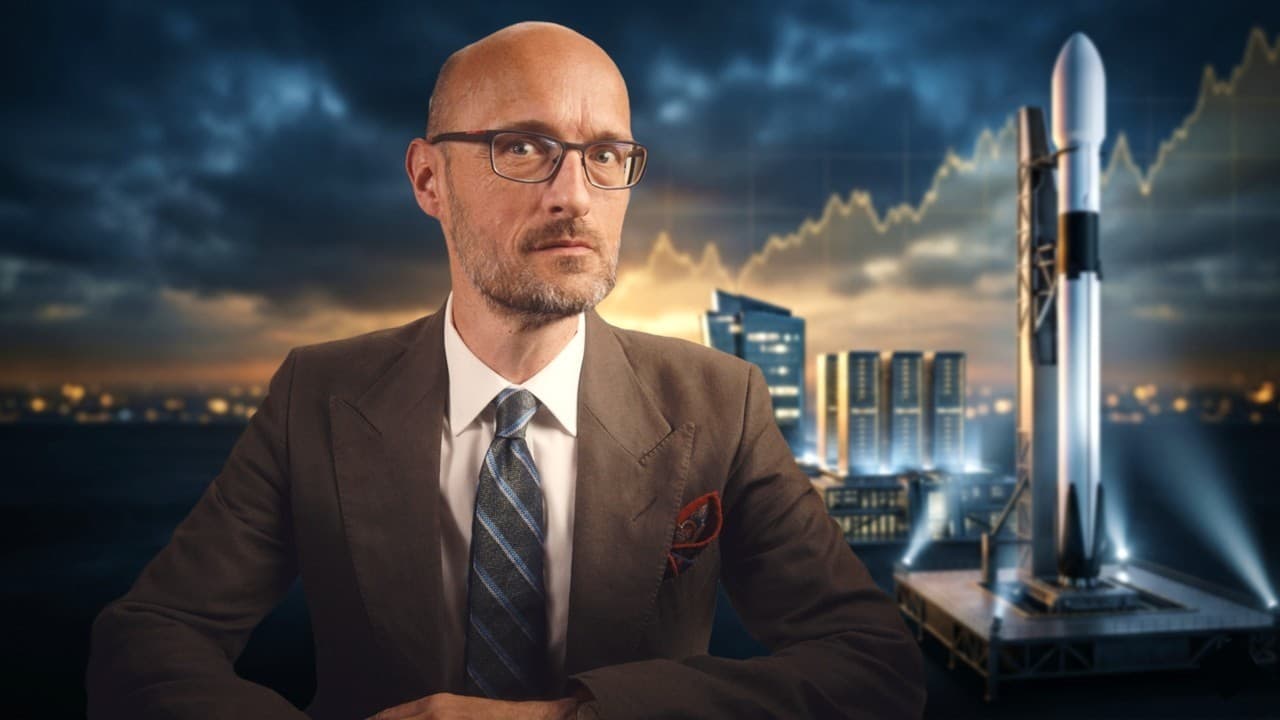
SpaceX raised about $75 billion while selling only around 4% to 5% of the company, preserving Elon Musk's control and sharply limiting public shareholders' influence. The deal reflects a broader reversal in US equities: AI infrastructure spending is pushing technology companies to issue stock after two decades marked by delayed IPOs, buybacks, and private equity takeovers.
Transcript
Yesterday morning, the largest company ever to go public started trading on NASDAQ. We'll get to that in just a moment. But first, I have to tell you about something even stranger, which is that the stock market has, as of this week, stopped shrinking. For the last 20 years or so, the US stock market operated under a very simple and reliable mechan... Read More
Key Insights
- The US public equity market contracted for roughly two decades because fewer companies completed IPOs, listed corporations repurchased their shares, and private equity firms took public businesses private. The resulting combination reduced both new inflows and the existing supply of publicly traded stock.
- Shrinking share supply supported stock prices because increasing amounts of investment capital competed for fewer available shares. The transcript presents this effect as one contributor to rising valuations, while also recognizing that earnings growth and exceptionally low interest rates played important roles.
- Meta illustrates how asset-light technology businesses could return more capital than they originally raised. Facebook collected around $16 billion in its 2012 IPO, then spent well over $100 billion on repurchases, including approximately $45 billion during 2021.
- AI infrastructure is reversing the previous capital model of major technology companies. Building data centers, purchasing millions of expensive Nvidia chips, and developing dedicated power capacity require far more investment than operating asset-light websites, encouraging companies to sell new equity instead of merely repurchasing shares.
- Goldman Sachs forecasts a major expansion in publicly available equity, including $225 billion of new IPO volume during the year discussed. When follow-on offerings and other issuance by existing companies are included, the projected total rises to $675 billion.
- SpaceX's IPO achieved extraordinary fundraising with limited dilution. The company sold more than 555 million shares at $135 each, raising around $75 billion at a $1.78 trillion valuation while transferring only approximately 4% to 5% of itself to public investors.
- SpaceX's governance structure preserves Musk's voting authority after the offering. Public Class A shares carry one vote each, while Musk's Class B shares carry ten votes each, allowing him to receive public capital without becoming proportionately accountable to the new shareholders.
- SpaceX shareholders face restrictions beyond reduced voting influence. The company's Texas incorporation creates a 3% ownership threshold for filing shareholder proposals, while its charter requires private arbitration, waives jury trials, and prohibits class actions in disputes.
Install to Summarize YouTube Videos and Get Transcripts
Explore YouTube Video Summarizer or Get YouTube Transcript Extractor
Questions & Answers
Q: Why did the US stock market shrink for two decades?
The US stock market shrank because three forces operated simultaneously. Companies remained private longer, reducing the arrival of new IPO shares. Public corporations used large amounts of cash to repurchase their own stock, offsetting issuance or retiring shares. Private equity firms also acquired listed companies and removed them from public markets, steadily reducing the investable supply.
Q: How did shrinking stock supply affect market valuations?
A shrinking supply meant that substantial investment capital was competing for fewer publicly available shares, which tended to push prices upward. Investors consequently paid more for each dollar of corporate earnings by the end of the period. The transcript cautions that supply was not the only cause, since earnings growth and very low interest rates also supported performance.
Q: Why are technology companies issuing more shares for AI?
Major technology companies are becoming more capital intensive as they compete in artificial intelligence. Their plans require enormous data centers, millions of expensive Nvidia chips, substantial electrical infrastructure, and potentially even systems located in space. These investments demand more funding than the asset-light website model, pushing companies that previously repurchased shares toward issuing new equity to investors.
Q: How large was the SpaceX public offering?
SpaceX sold more than 555 million shares for exactly $135 per share, raising approximately $75 billion. The amount could reach about $86 billion if the banks exercise their overallotment option. At the offering price, the entire company was valued at $1.78 trillion, making it the largest IPO described in the transcript by a wide margin.
Q: Why did SpaceX sell only a small ownership stake?
SpaceX raised an enormous amount while selling only around 4% to 5% of the company, compared with the approximately 20% stake that companies usually offer according to the transcript. This structure indicates that SpaceX had strong negotiating power and could obtain substantial public funding without surrendering much ownership, control, or future economic participation to outside investors.
Q: How much voting power do public SpaceX shares have?
The public receives Class A shares carrying one vote each, while Musk's Class B shares carry ten votes each. This dual-class arrangement separates the economic capital supplied by public investors from effective corporate control. As a result, Musk can retain dominant voting influence and has limited need to respond proportionately to the shareholders who funded the offering.
Q: What legal rights are restricted for SpaceX shareholders?
SpaceX's structure restricts several avenues normally available to shareholders. Texas law requires ownership of a 3% stake before a shareholder proposal can be filed, a position worth tens of billions of dollars at the stated valuation. The charter also mandates private arbitration, waives jury trials, and bans class actions, sharply limiting collective legal challenges.
Q: Why was the SpaceX IPO awkward for Wall Street banks?
The transcript characterizes the offering as humiliating for prestigious banks because SpaceX held unusually strong leverage over the transaction and its structure, even though the banks still stood to collect about half a billion dollars in fees. Banks ordinarily justify large IPO fees through price discovery, investor outreach, order-book construction, and transaction management, but SpaceX dictated exceptionally favorable terms for itself.
Summary & Key Takeaways
-
The US stock market spent roughly two decades contracting as companies delayed IPOs, repurchased shares, and disappeared into private equity ownership. That shrinking supply supported valuations alongside earnings growth and low interest rates. Goldman Sachs now forecasts a reversal, with $225 billion in IPOs and $675 billion in total equity issuance.
-
Artificial intelligence is turning large technology companies from asset-light websites into capital-intensive businesses. Data centers, Nvidia chips, power infrastructure, and even proposed space-based systems require enormous funding. Consequently, companies that once returned excess cash through buybacks are issuing shares, restoring the traditional capital-raising purpose of public equity markets.
-
SpaceX priced 555 million-plus shares at $135, raising about $75 billion at a $1.78 trillion valuation, with potentially $86 billion after the banks' overallotment option. Public investors received one-vote Class A shares, while Musk retained ten-vote Class B shares. Texas incorporation and mandatory arbitration further restrict shareholder remedies and influence.
Read in Other Languages (beta)
Share This Summary 📚
Summarize YouTube Videos and Get Video Transcripts with 1-Click
Try YouTube Summary with ChatGPT & Claude or YouTube Transcript Generator
Explore More Summaries from Patrick Boyle 📚

Summarize YouTube Videos and Get Video Transcripts with 1-Click
Try YouTube Summary with ChatGPT & Claude or YouTube Transcript Generator