What is GPT6.1 Soul and why it costs less
TL;DR
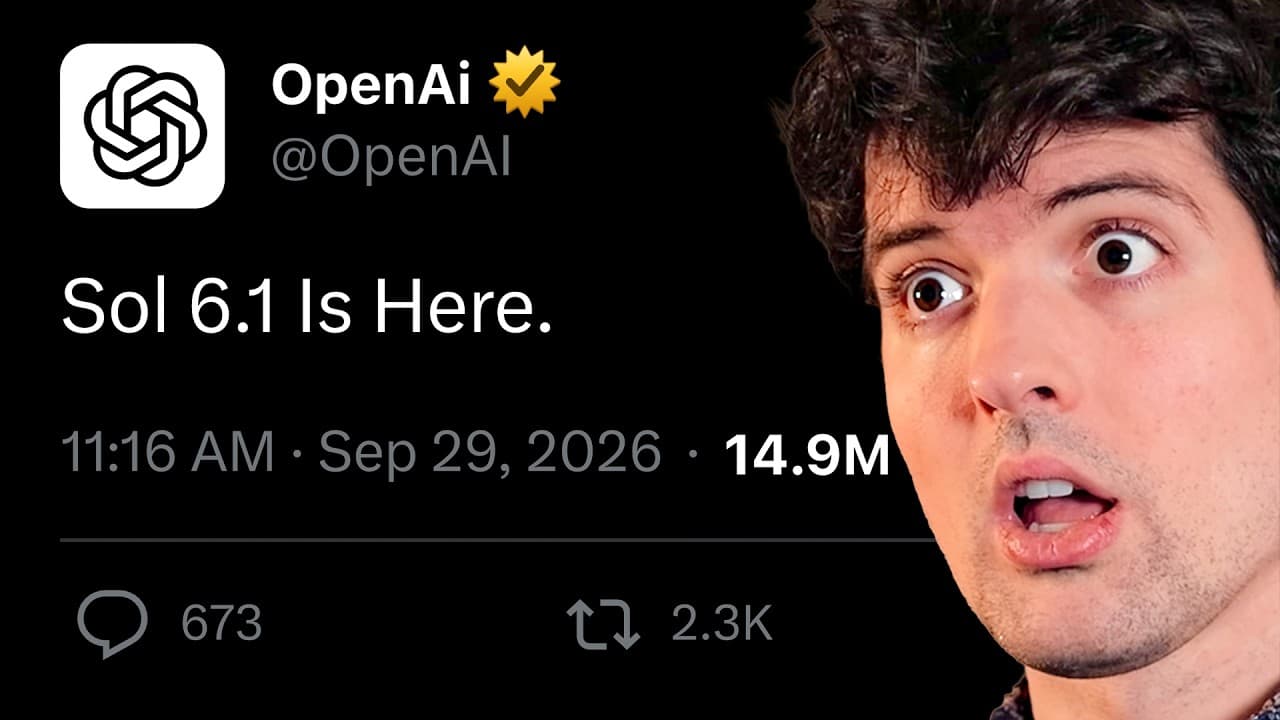
GPT6.1 Soul is significantly smarter than GPT6 and cheaper to use, with a 1 to 5 ratio of cost versus Opus 5.5 depending on task. It offers much cheaper cash reads and overall lower real world costs, making it a strong alternative for code work, while OpenAI adjusts subscription and usage pricing around it.
Transcript
They're back. Okay, let me catch you guys up quick. Last week, Anthropic dropped a new model, Opus 5.5, and it was unbelievably good. It was so unbelievably good that OpenAI rushed out two model drops, GPT6 Soul and GPT6 Luna. You might have noticed I didn't do a video on those models. There's a reason. They weren't that good. I was not particularl... Read More
Key Insights
- GPT6.1 Soul is reportedly smarter than GPT6 and differs from GPT6 Soul in meaningful ways.
- The model is priced at 2 dollars per million input tokens and 10 dollars per million output tokens.
- Cash reads for GPT6.1 Soul are 10 cents per million, a 95 percent discount relative to prior norms.
- Compared to Opus 5.5, GPT6.1 Soul can be dramatically cheaper to run.
- The author notes a one week gap between 6.0 Soul and 6.1 Soul suggesting a major leap.
- There is evidence OpenAI is adjusting the pro subscription dynamics and subsidizing usage.
- Benchmarks like Terminal Bench and Deep SU indicate strong performance, though not definitive for real-world work.
- The video frames Depot as a sponsor offering faster CI, faster builds, and better feedback for agents.
- More videos from this channel:
- More from this channel: Theo - t3․gg
Install to Summarize YouTube Videos and Get Transcripts
Explore YouTube Video Summarizer or Get YouTube Transcript Extractor
Questions & Answers
Q: How does GPT6.1 Soul differ from GPT6 Soul in the video
GPT6.1 Soul is described as significantly smarter than GPT6, indicating a meaningful leap beyond a simple snapshot update. The host suggests that this is not just a minor revision and implies architectural or training differences that improve performance, while maintaining a focus on cost efficiency and practical usage in real-world coding tasks.
Q: What pricing terms are highlighted for GPT6.1 Soul
The model is priced at 2 dollars per million input tokens and 10 dollars per million output tokens, which is presented as cheaper than previous models. The cash read price is 10 cents per million, representing a substantial discount that greatly reduces the effective cost for agent-based workflows and real-world coding tasks.
Q: Why does the presenter discuss Depot sponsorship
Depot sponsorship is cited as a solution for faster CI and builds, which aligns with the video’s focus on practical developer tooling. The sponsor provides better feedback, parallelization, and resilience when other services are unreliable, illustrating how improved CI can leverage cheaper models and support more efficient agent-based workflows.
Q: What benchmarks are mentioned and what caveats are given
Benchmarks mentioned include Terminal Bench and Deep SWE, with notes that scores vary with different runs and cloud hosts. The presenter acknowledges that benchmarks are not perfect measures of day-to-day coding ability and that results can fluctuate due to hardware and task selection, urging cautious interpretation.
Q: What is said about subscription changes and subsidies
The video references a public discussion saying that the pro subscription pricing is changing and subsidies may be reduced, which would affect API spend. The implication is that OpenAI is recalibrating margins while offering substantial price reductions on cash reads, thereby influencing overall cost of ownership for users.
Q: How does the video describe Opus 5.5 in relation to GPT6.1 Soul
Opus 5.5 is described as less impressive than GPT6.1 Soul and is used as a benchmark to illustrate cost and performance differences. GPT6.1 Soul is portrayed as surprisingly cheap while being capable, raising expectations about its ability to replace Opus 5.5 for routine code tasks.
Q: What real-world cost comparison is made
The presenter contrasts the cost per task between Opus 5.5 and GPT6.1 Soul across different benchmarks, noting a wide gap in expenses and emphasizing that GPT6.1 Soul can deliver similar or better results at a fraction of the cost, especially when cash reads are highly discounted.
Q: What caveats about real-world code work are mentioned
The host notes that Deep SU and other benchmarks are not perfect measures of real-world coding performance and that some tasks require more expensive hardware to replicate exactly. Despite this, the overall tone is that GPT6.1 Soul offers compelling cost efficiency and favorable performance dynamics for real-world use.
Summary & Key Takeaways
-
GPT6.1 Soul outperforms Opus 5.5 in benchmarks and real-world cost per task, while OpenAI adjusts subscription economics to subsidize usage. The model is described as surprisingly cheap and capable, with notable changes to cache read pricing. The video emphasizes cost efficiency for agent-based workflows and CI tasks.
-
The presenter compares GPT6.1 Soul to 6.0 Soul and Opus 5.5, highlighting speed, cost, and token economics, including dramatic reductions in cash reads and a new subscription dynamic. Real-world coding benchmarks are discussed with caveats, illustrating how cost and performance tradeoffs matter.
-
The discussion includes speculation about model capabilities, pricing strategy, and how Depot sponsorship and CI optimization influence developers' tooling choices, with focus on practical implications for developers using agents and CI pipelines.
Read in Other Languages (beta)
Share This Summary 📚
Summarize YouTube Videos and Get Video Transcripts with 1-Click
Try YouTube Summary with ChatGPT & Claude or YouTube Transcript Generator
Explore More Summaries from Theo - t3․gg 📚






Summarize YouTube Videos and Get Video Transcripts with 1-Click
Try YouTube Summary with ChatGPT & Claude or YouTube Transcript Generator