How to Turn Shorts Views Into Long-Form Views
TL;DR
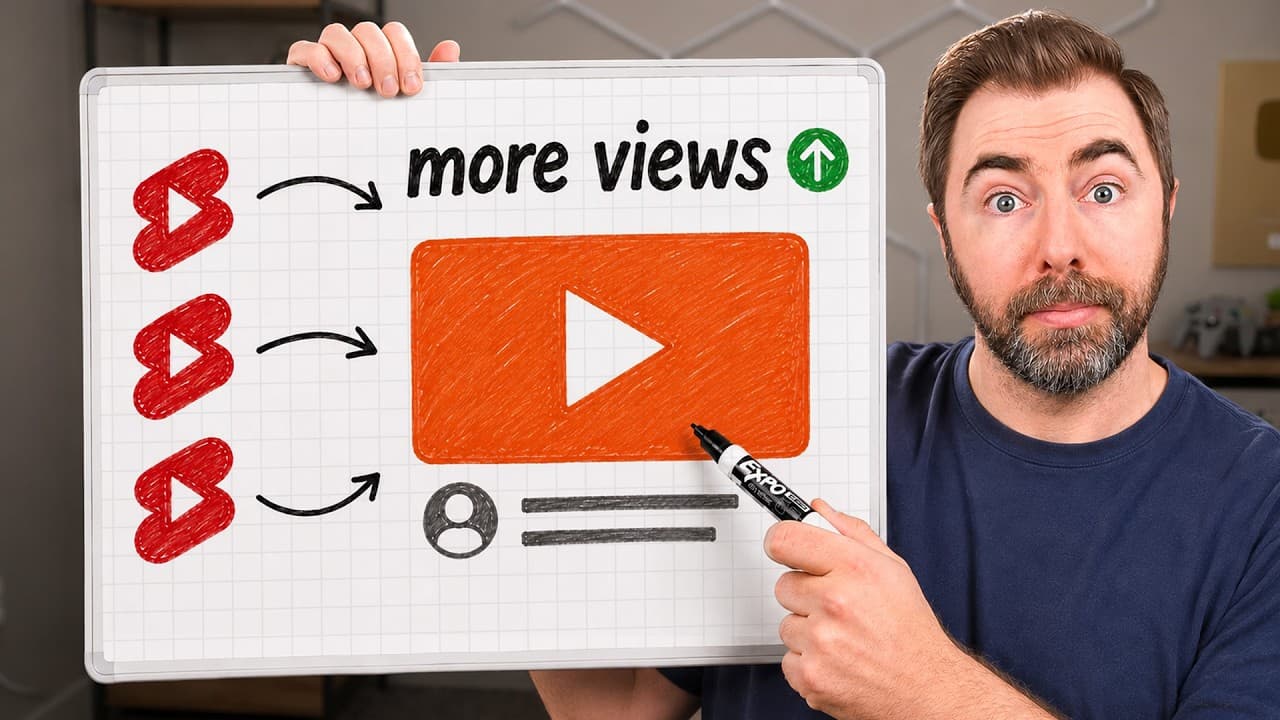
Make Shorts viewers recognize your long-form content by keeping the same personality, visual world, subject angle, and opening energy across both formats. Links, pinned comments, and related-video tools help only when the destination feels like a natural continuation of the Short, because viewers quickly leave when the creator, presentation, or promise suddenly changes.
Transcript
Look at these two channels. They have nearly identical shorts views, but only one of these channels is actually turning that attention into long- form views, while the other can barely crack 10,000 views on their longest videos. Why is that? You know, I'm about to say this, but it's not luck. It's not the niche. It's not the algorithm playing favor... Read More
Key Insights
- Cohesion is the central requirement for converting Shorts attention into long-form viewing. The two formats should look, sound, and feel connected, so the viewer immediately recognizes the long video as a continuation of the experience that originally attracted them.
- Links, pinned comments, related-video features, and calls to action work only under the right conditions. These tools can direct viewers toward another upload, but they cannot overcome a major mismatch between the Short's appeal and the long-form video's format, personality, or subject.
- Voice and personality cohesion means presenting the same cadence, tone, energy, and persona in both formats. A viewer attracted by an expressive or reserved Shorts personality may leave if the long-form version suddenly feels buttoned-up, unfamiliar, or like an entirely different creator.
- World and universe cohesion is created through recognizable settings, framing, colors, backgrounds, props, and recurring on-screen elements. Familiar visual signals help viewers identify a creator's long-form thumbnails quickly, even before they consciously read the channel name or evaluate the video's details.
- Subject and authority cohesion comes from maintaining a reliable angle rather than covering only one narrow topic. A channel can explore varied subjects when every upload delivers the same underlying promise, such as presenting a mystery and then examining what the evidence reveals.
- YouTube recommends videos according to what they are about and how they fit individual viewer interests, rather than simply because they share a creator. A Short about drawing therefore provides little reason to recommend an unrelated long-form upload to the same audience.
- A practical cohesion test is to compare the last five Shorts with the last five long-form videos. If a stranger would not assume that both groups came from the same channel, at least one form of cohesion is likely broken and needs closer examination.
- The opening seconds of a long-form video must honor the energy established by the Short. A punchy, chaotic Short should not lead immediately into a slow greeting, channel introduction, or request to like the video, because viewers are already looking for reasons to leave.
- More videos from this channel:
- More from this channel: vidIQ
Install to Summarize YouTube Videos and Get Transcripts
Explore YouTube Video Summarizer or Get YouTube Transcript Extractor
Questions & Answers
Q: How can Shorts views be converted into long-form views?
Shorts views can convert into long-form views when both formats share the same personality, visual identity, subject angle, and opening energy. The long video should feel like a natural extension of the Short rather than a separate product. Related-video links, pinned comments, and calls to action can help with navigation, but they work best after this underlying cohesion is established.
Q: Why do Shorts viewers ignore a creator's long-form videos?
Shorts viewers often ignore long-form videos because the two formats offer different experiences. A creator may use fast cuts, spontaneous challenges, and high energy in Shorts, then switch to slow, sit-down storytelling in longer uploads. That change can make the long-form content feel unfamiliar, even when the same person appears in it, weakening the handoff between formats.
Q: What types of cohesion connect Shorts and long-form content?
Three forms of cohesion connect Shorts and long-form content: voice and personality cohesion, world and universe cohesion, and subject and authority cohesion. These cover how the creator sounds and behaves, how the videos look and where they take place, and the dependable angle or promise that tells viewers what the channel consistently provides.
Q: How should a creator maintain personality across video formats?
A creator should preserve the cadence, tone, energy, and persona that attracted viewers in the Short. Someone who appears expressive, humorous, quiet, or reserved in short-form content should remain recognizably that person in longer videos. Adopting a formal podcast persona or another noticeably different presentation can make viewers feel that they have encountered a stranger and encourage them to leave.
Q: How can visual identity improve Shorts-to-long-form crossover?
Visual identity improves crossover by making long-form videos instantly recognizable to people who have watched the Shorts. Creators can repeat settings, framing, backgrounds, color palettes, clothing, props, expressions, or direct-to-camera angles. Long-form thumbnails do not need to copy Shorts exactly, but they should visually echo the same world and communicate comparable energy.
Q: Can a channel cover different topics and still build authority?
A channel can cover different topics when its angle remains consistent. The transcript describes a science channel that moves from plane crashes to deep-sea biology while repeatedly presenting an intriguing mystery and examining what the evidence shows. That dependable lens creates authority. Splitting the fun treatment into Shorts and the serious treatment into long-form content weakens the channel's recognizable promise.
Q: How can creators audit cohesion on their YouTube channel?
Creators can audit cohesion by placing their last five Shorts beside their last five long-form videos and asking whether a stranger would assume both sets came from the same channel. If the answer is no, they should inspect personality, visual world, and subject angle for mismatches. A third-party opinion or the mentioned AI coach can provide another perspective and a starting point for alignment.
Q: How should a long-form video begin after an energetic Short?
A long-form video should begin with energy that matches the Short that led viewers there. If the Short used punchy edits, charisma, chaos, or fun, the longer video's opening should preserve those qualities instead of starting with a slow welcome, personal introduction, or request to like the video. Any slowdown should happen naturally after the creator has earned the viewer's trust.
Summary & Key Takeaways
-
Shorts views do not automatically become long-form views. Successful crossover depends on cohesion: both formats should feel like products from the same channel. When Shorts deliver quick, energetic challenges but long videos offer slow, sit-down storytelling, viewers encounter a different experience and often leave despite links, pinned comments, or calls to action.
-
Cohesion has three forms: voice and personality, world and visual identity, and subject and authority. Creators should maintain a recognizable persona, recurring settings or aesthetics, and a dependable angle across formats. Topics may vary, but the channel's central promise and way of examining those topics should remain consistent.
-
Creators can diagnose problems by comparing their last five Shorts with their last five long-form videos and asking whether a stranger would identify them as one channel. Long-form thumbnails should visually echo the Shorts, while opening seconds should preserve their energy before any natural slowdown occurs after the viewer's trust has been earned.
Read in Other Languages (beta)
Share This Summary 📚
Summarize YouTube Videos and Get Video Transcripts with 1-Click
Try YouTube Summary with ChatGPT & Claude or YouTube Transcript Generator
Explore More Summaries from vidIQ 📚
Summarize YouTube Videos and Get Video Transcripts with 1-Click
Try YouTube Summary with ChatGPT & Claude or YouTube Transcript Generator