How to spot a narcissist and read lies instantly
TL;DR
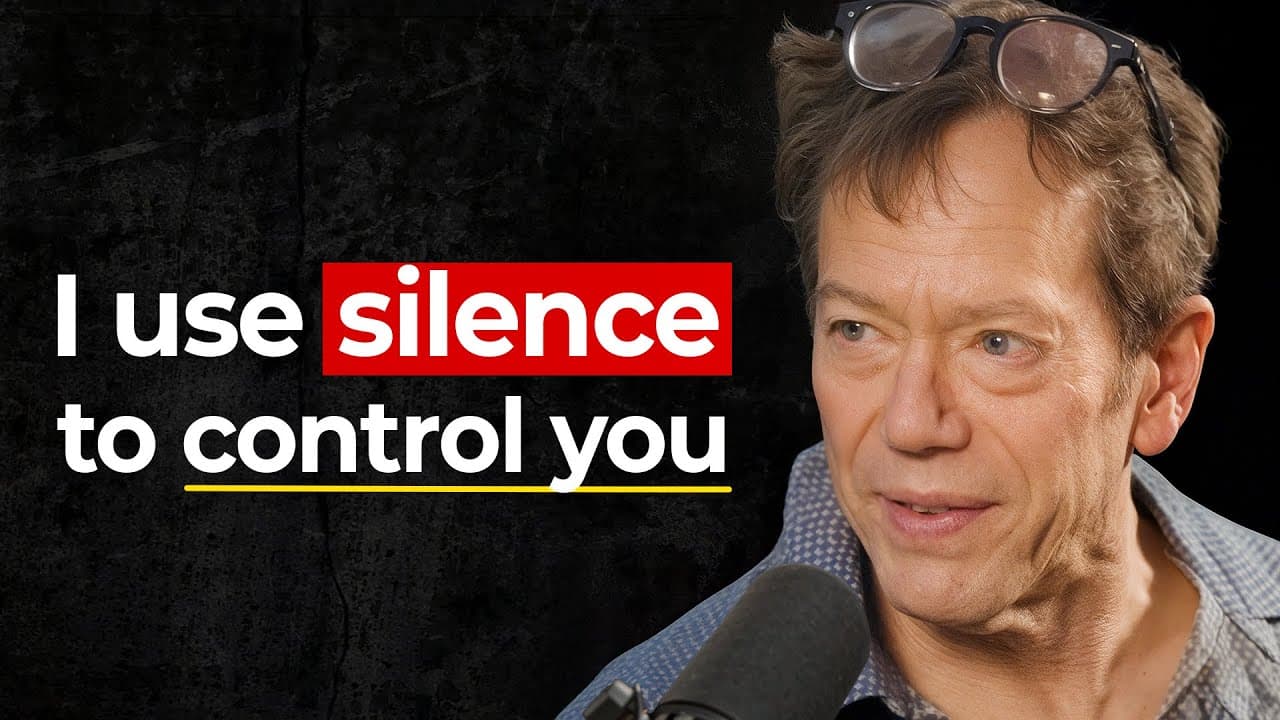
The guide explains that you can read manipulation by paying attention to facial cues and behavior, and that you should trust your gut when you sense something sleazy. It argues that power dynamics require patience, observation, and political savvy, rather than brute effort, and that relationships hinge on mutual awareness of ego and manipulation.
Transcript
Today's guest has mastered the art of seduction, power, and war. There is a kind of a facial quality to narcissists, a deadness in their eyes. There's this kind of smile that is slightly demonic. They're trying to get you to like them so that they can now use you. An expert in human nature, his books have been banned in prisons for being too danger... Read More
Key Insights
- Narcissists can show a dead or demonic look in their eyes, which is a cue to beware.
- Trust your gut when you sense something sneaky or slimy, as that feeling often signals a hidden issue.
- Power dynamics are interactive and handled best by observing, not rushing, to impress or undermine others.
- In early career stages, smiling and overachieving can trigger a boss’s insecurities, so it is wiser to be careful and strategic.
- Playing the political game at work can help you survive and progress, even when you dominate on results.
- The person who appears subservient can actually be in control of the dynamic in a relationship, making power a two-way street.
- In a marriage, arguments should consider both sides; default rightness can create resentment and backfire.
- Lie detection and reading people rely on consistent patterns of behavior, not single gestures or surface cues.
- More videos from this channel:
- More from this channel: Jack Neel
Install to Summarize YouTube Videos and Get Transcripts
Explore YouTube Video Summarizer or Get YouTube Transcript Extractor
Questions & Answers
Q: A real search query question about the video (e.g. 'How to...', 'What is...', 'Why does...', 'When should...'). Question 1
How to tell if someone is a narcissist and read their lies from facial cues and behavior is a practical concern in daily life. The speaker suggests that a certain facial quality, a deadness in the eyes, and a slightly demonic smile can serve as warning signs. Beyond look, patterns of manipulation and consistency in behavior over time are key indicators to watch for.
Q: Question 2
What does the discussion say about handling power in the early stages of a career and dealing with insecure bosses? It emphasizes not overdoing self-promotion, instead focusing on learning skills, observing power dynamics, and mastering them gradually. Impressing a boss by being mindful of their insecurities can reduce conflict and improve prospects.
Q: Question 3
How does the guest describe the dynamics of power within a marriage? The interview notes that power is not permanently held by one side; two people create the dynamic. Often, appearing subservient can grant influence, while seeming dominant may hide insecurity. The key is awareness and mutual acknowledgment of the back and forth nature of control.
Q: Question 4
What does the host identify as a common lie people tell themselves, and how is it addressed in the talk? The conversation points to self-deception as a recurring theme in the psychology of manipulation. Understanding this lies helps individuals avoid being misled by others and to navigate social dynamics more effectively.
Q: Question 5
What is said about recognizing narcissism just by looking at someone’s face and body language? The transcript asserts that facial cues and micro-behaviors can indicate narcissism, but stresses that patterns over time are more reliable than single gestures, so consistent observation is essential for accurate reading.
Q: Question 6
How should one respond when they feel envy or observe manipulation around them? The discussion implies recognizing envy as a powerful motivator and advises maintaining self-awareness and strategic restraint to resist being pulled into others’ schemes. It suggests aligning actions with long-term goals rather than reacting impulsively.
Q: Question 7
What does the talk suggest about checking a significant other’s phone or private communications? It frames such behavior as part of a broader exploration of trust and control in relationships. The emphasis is on understanding underlying dynamics rather than just policing behaviors, encouraging thoughtful and respectful handling of trust issues.
Q: Question 8
Why is it nearly impossible to truly know another person, according to the interview? The discussion highlights the complexity of human psychology, noting that people present selective versions of themselves and adapt over time. True understanding requires ongoing observation, context, and awareness of evolving motives and defenses.
Summary & Key Takeaways
-
A broad overview of recognizing manipulation through micro-expressions and gut instinct, emphasizing cautious interpretation. It highlights the importance of observing power dynamics and adapting tactics accordingly. It also notes that sustained success comes from political awareness and restraint rather than blunt aggression.
-
The discussion covers how power plays emerge in work and marriage, suggesting that controlled behavior and strategic listening are crucial. It points out that both parties can be manipulative and that true influence comes from understanding the back-and-forth nature of relationships.
-
The interview touches on historical figures and contemporary tech leaders to illustrate manipulation and ambition, arguing that public success often masks insecurity and ego, which in turn fuels strategic deception and control within various social contexts.
Read in Other Languages (beta)
Share This Summary 📚
Summarize YouTube Videos and Get Video Transcripts with 1-Click
Try YouTube Summary with ChatGPT & Claude or YouTube Transcript Generator
Explore More Summaries from Jack Neel 📚




Summarize YouTube Videos and Get Video Transcripts with 1-Click
Try YouTube Summary with ChatGPT & Claude or YouTube Transcript Generator