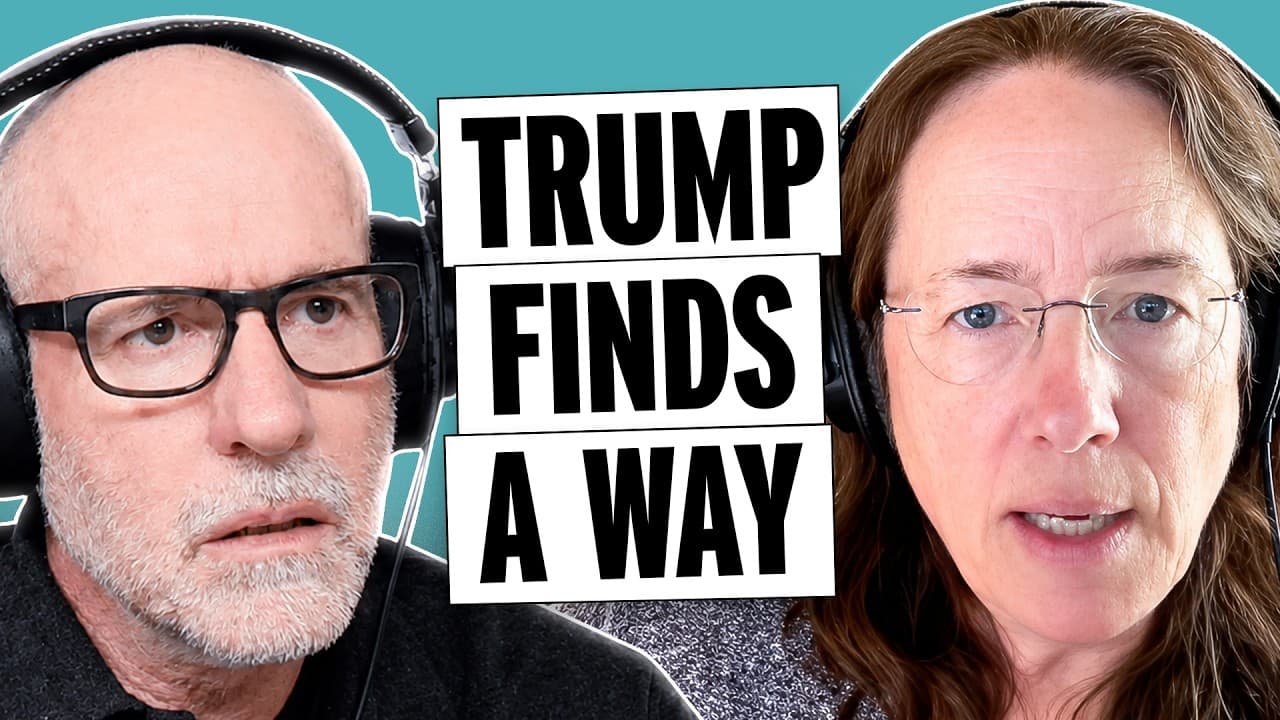
How Does Trump Always Find a Workaround?
TL;DR
Trump consistently relies on finding a workaround to circumvent rules and norms. The discussion highlights how the Kennedy Center tarp and the concept of cheating the system reveal a pattern of testing limits, while broader political dynamics show how this behavior resonates with supporters and challenges governance norms.
Transcript
And and one of the things that really jumps out to me is how many different stories are coming at us from so many different places where you not only have to read what is in front of you, but also guess what is really happening. And that's just a lot of mental work. And you know, you and I devote our lives to it, but for people who are trying to pa... Read More
Key Insights
- Trump’s behavior is described as repeatedly finding a workaround to bypass rules or expectations.
- The Kennedy Center tarp incident is presented as evidence of both a formal compliance and a subversion of the spirit of the order.
- The discussion suggests the pattern is both a personal trait of Trump and a behavior observed among his followers.
- The analysis links the tactic of cheating the system to broader societal ideas about what constitutes legitimate business or governance.
- There is a tension noted between media narratives and the concerns of ordinary people, like rising egg prices, in shaping political relevance.
- Democrats are portrayed as embracing a more supportive stance toward the military, contrasting with perceived Republican undercutting of service members.
- The UFC fight at the White House is discussed as a symbol of branding, masculinity, and political distraction rather than a straightforward policy debate.
- The speakers caution against equating tactical political theater with genuine governance or accountability.
- More videos from this channel:
- More from this channel: The Prof G Pod – Scott Galloway
Install to Summarize YouTube Videos and Get Transcripts
Explore YouTube Video Summarizer or Get YouTube Transcript Extractor
Questions & Answers
Q: How does the Kennedy Center tarp example illustrate Trump’s pattern of evading rules?
The Kennedy Center tarp is described as fulfilling the court order to remove Trump’s name, yet covering it to obscure the removal. This is used to illustrate a broader habit of not just meeting the letter of a rule but avoiding the spirit of it. The act demonstrates a preference for finding a workaround that preserves appearance while altering reality, highlighting a strategy of partial compliance.
Q: What does the panel say about why some people might not see these actions as harmful?
The discussion suggests that some followers view Trump as a smart businessman who knows how to operate within or around systems. This perspective can normalize rule bending as an effective way to achieve goals, which in turn diminishes perceptions of harm and ethics. It also points to how sensational acts capture attention more than routine governance.
Q: How is the idea of masculinity connected to Trump’s approach, according to the interview?
The speakers discuss a desire for an aspirational form of masculinity rooted in strength and service, arguing that Democrats are embracing military service while Republicans sometimes undercut it. They suggest that Trump’s actions, including events like the UFC fight, tap into a public appetite for aggressive symbols, even if they are controversial or divisive.
Q: Why is the UFC event at the White House viewed as a potential distraction, and what does it symbolize?
The UFC event is viewed as a distraction that also brands the White House with a commercial spectacle. It symbolizes a fusion of branding and politics that many find off-putting because it monetizes national institutions and risks diluting civic functions. This creates concerns about taxpayer costs and the symbolic meaning of government spaces.
Q: What is the contrast drawn between Democrats and Republicans regarding the military, and what does it imply?
The conversation notes that new rising Democrats are embracing the American military more openly, while Republicans are described as undercutting veterans and mismanaging VA policies. This contrast implies different readings of masculinity and national service, suggesting that party strategies may hinge on how they value and support service members.
Q: How does the panel view the media’s role in shaping perceptions of Trump’s acts?
The panel acknowledges the media bubble and questions whether the public's bandwidth is consumed by high-profile acts at the expense of everyday concerns like inflation or costs of living. This suggests that coverage can magnify symbolic actions while potentially overlooking substantive policy debates that affect ordinary people.
Q: What is the broader implication of “cheating the system,” according to the discussion?
Cheating the system is framed as a broader tendency to redefine rules and obligations in a way that benefits a select group at the expense of the public good. This pattern undermines the rule of law and erodes trust in institutions, illustrating how personal tactics can influence national governance and democratic norms.
Q: What does the episode suggest about how ordinary citizens perceive political theater versus governance?
The episode argues that while political theater can be compelling and memorable, many ordinary citizens are preoccupied with practical concerns like prices and daily costs. The tension between dramatic symbolism and effective governance is highlighted, suggesting that acts of spectacle may overshadow essential policy decisions for the average voter.
Summary & Key Takeaways
-
A historian analyzes Trump’s pattern of bending rules and the implications for democratic norms, focusing on symbolic acts like the Kennedy Center tarp and how such actions shape public perception. The discussion connects personal tactics to wider political consequences and taxpayer concerns.
-
The conversation contrasts the media bubble with everyday concerns such as rising costs, suggesting that the high profile acts may distract from real policy impacts on daily life.
-
The interview also contrasts Democrat and Republican approaches to military service and civic duty, arguing that questions of masculinity, service, and national identity influence political strategy and public reception.
Read in Other Languages (beta)
Share This Summary 📚
Summarize YouTube Videos and Get Video Transcripts with 1-Click
Try YouTube Summary with ChatGPT & Claude or YouTube Transcript Generator
Explore More Summaries from The Prof G Pod – Scott Galloway 📚
Summarize YouTube Videos and Get Video Transcripts with 1-Click
Try YouTube Summary with ChatGPT & Claude or YouTube Transcript Generator