What Will China’s Next 5-Year Plan Focus On AI?
TL;DR
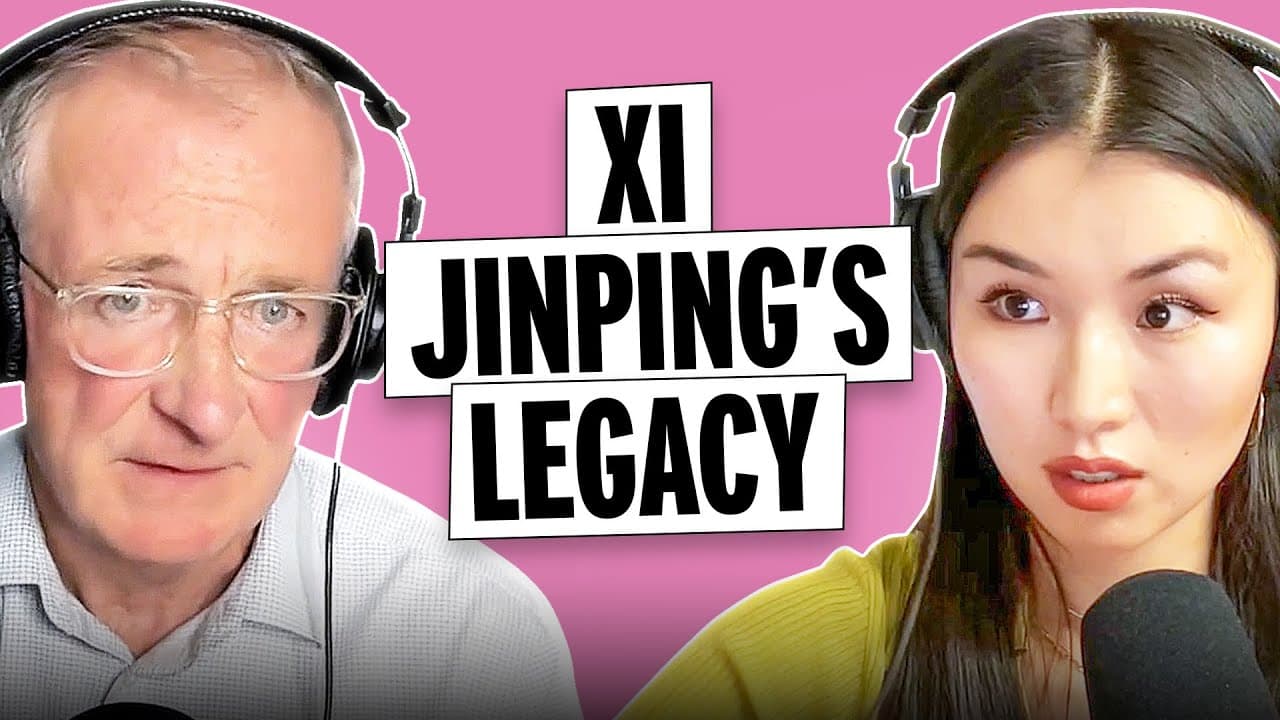
The next five-year plan for 2026–2030 will center on AI as a core driver of growth and transformation, with emphasis on high tech, social safeguards, and self reliance. Analysts expect AI to shape policy, industry, and governance while questions remain about Xi Jinping’s succession and the political transition ahead.
Transcript
I think these 5-year plans, I mean, they sound like they could be a bit workmanlike, uh, a little bit sort of socialist, communist, uh, uh, type of terminology, but they're really important way markers for China's development. Um, we've had a a 5-year plan every 5 years since 1953, and they really show where China's aiming, and as you say, this one... Read More
Key Insights
- AI is positioned as the cornerstone of China’s next five-year plan, signaling a threshold shift toward AI-driven growth and transformation.
- The plan is expected to emphasize rebalancing the economy, boosting consumption, and investing in high-tech industries as part of a broader social and economic modernization.
- Chokepoint technologies such as semiconductors, advanced chemicals, biotech, and aviation are identified as key focus areas to reduce dependence on foreign suppliers.
- The fourth plenum is framed as the moment when the CCP may set the stage for the policy blueprint that shapes the 2026–2030 plan, under Xi Jinping’s leadership.
- The AI plus plan outlines ambitious goals: 70% AI integration in six sectors by 2027, 90% integration by 2030, and universal adoption by 2035, signaling broad government and industry alignment.
- Public sector AI adoption is highlighted, with examples of AI in medical records, local government data, and a Beijing AI hospital with many AI doctors, indicating a push for governance applications.
- There is a recurring theme that AI deployment should be practical and specific rather than a vague promise, as illustrated by demonstrations of robotics and real-world AI pilots.
- The conversation includes reflections on the role of AI in everyday life and services, from hotel robots delivering items to AI doctors diagnosing conditions, illustrating AI’s expanding footprint in society.
- More videos from this channel:
- More from this channel: The Prof G Pod – Scott Galloway
Install to Summarize YouTube Videos and Get Transcripts
Explore YouTube Video Summarizer or Get YouTube Transcript Extractor
Questions & Answers
Q: What is the basic purpose of China’s upcoming five-year plan and how is AI expected to influence it?
The upcoming five-year plan will cover 2026 through 2030 and is expected to rebalance a slowing economy, boost consumption, and invest in high-tech sectors, with AI positioned as a central engine for technological revolution and industrial transformation. The plan aims to integrate AI across industry and governance, reflecting a strategic push toward self-reliance and advanced manufacturing while managing social and economic risks.
Q: How do the hosts describe the role of AI in China’s economic strategy according to the discussion?
The hosts describe AI as the cornerstone of the next five-year plan and a continuation of the push for high-quality growth. They cite government rhetoric about AI as a driver of transformation and emphasize the need for a practical, not merely symbolic, deployment of AI across sectors such as healthcare, manufacturing, and public administration.
Q: What is the AI plus plan and what targets does it set for AI adoption by 2030 and 2035?
The AI plus plan is a three-step roadmap that targets 70% AI integration in six key sectors by 2027, 90% integration across the economy by 2030, and universal adoption by 2035, reflecting an ambition to embed AI deeply into economic and social systems.
Q: What examples are given to illustrate AI’s real-world applications in China?
Examples include an AI hospital with 42 AI doctors diagnosing thousands of cases with high accuracy, a humanoid robot demonstration in a hotel lobby, and a lunar mission where AI assisted a selfie-taking rover, illustrating AI’s practical deployment in healthcare, robotics, and space exploration.
Q: What concerns do the hosts raise about overpromising AI in public discourse?
The hosts caution against treating AI as a magical solution without specifics, pointing out that meaningful progress requires concrete deployments and tangible improvements in sectors like healthcare, governance, and manufacturing, rather than vague references to AI as a universal fix.
Q: What does the discussion suggest about AI’s role in public governance and data use?
The discussion suggests AI could be integrated into public governance, with potential AI applications in medical records and local government data managed by partnerships with tech firms, highlighting a trajectory where AI supports decision making and service delivery in the public sector.
Q: How is Xi Jinping’s leadership linked to the 5-year plan and possible successor in the conversation?
The hosts frame Xi Jinping as personally driving the blueprint for the 5-year plan, while noting that questions about his eventual successor and the transition regime are surfacing, implying the political dimension of the plan beyond purely economic and technological goals.
Q: What are the hosts' views on the balance between innovation and consumption in the next plan?
They suggest the plan will seek to boost consumption and social safety nets to support domestic demand while maintaining a strong push for AI and advanced technologies, aiming for sustainable growth that reduces reliance on external markets while expanding living standards for citizens.
Summary & Key Takeaways
-
The episode explains that China’s next five-year plan will cover 2026 through 2030 and is expected to prioritize AI across industry and governance. It notes that the plan mirrors prior emphasis on high-quality growth and technology while seeking to rebalance the economy and strengthen internal demand.
-
The discussion highlights the AI plus plan, a three-step roadmap aiming for 70 percent AI integration in six sectors by 2027, 90 percent economy coverage by 2030, and universal adoption by 2035, with attention to chokepoint technologies like semiconductors and biotech.
-
The hosts consider political aspects, such as Xi Jinping's influence on the blueprint and the potential transition, while also sharing anecdotes about AI applications from robots to AI doctors and a moon mission propelled by AI.
Read in Other Languages (beta)
Share This Summary 📚
Summarize YouTube Videos and Get Video Transcripts with 1-Click
Try YouTube Summary with ChatGPT & Claude or YouTube Transcript Generator
Explore More Summaries from The Prof G Pod – Scott Galloway 📚



Summarize YouTube Videos and Get Video Transcripts with 1-Click
Try YouTube Summary with ChatGPT & Claude or YouTube Transcript Generator