How to Identify and Use Order Blocks in Trading
TL;DR
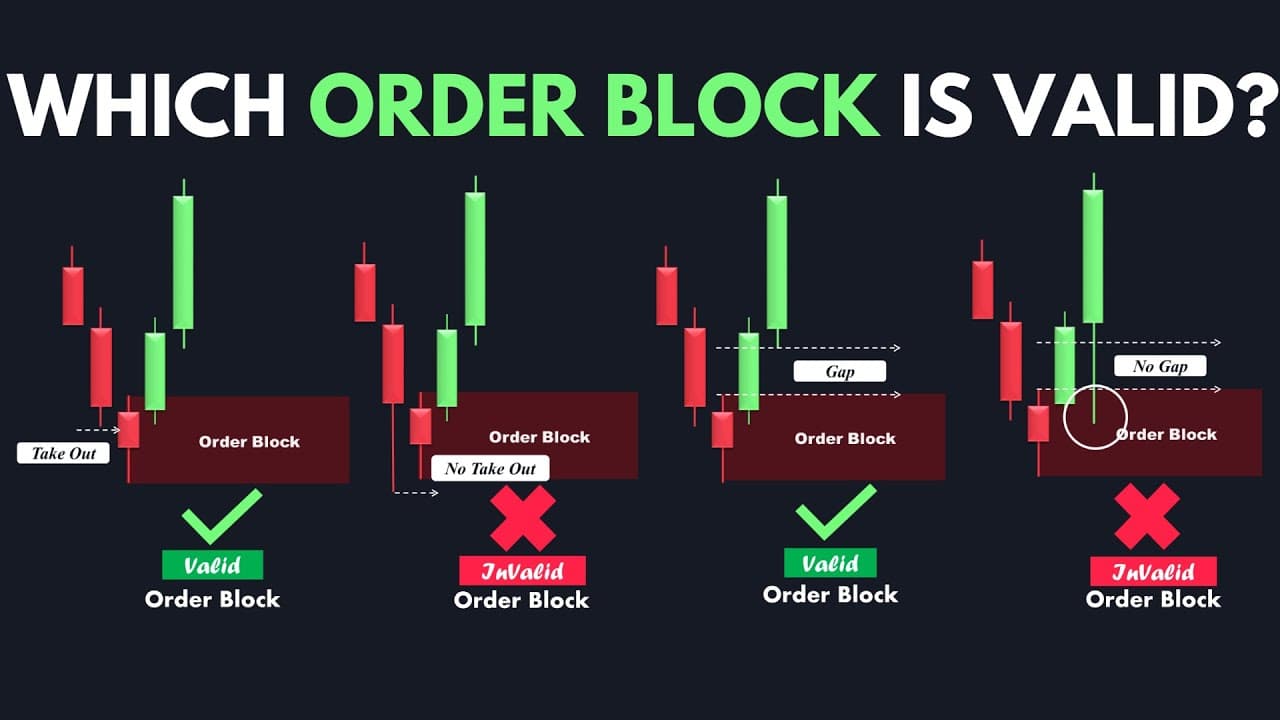
Order blocks are critical zones in trading that indicate potential price reversals. Identifying valid order blocks involves recognizing the last bullish or bearish candle before a significant price movement. Key criteria include sweeping liquidity, creating imbalance, and ensuring the order block is unmitigated. These zones help traders make informed decisions and enhance trade profitability.
Transcript
hey Traders and welcome to another episode of smart risk trading without the skill to identify valid and highquality Order blocks can be extremely risky and may result in significant losses order blocks often overlooked by many play a pivotal role in executing well-informed trading opportunities and are a Cornerstone in the strategies of smart Mone... Read More
Key Insights
- Order blocks are zones that indicate potential price reversals in trading.
- A valid order block requires sweeping liquidity of the previous candle.
- Imbalance creation near the order block is crucial for its validity.
- Unmitigated order blocks are considered one-time use opportunities.
- Order blocks must lead to a break of structure or change of character.
- Different entry methods, such as wick and body entries, affect risk and reward.
- The midpoint entry offers a favorable reward-to-risk ratio.
- Order block principles apply to various time frames and market conditions.
Install to Summarize YouTube Videos and Get Transcripts
Explore YouTube Video Summarizer or Get YouTube Transcript Extractor
Questions & Answers
Q: How to identify a valid order block?
A valid order block is identified by the last bullish or bearish candle before a significant price movement. Key criteria include sweeping the liquidity of the previous candle, creating an imbalance, and ensuring the order block remains unmitigated. These factors confirm the zone as a potential area for price reversal.
Q: What is the importance of sweeping liquidity in order blocks?
Sweeping liquidity is crucial as it confirms that the order block represents a zone of significant buying or selling interest. This action indicates market manipulation areas where large orders have been executed, increasing the likelihood of a price reversal when the market reaches these zones again.
Q: Why is imbalance important in validating order blocks?
Imbalance near an order block signifies that there were more aggressive orders executed in one direction, creating a gap in price action. This imbalance supports the validity of the order block, as it indicates a strong directional bias that traders can exploit for potential price reversals.
Q: What does it mean for an order block to be unmitigated?
An unmitigated order block is one that has not been revisited by price action after its initial formation. It is considered a one-time use opportunity for traders, as the first interaction with the order block is when the highest probability of a price reversal is expected.
Q: How do order blocks relate to a break of structure?
Order blocks often lead to a break of structure, indicating a change in market direction. A break of structure occurs when price action moves beyond a previous high or low, confirming the order block's validity as a reversal zone and signaling potential trading opportunities.
Q: What are the different entry methods for order blocks?
Entry methods for order blocks include wick entry, body entry, midpoint entry, and body-to-wick entry. Each method offers different risk and reward profiles. Wick entry provides a wider stop-loss margin, while midpoint entry offers a refined entry point with a tighter stop-loss, enhancing the reward-to-risk ratio.
Q: Why is midpoint entry preferred by some traders?
Midpoint entry is preferred due to its refined entry point, which allows for a tighter stop-loss and a higher reward-to-risk ratio. By placing the entry at the midpoint of the order block, traders can potentially capture more significant price movements while effectively managing their risk exposure.
Q: Can order block principles be applied across different time frames?
Yes, order block principles can be applied across various time frames and price action-based charts. The criteria for identifying valid order blocks, such as liquidity sweeps and imbalances, remain consistent, allowing traders to utilize these concepts in different market conditions and trading strategies.
Summary & Key Takeaways
-
Order blocks are pivotal in trading, representing zones where significant market movements begin. To identify a valid order block, traders must look for liquidity sweeps and imbalances. These areas are used once, and their validity is confirmed by a break of structure or change of character.
-
Understanding order blocks involves recognizing the last bullish or bearish candle before a major price move. Traders use criteria like liquidity sweeps and imbalances to validate these zones, which are crucial for informed trading decisions and improving trade outcomes.
-
Traders can employ various entry models based on order blocks, such as wick and body entries. Each method has different implications for risk and reward, but all rely on identifying valid order blocks through specific criteria, enhancing trading strategies effectively.
Read in Other Languages (beta)
Share This Summary 📚
Summarize YouTube Videos and Get Video Transcripts with 1-Click
Try YouTube Summary with ChatGPT & Claude or YouTube Transcript Generator
Explore More Summaries from Smart Risk 📚



Summarize YouTube Videos and Get Video Transcripts with 1-Click
Try YouTube Summary with ChatGPT & Claude or YouTube Transcript Generator