How did Europe claim the world through exploration?
TL;DR
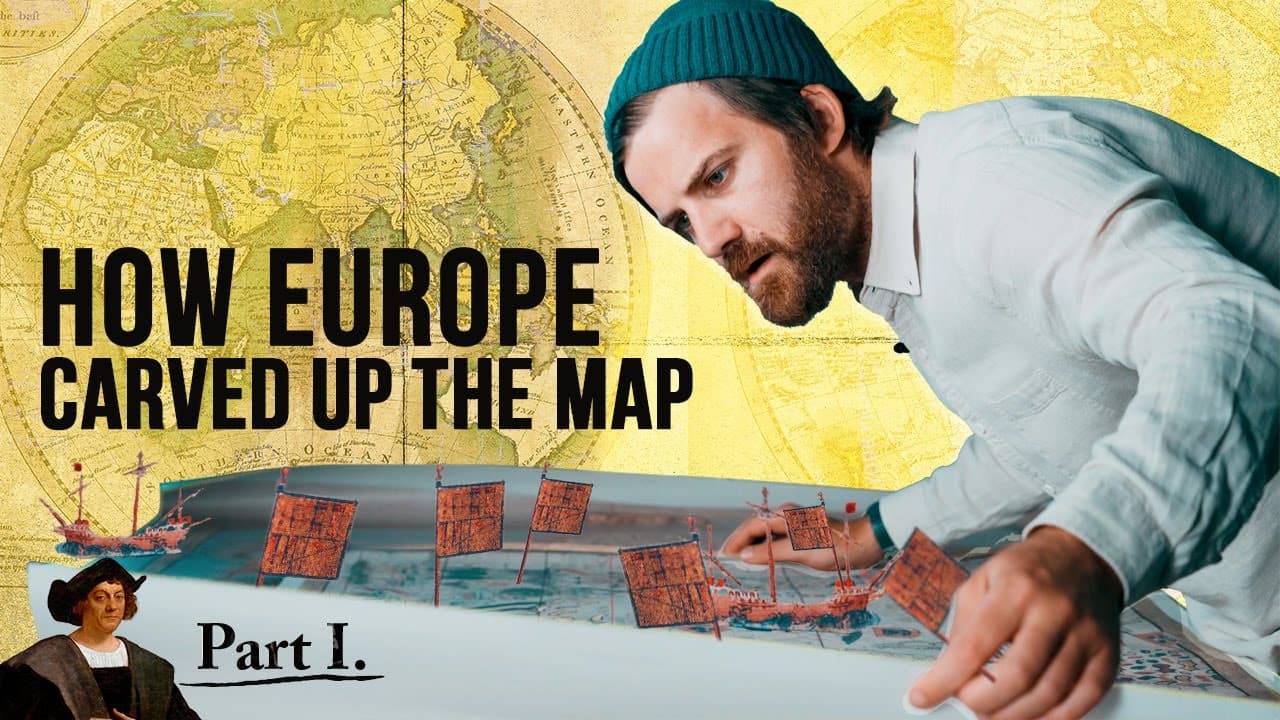
Europe shifted from trading to claiming land after Columbus reported new lands and the Pope drew lines dividing the world. Spain and Portugal developed a two sphere system and produced maps and atlases that framed conquest as rightful access rather than mere trade, setting the stage for imperialism rooted in a new world versus old world mindset.
Transcript
(drawer opening) (explorative music) - The world you live in today was sketched on paper by European men. Men who looked like me. Men who at first were just curious and adventurous but soon whose motives morphed into an insatiable greed. A confidence that their way was better than everyone elses. This confidence led to arguably the most influential... Read More
Key Insights
- Europeans believed a distinction existed between the old world and the new world, enabling land claims as a legitimate enterprise.
- The Columbus voyage changed the goal from trade to possession, which redefined how Europeans could interact with distant lands.
- Spain and Portugal formalized their exploration efforts by drawing straight lines that split the world their way, creating spheres of influence.
- Papal mediation helped legitimize the division of territories, illustrating how religious authority played a role in imperial ambitions.
- The Portuguese Atlantic route around Africa marks a pivotal moment for accessing eastern trade riches and setting a template for later colonization.
- Atlases and maps from the period framed conquest as a narrative of Christian expansion and quest for wealth, influencing public perception.
- The seizure of lands was justified by the lack of organized resistance and by the claim of possession in the explorers' reports.
- This video presents a contextual approach, showing how economic motives, religious framing, and geographic discovery combined to propel European imperialism.
- More videos from this channel:
- More from this channel: Johnny Harris
Install to Summarize YouTube Videos and Get Transcripts
Explore YouTube Video Summarizer or Get YouTube Transcript Extractor
Questions & Answers
Q: A real search query question about the video (e.g. 'How to...', 'What is...', 'Why does...', 'When should...'). Question 1
How did Columbus’s travels contribute to the shift from trade to land claiming in Europe, and what changes did it trigger in the European mindset about global territories? The answer lies in his reports about newly found lands and the idea of taking possession, which reframed exploration as conquest rather than simple exchange. This catalyzed imperial ambitions.
Q: Question 2
What role did the lines drawn by Spain and Portugal play in European imperial expansion, and how were these lines perceived by contemporaries and later generations? The two straight lines created spheres of influence, did not involve local negotiation, and helped establish a clear framework for conquest under a division of the world.
Q: Question 3
How did the papal mediation influence early imperial claims, and why was religion used to justify European expansion? The Pope brokered the deal dividing lands, which lent religious legitimacy to seizure and possession, aligning Christian mission with wealth and power in a way that shaped imperial narratives.
Q: Question 4
In what ways did maps and atlases reflect and reinforce European imperial ambitions, according to the transcript? The nautical atlas presented Europe’s dominance through imagery of sails, angels, and flags claiming lands, turning exploration into a story of rightful possession and expanding influence.
Q: Question 5
What is the significance of around Africa routes in Portuguese exploration, and how did that influence later European expansion? The circumnavigation of Africa opened access to eastern trade riches, providing a model for how to project power overseas and establish wealth through control of key trade routes.
Q: Question 6
How did the idea of trading evolve into land grabbing in the West, as described in the video, and what were the immediate consequences? The narrative shows a shift from exchange with rich empires to claiming lands with little resistance, creating a new global order and set of rivalries between European powers.
Q: Question 7
What does the video imply about the perception of unclaimed lands and the readiness of indigenous peoples to resist European arrival? The speaker suggests lands could be seen as unclaimed and ready for claiming, but this framing ignores local governance and resistance, facilitating imperial trajectories and broader conquest.
Q: Question 8
How does the video frame the early episodes of imperialism as a three-part series, and what foundational idea does part one establish? The series frames imperialism as a long process starting with early exploration, maps, and the mindset of possession, which constructs the basis for later expansion and global restructuring.
Summary & Key Takeaways
-
Europe's shift from trade to land claiming began with Columbus and the notion of unclaimed lands, leading to a division of territories between Spain and Portugal.
-
The two lines of demarcation and the atlas imagery show how Europeans justified conquest and framed overseas expansion as a legitimate enterprise.
-
This video traces how maps, narratives, and early voyages created a mindset that allowed Europe to extend control over vast areas beyond its shores.
Read in Other Languages (beta)
Share This Summary 📚
Summarize YouTube Videos and Get Video Transcripts with 1-Click
Try YouTube Summary with ChatGPT & Claude or YouTube Transcript Generator
Explore More Summaries from Johnny Harris 📚
Summarize YouTube Videos and Get Video Transcripts with 1-Click
Try YouTube Summary with ChatGPT & Claude or YouTube Transcript Generator