How Inflation Happens and Why Rates Change It
TL;DR
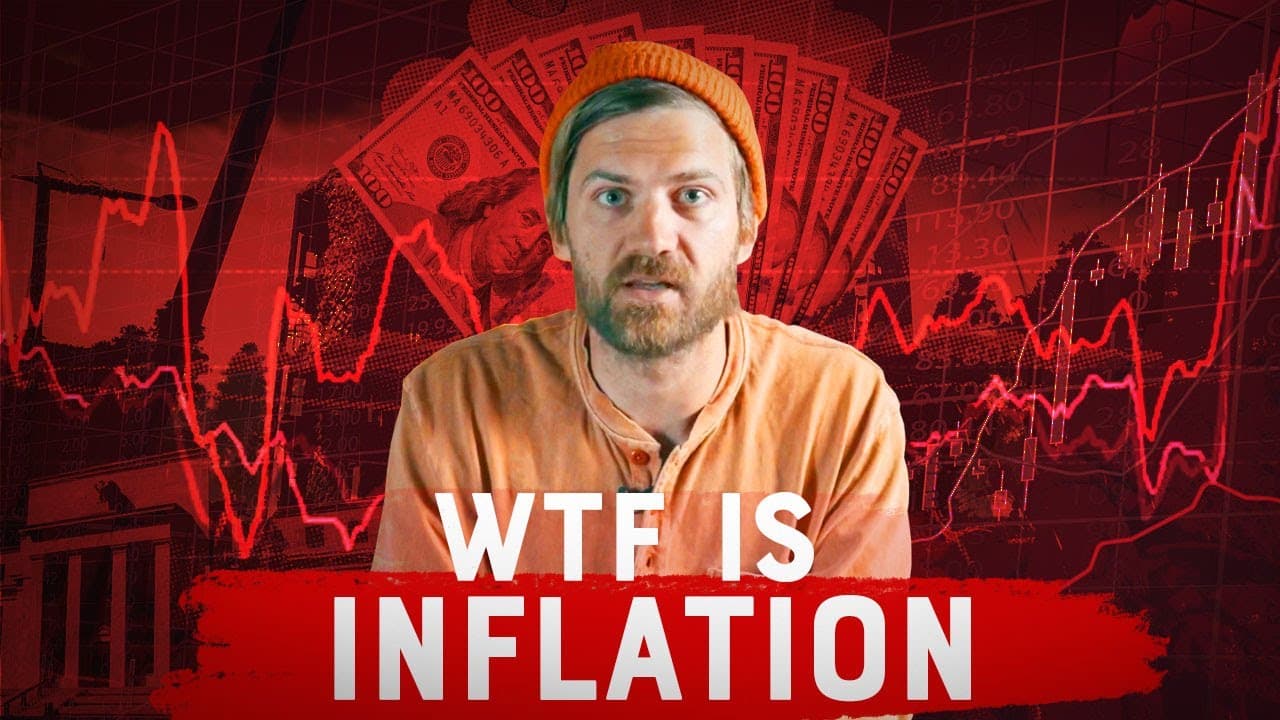
Inflation happens when there is more money in the economy than goods and services available, pushing prices higher. Central banks, like the Fed, adjust interest rates to influence borrowing, spending, and growth, aiming to keep inflation in a manageable range and avoid recessions. The video uses a village metaphor and real-world policy actions to explain these dynamics.
Transcript
(electronic music) - No, no cool intro, no fancy music. I just want to explain inflation in six minutes. I have a degree in economics. I spent years trying to understand this. (ominous music) so let's see if I can boil it down. What is inflation? Why is it rising? Why are people worried? And what do interest rates have to do with it? - The Federal ... Read More
Key Insights
- Inflation is defined as more money in the economy than goods to buy, which raises prices.
- A government or central bank can influence inflation by changing interest rates to affect borrowing and spending.
- When demand outpaces supply due to loose monetary policy, prices rise across many sectors, causing inflation.
- Central banks act as policy setters to keep growth and employment stable, not to earn profits.
- Lower interest rates stimulate borrowing and spending, which can boost growth but risks higher inflation.
- Raising rates aims to cool spending and borrowing to curb inflation and prevent a recession.
- A supply chain disruption during the pandemic contributed to inflation by limiting available goods.
- Historical extremes, like Venezuela, show inflation can destroy money’s value when policy fails, though most economies do not reach that extreme.
- More videos from this channel:
- More from this channel: Johnny Harris
Install to Summarize YouTube Videos and Get Transcripts
Explore YouTube Video Summarizer or Get YouTube Transcript Extractor
Questions & Answers
Q: What is inflation in simple terms and why does it happen?
Inflation is when there is more money in the economy than there are goods and services to buy, which makes prices go up. It happens when demand rises faster than supply, such as when people have extra money and want to spend it but factories and retailers cannot produce goods quickly enough. This mismatch pushes prices higher across many sectors.
Q: How do central banks like the Federal Reserve influence inflation?
Central banks set rules that influence the entire banking system and the economy. They adjust the interest rate, which changes how expensive it is to borrow money. Lower rates encourage borrowing and spending, while higher rates discourage it. By steering borrowing and spending, they try to keep inflation under control and avoid excessive booms or recessions.
Q: Why did inflation rise after the pandemic according to the video?
Inflation rose because governments printed or otherwise spent large sums to keep the economy afloat during the pandemic, while supply chains were disrupted. That created a situation where more money chased fewer goods, leading to higher prices across many sectors as businesses responded to increased demand.
Q: What role do interest rates play in inflation according to the explanation?
Interest rates affect how much people and businesses borrow and spend. When rates are low, borrowing is cheap, which increases spending and can push up prices. When rates rise, borrowing costs go up and spending slows, which can cool price increases and help reduce inflation.
Q: What is the difference between inflation and a recession as described in the video?
Inflation refers to rising prices and eroding purchasing power, caused by excess money or demand relative to supply. A recession is a downturn where economic activity slows, often due to high prices squeezing demand or reduced investment. The central bank may raise rates to prevent inflation from tipping into a recession.
Q: Why is inflation considered a natural part of a growing economy?
Inflation is described as a natural part of growth because, in small doses, rising prices can reflect rising demand and expanding economic activity. It signals that the economy is not shrinking and that production is growing enough to meet demand, though it must be kept under control to prevent runaway price increases.
Q: What could cause a currency to lose value, based on the Venezuela example?
If a government cannot stabilize prices or control the rate of inflation, money can lose value quickly. In extreme cases, people may start using the currency itself as a raw material rather than money, which demonstrates how quickly confidence in a currency can erode when inflation spirals out of control.
Q: What is the
The next set of content elaborates how policy and external events interact, emphasizing that inflation cannot be fully understood without considering both monetary policy actions and real-world supply conditions. The explanation highlights that central banks aim to balance growth, jobs, and price stability, while governments and markets respond to changing demand and supply dynamics.
Summary & Key Takeaways
-
Inflation is described as excess money chasing limited goods, leading to higher prices, which can be tempered by policy actions. The video uses a simple village analogy to illustrate how over-spending and supply constraints create inflation. It also explains why central banks raise rates to cool demand and stabilize the economy.
-
The Fed and central banks are depicted as policy makers who do not seek profit but aim to maintain job growth and price stability. They adjust interest rates to influence borrowing and spending, with the goal of avoiding deep recessions and keeping the economy on a steady path.
-
The broader message is that inflation is a natural, though sometimes risky, part of growing economies, and policy responses depend on balancing demand and supply while considering the broader effects on employment and prices.
Read in Other Languages (beta)
Share This Summary 📚
Summarize YouTube Videos and Get Video Transcripts with 1-Click
Try YouTube Summary with ChatGPT & Claude or YouTube Transcript Generator
Explore More Summaries from Johnny Harris 📚

Summarize YouTube Videos and Get Video Transcripts with 1-Click
Try YouTube Summary with ChatGPT & Claude or YouTube Transcript Generator