Can AI Overcome the Shortage of Training Data?
TL;DR
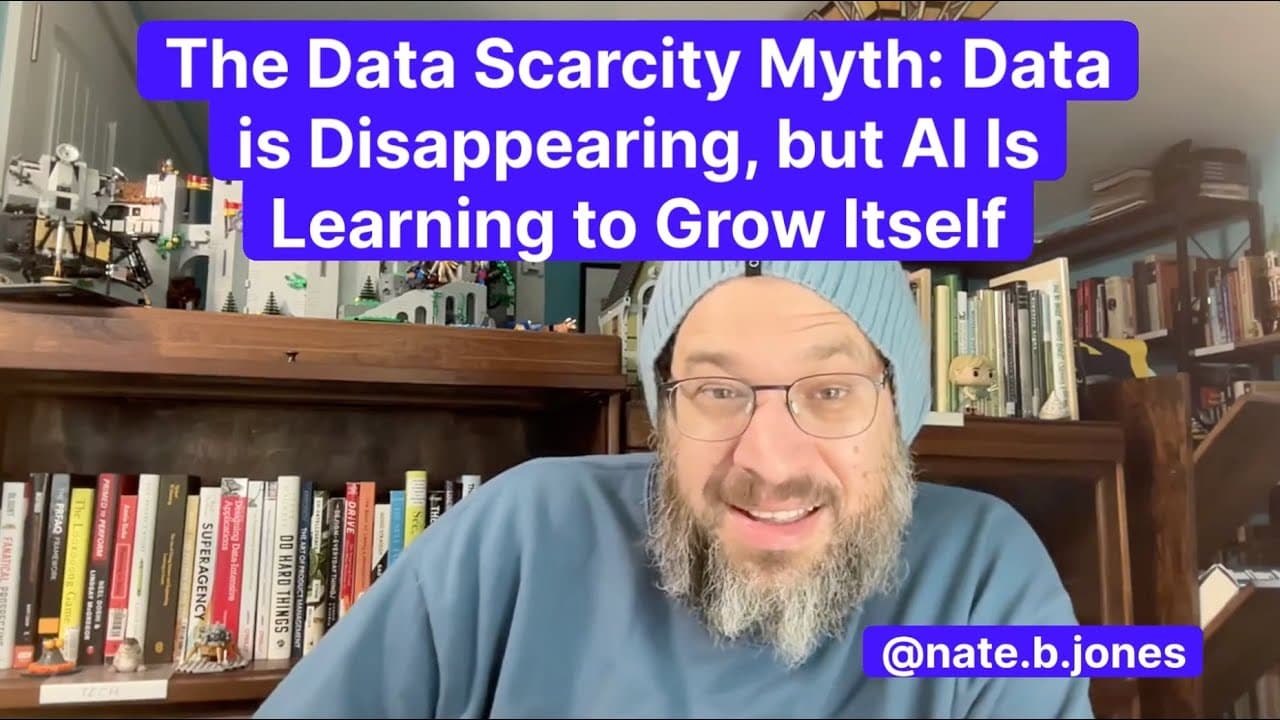
AI labs may offset shrinking access to human-created training data by generating synthetic tokens and using AI-driven reinforcement learning to evaluate and improve them. Companies are simultaneously protecting valuable data streams, including model outputs, Slack conversations, publisher archives, and copyrighted characters, so future model progress may depend less on open data and more on compute-intensive self-improvement loops.
Transcript
You know, Ilia Sutskiver said data is the new oil, which is, I suppose, not a new thing to say, but it's Ilia, and he's one of the leading lights of the AI generation. And when he said it at Nurips in November 2024, we all paid attention. There have been two major trend lines since then that make me think that Ilia needs to update his priors. I kno... Read More
Key Insights
- Data access is becoming more restricted as companies recognize that live user activity, internal conversations, model outputs, and proprietary content can support AI development. This ring-fencing strengthens the traditional scarcity argument because useful information may become unavailable faster than the world produces new open training material.
- User-generated artificial data is model-produced content created in response to human prompts. The discussion identifies interactions inside products such as ChatGPT as a potentially renewable training source because users continually generate prompts, outputs, preferences, and domain-specific material through ordinary product use.
- Anthropic’s restriction of Claude model access through Windsurf is presented as a competitive data decision. The proposed concern is that valuable model outputs and user-generated coding interactions could otherwise flow toward OpenAI following its reported purchase of Windsurf, giving a rival access to useful future data streams.
- Salesforce’s reported decision to restrict Glean’s access to Slack messages illustrates platform-level data protection. Slack conversations can help an enterprise search product show executives what is happening across a business, making those internal communications strategically valuable for AI products and worth protecting from outside companies.
- Copyright lawsuits are narrowing the practical training landscape by challenging how AI companies use premium or proprietary material. The New York Times case against OpenAI and Disney’s case against Midjourney are cited as attempts to restrict access to publisher content and recognizable copyrighted characters.
- Synthetic tokens are becoming useful training material according to reports from major model makers discussed in the source. This challenges an older conclusion from 2023 that repeatedly training AI systems on AI-generated material could not reliably support continued model improvement.
- AI-driven reinforcement learning works by allowing AI systems to evaluate or improve AI-generated responses instead of relying entirely on humans to judge which outputs should be preferred. Reports concerning OpenAI and Anthropic are presented as evidence that major laboratories are exploring autonomous improvement processes.
- Compute and power may become the central constraints if AI can generate synthetic tokens and conduct reinforcement learning on its own outputs. Under that scenario, restricted human-created data matters less, but the discussion emphasizes that alignment questions remain and require a separate examination.
Install to Summarize YouTube Videos and Get Transcripts
Explore YouTube Video Summarizer or Get YouTube Transcript Extractor
Questions & Answers
Q: Why is access to AI training data becoming more restricted?
Access is becoming more restricted because companies increasingly view internal communications, model outputs, user interactions, publisher archives, and copyrighted material as valuable strategic assets. The discussion cites Anthropic restricting access through Windsurf, Salesforce reportedly limiting Glean’s access to Slack messages, and legal actions involving The New York Times, OpenAI, Disney, and Midjourney as examples of technical, commercial, and legal gatekeeping.
Q: What is user-generated artificial data in AI products?
User-generated artificial data is content produced by an AI model in response to prompts supplied by users. It is artificial because the model creates the output, but user-generated because human requests cause and shape its production. The discussion argues that products such as ChatGPT continually create this renewable stream, which may include valuable code and other domain-specific responses that companies can potentially use for improvement.
Q: Why did Anthropic restrict Claude access through Windsurf?
The discussion interprets Anthropic’s restriction as an attempt to prevent valuable model output and coding data from benefiting a competitor. After OpenAI reportedly bought Windsurf, interactions generated through Claude inside that product could potentially provide OpenAI with useful output tokens and user-driven coding material. The stated reasoning is competitive data protection, although the transcript presents this interpretation as part of its broader argument about data lockoffs.
Q: Why does Salesforce reportedly restricting Glean’s Slack access matter?
The reported restriction matters because Glean depends on access to workplace information to provide executives with a unified view of activity across a business. Slack messages represent a large stream of user-generated internal communication. By limiting access, Salesforce can protect information that may be valuable for AI systems while making it harder for an outside enterprise search company to build services around Slack’s data.
Q: How can copyright lawsuits reduce available AI training data?
Copyright lawsuits can make proprietary content harder or riskier for AI companies to use. The discussion cites The New York Times suing OpenAI and Disney suing Midjourney, with Disney objecting to users creating proprietary characters. Regardless of each case’s legal merits, these actions are described as attempts to place parts of the publisher and entertainment data landscape beyond unrestricted model training or generation.
Q: Can synthetic data improve AI models?
The discussion says reports from multiple major model makers indicate that synthetic tokens can now contribute usefully to training. That position differs from a well-known 2023 study described in the transcript as suggesting AI-generated data could not be used reliably by AI systems. The claimed change is not merely generating synthetic text, but combining it with improved evaluation and iterative training methods that select better responses.
Q: What is AI-driven reinforcement learning?
AI-driven reinforcement learning is described as a process in which AI evaluates AI-generated responses and helps determine which outputs should be preferred during training. Traditional reinforcement learning in the discussion relies on humans to judge whether responses are good. Reports concerning OpenAI and Anthropic suggest that laboratories are exploring autonomous alternatives, allowing machines to participate directly in improving later versions of AI systems.
Q: Does synthetic data eliminate the need for human-created data?
Synthetic data may reduce dependence on scarce human-created material, but the discussion does not establish that conventional data has become unnecessary. Companies are still protecting Slack conversations, model interactions, publisher content, and copyrighted assets, which indicates that these sources remain valuable. The stronger claim is conditional: if AI can generate useful tokens and evaluate them reliably, compute and power may replace data access as the main constraints.
Summary & Key Takeaways
-
Access to valuable training material is narrowing as technology companies, publishers, and copyright holders protect their information. Examples discussed include Anthropic restricting model access through Windsurf, Salesforce reportedly limiting Glean’s access to Slack messages, and lawsuits seeking to prevent AI companies from using proprietary or copyrighted material without authorization.
-
User-generated artificial data is presented as a renewable resource created when people prompt models and receive outputs inside AI products. These interactions can contain useful code, preferences, corrections, and responses. Because such data may help improve future systems, companies have incentives to keep these streams away from competitors and treat them as proprietary assets.
-
Synthetic data and AI-driven reinforcement learning may weaken the importance of conventional data scarcity. Reports described in the discussion suggest major model makers are using AI-generated tokens and autonomous evaluation loops to improve models. If these methods continue working, compute and power may become more important constraints, although unresolved alignment questions would remain.
Read in Other Languages (beta)
Share This Summary 📚
Summarize YouTube Videos and Get Video Transcripts with 1-Click
Try YouTube Summary with ChatGPT & Claude or YouTube Transcript Generator
Explore More Summaries from AI News & Strategy Daily | Nate B Jones 📚






Summarize YouTube Videos and Get Video Transcripts with 1-Click
Try YouTube Summary with ChatGPT & Claude or YouTube Transcript Generator