What Are the Four Steps of Toxicology ADME?
TL;DR
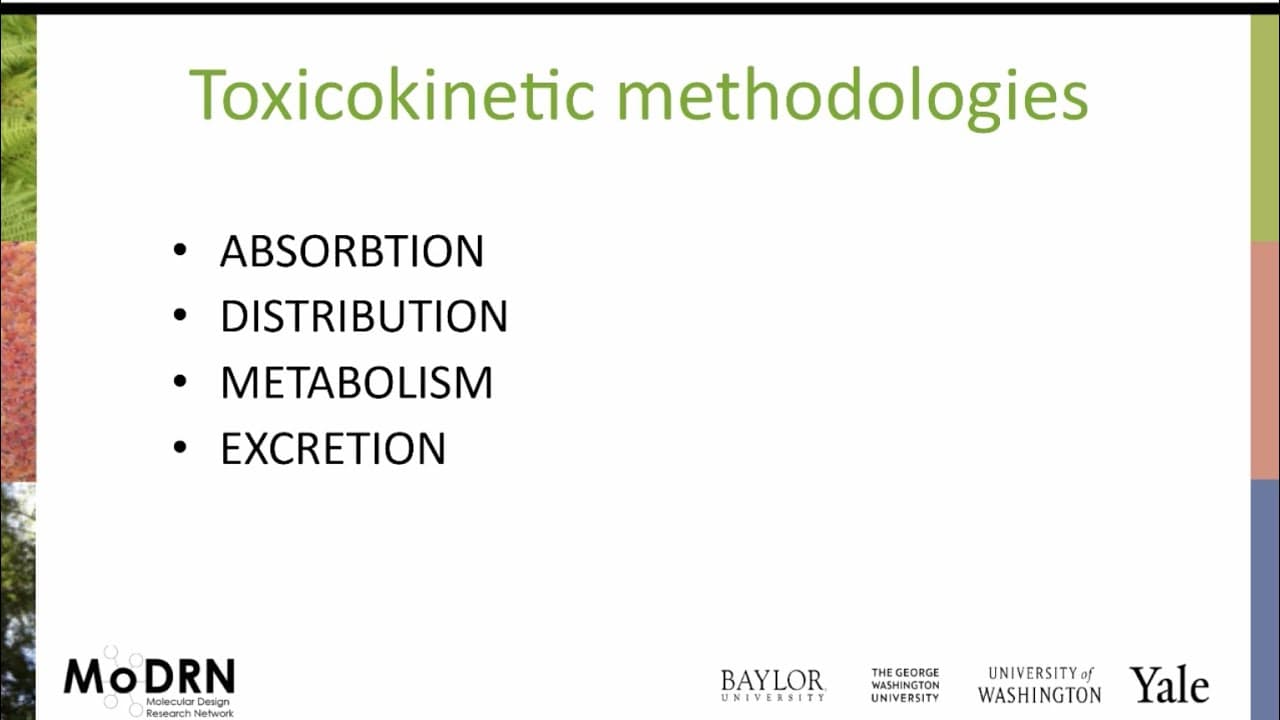
The four key steps of toxicology ADME — absorption, distribution, metabolism, and excretion — determine how substances interact with the body and their potential toxicity. Substances enter through ingestion, inhalation, or skin absorption, and their characteristics impact their bioavailability and harmfulness. Understanding these processes is vital for green chemists in designing safer chemicals.
Transcript
what happens once you're exposed to a toxicant add me a DME because absorption distribution metabolism and excretion are the four key steps that are going to be crucial to whether or not something has a biological biological activity on your body and how it's going to affect your your body and these are also going to be the key intervention points ... Read More
Key Insights
- ❓ Absorption, distribution, metabolism, and excretion (ADME) are crucial steps in assessing the toxicity of a substance.
- ❓ Different routes of exposure, such as ingestion, inhalation, and skin absorption, have varying implications for a substance's absorption and toxicity.
- 🖐️ The properties of biological membranes, such as the skin, lungs, and gastrointestinal tract, play a role in the absorption and distribution of substances.
- ❓ Metabolism involves the transformation of chemicals into metabolites, which can greatly impact the toxicity of a substance.
- 💦 Excretion, especially water solubility, is an important factor in removing substances from the body.
- 💚 Green chemists and chemical designers can intervene in the ADME processes to minimize toxicity.
- 🆘 Understanding the properties of different organs involved in excretion helps determine if a substance can be easily eliminated from the body.
Install to Summarize YouTube Videos and Get Transcripts
Explore YouTube Video Summarizer or Get YouTube Transcript Extractor
Questions & Answers
Q: What are the four key steps involved in assessing the toxicity of a substance?
The four key steps are absorption, distribution, metabolism, and excretion. These steps determine the biological activity and potential toxicity of a substance in the body.
Q: How can a substance enter the body?
A substance can enter the body through ingestion, inhalation, or skin absorption. Each route of exposure has different implications for the absorption and potential toxicity of the substance.
Q: How does the rate and extent of absorption affect the bioavailability of a substance?
The rate and extent of absorption determine the bioavailability of a substance, which refers to how much of the substance reaches the systemic circulation. Faster and more complete absorption leads to higher bioavailability.
Q: Why is metabolism important in assessing toxicity?
Metabolism involves the transformation of chemicals into metabolites. If a molecule is easily transformed into a highly toxic metabolite, its initial non-toxic appearance becomes irrelevant, and it is considered toxic.
Summary & Key Takeaways
-
Absorption, distribution, metabolism, and excretion (ADME) are crucial steps in determining the biological activity and potential toxicity of a substance.
-
Substances can enter the body through ingestion, inhalation, or skin absorption, and their rate and extent of absorption affect their bioavailability.
-
Volume of distribution determines how widely a substance distributes throughout the body, while metabolism involves the transformation of chemicals into metabolites.
-
The properties of the skin, lungs, and gastrointestinal tract play a role in the absorption and metabolism of substances.
-
Excretion, especially water solubility, is an important factor in removing substances from the body.
Read in Other Languages (beta)
Share This Summary 📚
Summarize YouTube Videos and Get Video Transcripts with 1-Click
Try YouTube Summary with ChatGPT & Claude or YouTube Transcript Generator
Explore More Summaries from YaleCourses 📚


Summarize YouTube Videos and Get Video Transcripts with 1-Click
Try YouTube Summary with ChatGPT & Claude or YouTube Transcript Generator