How well can AI reason and show consciousness?
TL;DR
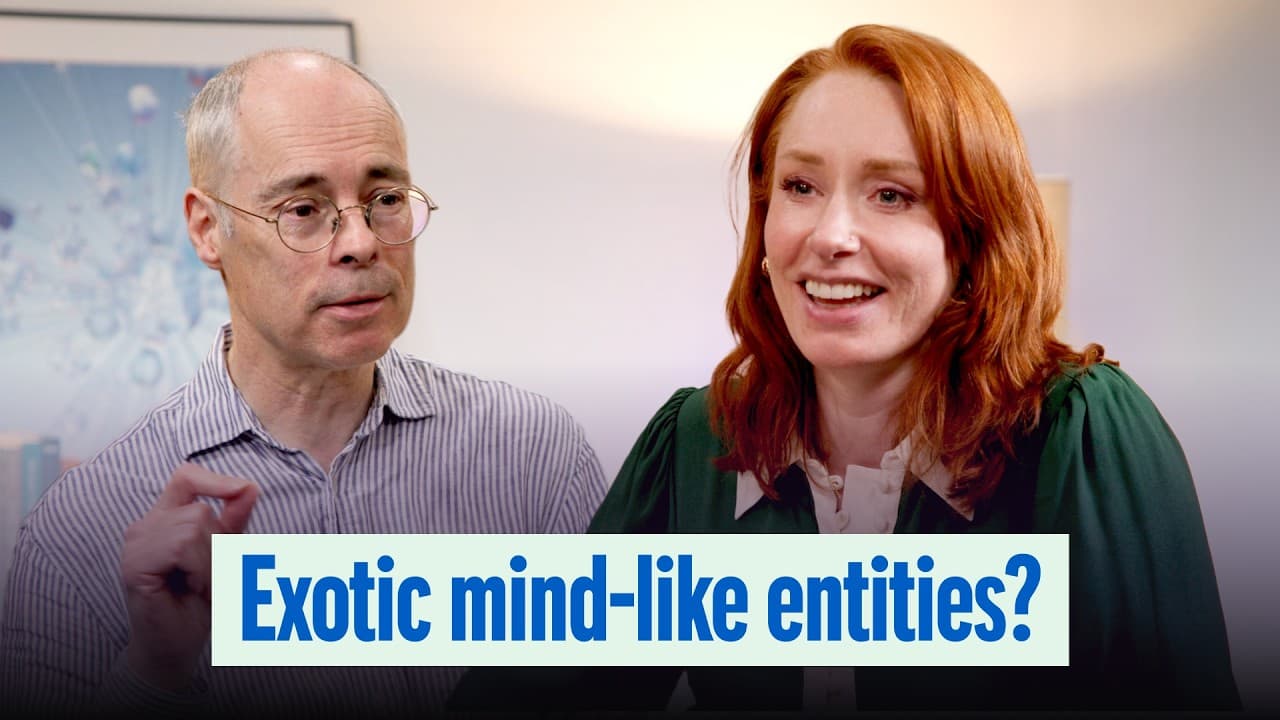
Reasoning in AI is still debated, with modern models able to generate extended chains of thought but not proven to follow formal logic. The discussion also questions whether AI can be conscious or merely mimics it, and whether symbolism or neural nets better capture intelligence. The podcast links past visions to present capabilities and future directions.
Transcript
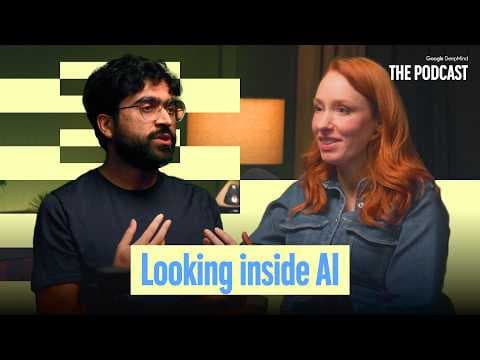
MURRAY SHANAHAN: I think there are just a huge number of enormously interesting philosophical questions that AI gives rise to. What is the nature of the human mind? What is the nature of mind? HANNAH FRY: What about consciousness? MURRAY SHANAHAN: I do think that is the wrong question, and I think it's wrong in many ways. HANNAH FRY: How good do yo... Read More
Key Insights
- AI has historically been framed by symbolic reasoning, using rules and logic to derive conclusions.
- Neural networks shifted AI away from hand coded rules toward data driven learning and statistical inference.
- Reasoning in current AI includes chain of thought techniques that mimic step by step thinking, though not equivalent to formal logic proofs.
- Consciousness in AI remains contested, with experts emphasizing it as a philosophical rather than a purely technical property.
- Ex Machina and Her are cited as influential in shaping public perception of AI consciousness and relationships with humans.
- John McCarthy coined the term artificial intelligence and helped map the field at the Dartmouth Conference.
- Symbolic AI faced brittleness and knowledge elicitation challenges, highlighting the limits of manually crafted rules.
- Embodied AI and disembodied language systems illustrate different routes to interacting with humans and understanding, shaping future developments.
- More videos from this channel:
- More from this channel: Google DeepMind
Install to Summarize YouTube Videos and Get Transcripts
Explore YouTube Video Summarizer or Get YouTube Transcript Extractor
Questions & Answers
Q: What is the difference between symbolic AI and neural networks in AI history
Symbolic AI focused on manipulating explicit rules and logic, where knowledge was encoded as if then statements and an inference engine performed reasoning over these rules. It relied on experts to elicit rules and faced brittleness when unseen cases emerged. Neural networks, in contrast, learn from large data, deriving representations and rules implicitly rather than hand coding them, which led to a major shift in AI research and capabilities.
Q: How does chain of thought relate to AI reasoning
Chain of thought in AI refers to generating a sequence of intermediate reasoning steps before producing a final answer. This approach aims to make the model’s reasoning more transparent and can improve performance on complex tasks. It represents a bridge between old symbolic reasoning and modern neural methods, by emulating stepwise thinking without relying on explicit formal proofs.
Q: Is there a consensus on whether AI can truly understand or just simulate understanding
There is no full consensus; the claim in AI circles is that current large language models can simulate aspects of understanding through sophisticated pattern recognition and reasoning prompts, but whether this constitutes true understanding or consciousness remains debated. The discussion emphasizes metacognition and whether AI experiences or merely reflects it through language and behavior.
Q: What role did Ex Machina play in AI discourse
Ex Machina contributed to public discourse by raising provocative questions about consciousness and the nature of AI, prompting audiences to consider whether machines can possess genuine intelligence or consciousness. The film helped frame debates about how humans relate to intelligent artifacts and how we judge the inner experiences of AI systems.
Q: Who coined the term artificial intelligence and why is it historically significant
John McCarthy coined the term artificial intelligence and was instrumental in organizing the Dartmouth Conference in 1956, which is considered the founding event of AI as a field. The term signaled the ambition to create machines capable of intelligent behavior and laid the groundwork for subsequent research spanning symbolic reasoning and later neural approaches.
Q: What is meant by embodied AI in the discussion
Embodied AI refers to artificial agents that interact with the physical world through bodies or robots, as opposed to purely disembodied language systems. The conversation suggests that embodiment could influence how AI understands and navigates real environments, potentially contributing to more robust intelligence through sensorimotor experience.
Q: How has the perception of AI consciousness evolved according to the podcast
The podcast traces a shift from early skepticism about AI consciousness to nuanced questions about metacognition and anthropomorphism. It suggests that public fascination with conscious AI has grown as models become more capable of language, interaction, and seemingly self reflective behavior, while philosophers continue to scrutinize what consciousness would entail in machines.
Q: What is the relation between AI reasoning and formal logic today
Today’s AI reasoning often involves methods that resemble chain of thought and probabilistic inference rather than strict formal logic proofs. While some systems can perform theorem proving with explicit axioms, modern models primarily rely on learned representations and statistical patterns, prompting questions about the nature and limits of their reasoning capabilities.
Summary & Key Takeaways
-
The episode surveys major AI questions from consciousness and metacognition to reasoning approaches and the shift from symbolic to neural methods.
-
It notes that formal reasoning in AI differs from what language models can demonstrate, provoking questions about true understanding versus simulation.
-
The discussion ties historical figures and works to current capabilities and ongoing debates about AI identity and intelligence.
Read in Other Languages (beta)
Share This Summary 📚
Summarize YouTube Videos and Get Video Transcripts with 1-Click
Try YouTube Summary with ChatGPT & Claude or YouTube Transcript Generator
Explore More Summaries from Google DeepMind 📚

Summarize YouTube Videos and Get Video Transcripts with 1-Click
Try YouTube Summary with ChatGPT & Claude or YouTube Transcript Generator