Why Is Cancer So Difficult to Treat?
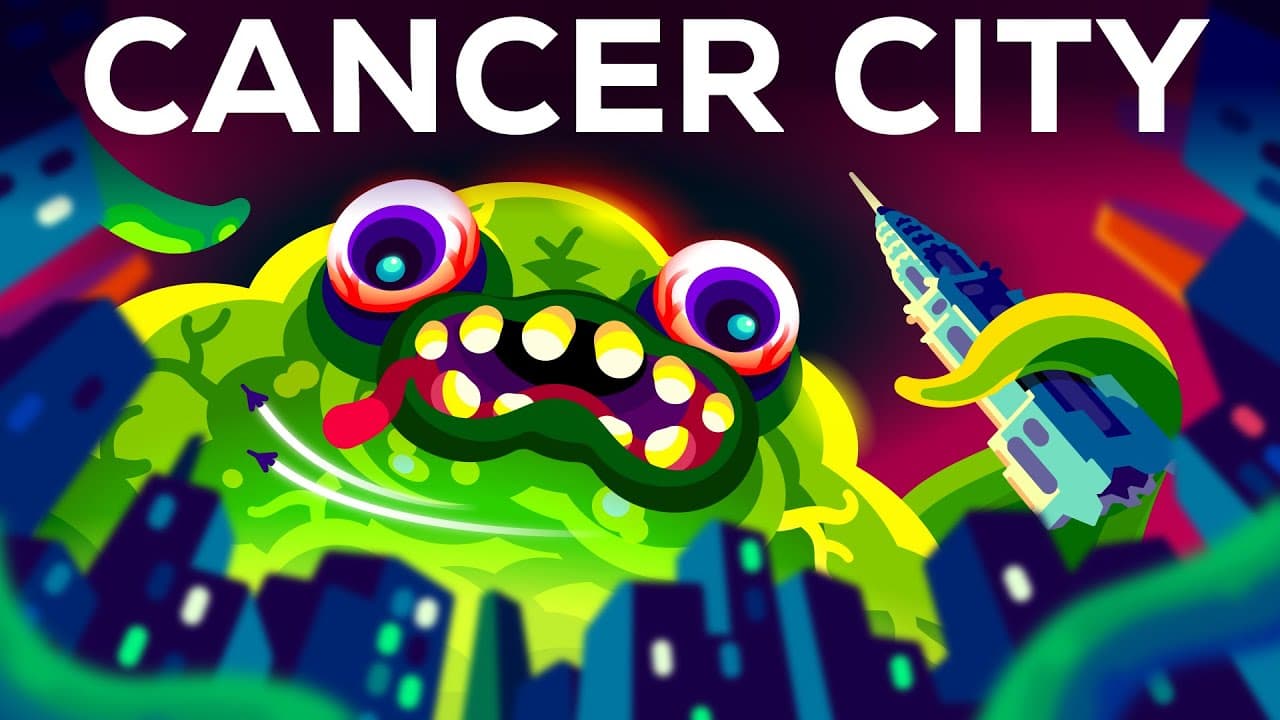
TL;DR
Cancer is hard to treat because it starts from a single corrupted cell that rapidly multiplies and evolves, forming resilient tumor lineages that can evade the immune system. As tumors grow, they alter their microenvironment to inhibit immune responses, making eradication challenging. Despite these difficulties, advancements in immunotherapy offer hope for more effective treatment options.
Transcript
An undead city under siege, soldiers and police ruthlessly shooting down waves of zombies that flood from infected streets, trying to escape and infect more cities. This is what happens when your body fights cancer, more exciting than any movie. How does this battle for survival unfold? 1. The Elimination Phase It all begins with a single co... Read More
Key Insights
- ♋ Cancer starts as a single corrupted cell and progresses through rapid multiplication and mutation.
- 🖐️ The immune system plays a crucial role in recognizing and eliminating tumors, but some tumor cells can evade immune responses.
- 👻 Cancer cells develop resilient lineages that allow them to survive and re-establish tumors.
- 👊 Cancer creates a hostile microenvironment that hinders immune attacks and promotes its growth.
- 🤞 Ongoing research and advancements in immunotherapy offer hope for more effective cancer treatments.
- 🎯 Immunotherapy utilizes the modification of immune cells to better target and kill cancer cells.
- ♋ Cancer is a complex battle between the body's immune system and evolving tumor cells.
Install to Summarize YouTube Videos and Get Transcripts
Explore YouTube Video Summarizer or Get YouTube Transcript Extractor
Questions & Answers
Q: How does cancer begin and progress within the body?
Cancer starts with a corrupted cell that can no longer repair its genetic code and multiplies rapidly. As the tumor grows, it disrupts surrounding healthy tissue and evades the immune system, leading to the development of cancer.
Q: What happens when the immune system detects a tumor?
The immune system sends immune cells, such as macrophages and natural killer cells, to invade the tumor and release chemical signals to activate the rest of the immune system. Dendritic cells collect samples of dead tumor cells and activate specialized T cells, which are capable of recognizing and killing cancer cells.
Q: How do cancer cells evade the immune system?
Cancer cells can exploit an off switch in the immune system by targeting inhibitor receptors on immune cells, effectively deactivating them. This allows the cancer cells to continue replicating and mutating, evading detection and destruction.
Q: How does cancer progress to become dangerous and spread throughout the body?
Resilient tumor cells that survive immune attacks continue to form new lineages, pushing back the immune system and expanding further. If more mutations occur, cancer cells can explore and invade other tissues, creating new tumors and causing organ dysfunction.
Summary & Key Takeaways
-
Cancer originates from a single corrupted cell that multiplies rapidly, forming a small tumor.
-
The immune system responds to the tumor by activating immune cells to eliminate it.
-
Resilient tumor cells survive and form new lineages, leading to the development of cancer.
Read in Other Languages (beta)
Share This Summary 📚
Summarize YouTube Videos and Get Video Transcripts with 1-Click
Try YouTube Summary with ChatGPT & Claude or YouTube Transcript Generator
Explore More Summaries from Kurzgesagt – In a Nutshell 📚


Summarize YouTube Videos and Get Video Transcripts with 1-Click
Try YouTube Summary with ChatGPT & Claude or YouTube Transcript Generator