Why do men and women lose weight differently?
TL;DR
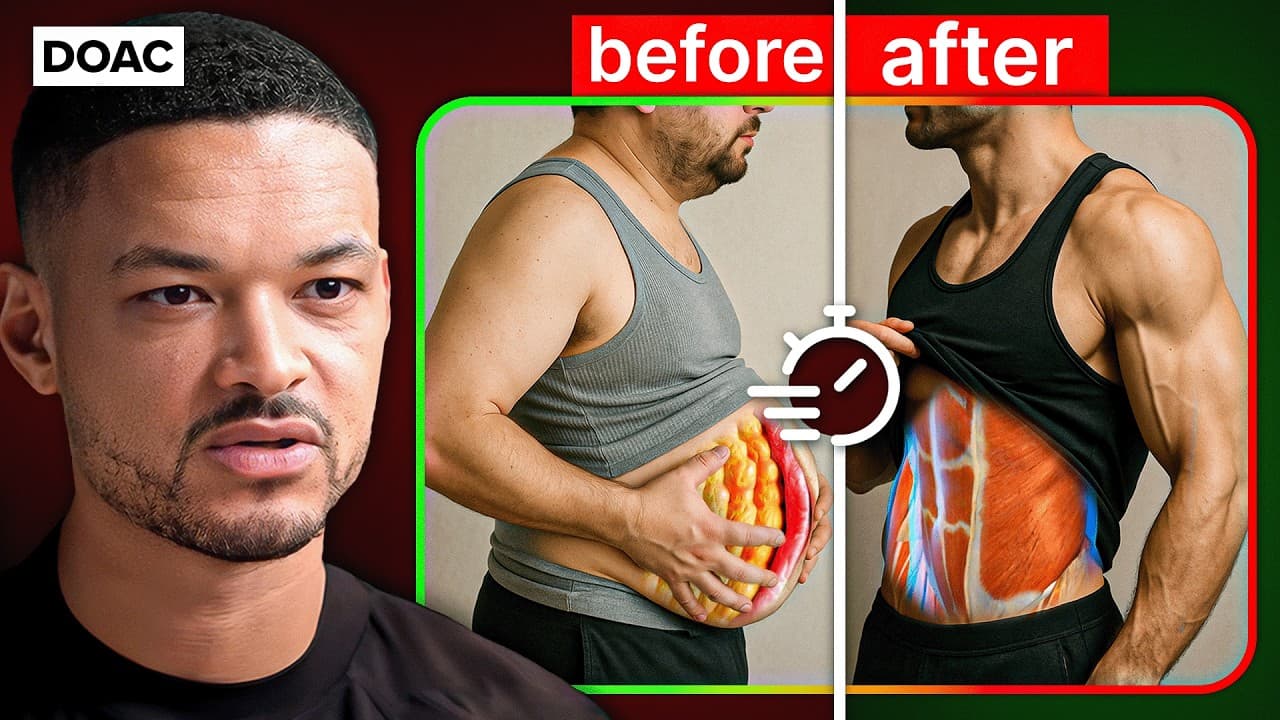
The key reason is the brain and hormone differences between sexes. Men respond better to fasting and calorie restriction because the hypothalamus is less sensitive to low calories, while women have more nutrient sensitive brain areas and may lose lean mass with fasted training. Small pre workout nutrition can support muscle while still aiding fat loss.
Transcript
If a man and a woman came to you and said, "I want to lose weight." They said, "I'm 200 pounds um and I'd like to lose some weight." Would you give them different advice on what to do? Absolutely. Absolutely would. And it comes down to a lot of we see this on social media all the time, calories in, calories out, right? So, when we're looking at cal... Read More
Key Insights
- The hypothalamus is the brain region that controls appetite and endocrine responses, shaping how calories affect weight loss.
- The hypothalamus sensitivity to nutrient density differs between men and women, altering responses to low calorie and low carb intake.
- Baseline calorie needs differ by sex, with men at 15 calories per kilogram of fat-free mass and women at 30.
- Fasted training commonly favors men because their hypothalamus is less sensitive to low calories.
- Women lose lean mass more readily with fasted training due to higher hypothalamic sensitivity to nutrients.
- Protein before workouts can sustain blood sugar, support muscle, and improve fat oxidation.
- Carbohydrates around 15 grams protein around 15 grams can help women during training to protect muscle.
- For men, post exercise protein supports muscle protein synthesis and helps recovery when calories are restricted.
- More videos from this channel:
- More from this channel: The Diary Of A CEO Clips
Install to Summarize YouTube Videos and Get Transcripts
Explore YouTube Video Summarizer or Get YouTube Transcript Extractor
Questions & Answers
Q: A real search query question about the video (e.g. 'How to...', 'What is...', 'Why does...', 'When should...'). Question 1
The hypothalamus is a brain region that senses nutrients and regulates appetite and hormones, which in turn influences how calories are processed during weight loss. Because its sensitivity differs between men and women, standard fasting or calorie restriction plans may work for one sex but not the other. This requires sex specific strategies to optimize fat loss while preserving lean mass.
Q: Question 2
Fasting and calorie restriction tend to be more effective for men because their hypothalamus is less sensitive to low calories, allowing greater use of liver and muscle glycogen and less lean mass loss. In practice this means men may perform better with fasted training and post workout protein timing that supports recovery.
Q: Question 3
Women have more brain areas that are sensitive to nutrient density, so four grams of carbohydrate can have a different impact. To avoid lean mass loss, women benefit from slightly different pre workout nutrition, such as 15 grams of protein with 30 grams of carbohydrate, which helps stabilize blood sugar and fuel muscles.
Q: Question 4
Baseline energy needs differ by sex, with men at 15 calories per kilogram of fat-free mass and women at 30. This means women generally require a higher relative intake to support metabolism and hormone function, especially under caloric restriction or during intense training.
Q: Question 5
Post exercise nutrition is important for both sexes but differs in emphasis. Men benefit from protein after workouts to drive muscle protein synthesis and support recovery, while women may require a careful balance of protein and carbohydrates to maintain muscle and prevent breakdown during energy deficits.
Q: Question 6
Fasted training in women can trigger the hypothalamus to reduce available blood glucose and may lead to lean mass loss if there is insufficient nutrient intake. Therefore, strategic fueling around workouts is recommended to protect muscle tissue while still enabling fat loss.
Q: Question 7
An evolutionary perspective explains why women conserve energy during times of potential famine, reducing reproductive function and focusing energy on survival, whereas men remain more inclined to lean up and fight for calories. This underpins why dieting strategies must be sex specific for effective results.
Q: Question 8
The video emphasizes a circadian rhythm approach to fasting for weight loss: avoid late dinners, create an overnight fast, and align eating with the body clock. This strategy supports metabolic control and can be more suitable for both sexes than extended fasting, especially for women.
Summary & Key Takeaways
-
The video explains that the hypothalamus acts as the appetite control center and differs in sensitivity between men and women, influencing how each sex responds to calories and nutrients. It also discusses how this affects weight loss strategies like fasting and cardio. Finally, it emphasizes protein needs and timing for both sexes.
-
The content highlights that baseline energy requirements differ: men use 15 calories per kilogram of fat-free mass, while women need 30, which changes how each sex should structure calorie deficits and training to protect lean mass.
-
A key takeaway is that women may benefit from protein and carb before workouts to signal nutrient availability, whereas men may tolerate fasted workouts better, supporting fat loss without as much lean mass loss.
Read in Other Languages (beta)
Share This Summary 📚
Summarize YouTube Videos and Get Video Transcripts with 1-Click
Try YouTube Summary with ChatGPT & Claude or YouTube Transcript Generator
Explore More Summaries from The Diary Of A CEO Clips 📚





Summarize YouTube Videos and Get Video Transcripts with 1-Click
Try YouTube Summary with ChatGPT & Claude or YouTube Transcript Generator